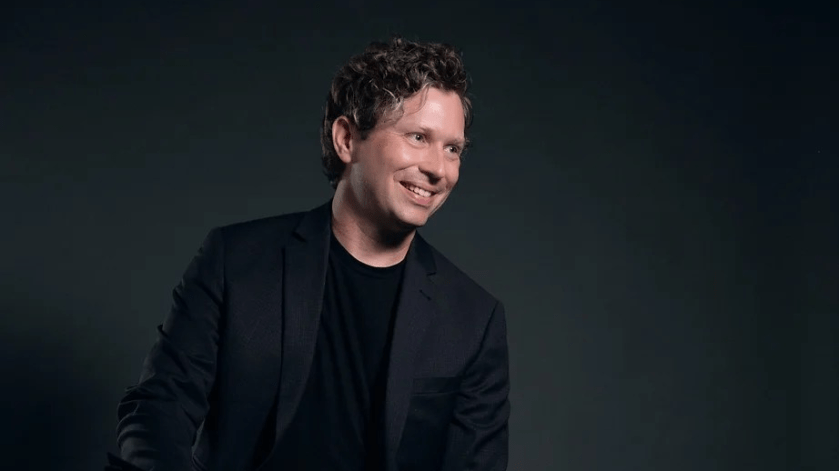
Who or what are the most significant influences on your musical life and career as a composer?
If I split this into 3 categories, I can give you some clear answers:
1) Piano influence: Martha Argerich. She is the queen, and I still get chills hearing recordings I’ve heard a hundred times before. Her playing is out of this world and restores my musical energy every time I hear her. Seeing (and hearing) her live in Montréal a couple of times have been highlights of my concert-going life.
2) Composing style influence: Sigur Rós – the Icelandic band has been with me for decades and I connect so closely and so immediately with everything they do. It’s only recently that I’ve fully acknowledged their influence on my musical style, and I feel as though my music is better because of it.
3) Music teaching/approach: David Jalbert & Maneli Pirzadeh. I studied with each of these remarkable pianists for years. A lasting element from each of them has been a connection to fellow musicians as people first. We are not defined by our music even if it is a large part of our lives. I carry their teachings and guidance with me in everything I do musically.
What have been the greatest challenges of your career so far?
Balance. In every part of our lives balance is crucial. For me it’s paramount. I have a bad habit of throwing myself whole-heartedly into projects to an extent which I can’t sustain. I end up burning out and taking a while to rebuild.
I’ve gotten better at recognizing when I’m going too hard, or not recharging, and allowing myself the time and space to balance it all out.
It’s hard when jumping between engagements and wanting to build career momentum, but what’s the point if you fall off on the other side? It’s all about balance.
What are the special challenges/pleasures of working on a commissioned piece?
I love working on commissions because it can give clear direction and focus. Some composers find it demanding and stressful, but I see it as an encouraging boost to have someone or an ensemble trust in me and my music enough for me to create something especially for them.
Tackling commissions can give parameters to work within, which narrows down the possibilities. I can get overwhelmed by the wide-open nature of composing sometimes, so it’s nice to have that guidance, especially at the start.
What are the special challenges/pleasures of working with particular musicians, singers, ensembles or orchestras?
Personal connection and specialization can be a wonderful thing when creating a work for specific musicians. As a performer I’ve adored having pieces written especially for me, and I hope others feel the same way when I write for them.
Besides technical aspects such as instruments, voice ranges, ensemble size/type, I really love adapting the style and the story of the music to the strengths of the performers. It helps me explore aspects of my composing which I may not have sunk into otherwise.
Active communication with the performers about what they want the experience to be can also bring invigorating creative light into the process.
Of which works are you most proud?
I’m usually most proud of the work I’ve most recently completed, which in this case would be my 12-part piano work Insights. It’s an exploration of the relationship between composer and pianist while creating dynamic interactions between those two worlds. They’re not as far apart as many think, and I like to play with the power given to the performer from the composer. This piece explores many of these ideas, and it’s fun to play, and I think it’s a powerful musical experience to listen to and to perform.
A piece I wrote for the SHHH!! Ensemble: “That Star Is Awake” is another one. I’ve still yet to hear it even though they’ve been performing it all over the place. The ensemble is piano and percussion, and I think that some of the energy I captured while creating with this ensemble is really special.
How would you characterise your compositional language?
Minimalist contemporary classical with improvisational elements and twinges of pop? It’s been hard to decide which genre boxes to tick with my most recent releases. I will say that I lean towards repeating and morphing rhythmic ideas, lush & dense harmonies, and melodies which may get stuck in your head.
The exploration of quiet sound worlds is important to me, but even in my most quiet, still music, there’s always a guiding pinprick of light pulling it along. I like playing with order and chaos, but in a human way. In the end, order (almost) always wins.
How do you work?
On the fly – I make short-form notes in books, record ideas, mix them with notation, use words to explain an idea and move on before fleshing it out. Especially with family life, there aren’t many opportunities to sit quietly for hours and let it happen in an orderly way. The composing experience for me is messy and disorderly at times but becomes more focused and clear as the writing continues.
I sit and write at the piano a lot, but it’s often filling out or expanding an idea which I had noted on a scrap of paper or in the back of a notebook earlier in the day.
I’ve also taken to recording myself more and letting ideas come more quickly into being that way and then notating and modifying ideas I’ve discovered while playing.
It all depends greatly on the specifics of the piece I’m working on, but I can say it this way: no one except me would be able to put my initial sketches/notes/recordings together in the way that it is all organized in my head.
As a musician, what is your definition of success?
Creating is something I need to do to feel myself. That’s the first level, but simply connecting with listeners is what I feel most proud of. When I have audience members share the thoughts and emotional connections they had after hearing me, or when someone writes to share the positive impact my recordings have had on their day, those moments give me a sense of value in what I’m doing.
What advice would you give to young/aspiring composers?
Create in whatever way feels most natural and create a lot. I spent a long time fighting my natural instincts and instead tried writing music that I felt I “should” be writing, but my natural musical energy would always re-emerge. Run with whatever you want to do and find people who want to create in that world – and find people who want to listen in that world.
Compose and create and write a lot too. Many authors have given the advice of writing a lot and you’ll find the good stuff. My experience as a composer has been the same. I used to treat each piece too preciously and as a result it would take me way to much time and energy to complete a piece. When I began really following my musical instincts and being curious about what felt right, I wrote a whole lot more. And when I created more, I began creating better. Not everything I’ve written is great, but I wouldn’t have created the gems if I hadn’t written everything else. You will also get better and more efficient the more you create.
What do you feel needs to be done to grow classical music’s audiences?
Communication with audiences needs to continue to be at the fore. Reaching audiences on whichever channel – TikTok, YouTube, whatever, it’s about building relationships with listeners. It’s about people and our shared experience. When I see kids discovering sound and rhythm and performance for the first time, it’s easy to see how we can simply reach out to listeners, but we sometimes lose sight of that musical wonder.
What’s the one thing in the music industry we’re not talking about, but you think we should be?
Burnout and mental health. The discussion is becoming more involved, but especially coming from a classical training, institutions need to be more aware working with young artists. We need to encourage a sense of self and self-care as being more important than whatever art we are studying and training in.
In the wider musical community, it needs to become normalized for artists to take breaks. That might seem like a simple statement, but short-term breaks and long-term career breaks should not be frowned upon as much as they are. I’m always disheartened when an artist has to step away from a career for a time, because it means they’ve pushed themselves too hard, but I’m also encouraged at the same time because it means they’re doing what they need to stay healthy.
What do you enjoy doing most?
Running is a solid balancing force in my life. I’m regularly training for something (this year it’s the Chicago Marathon), and it helps to re-energize me. I read every day and I love it. Family time is the best though. I can have a stressful day/week and with one game of hide-and-seek I’m back feeling level.
What is your present state of mind?
Always hopeful.
Website: https://edwardenman.com
Discover more from MEET THE ARTIST
Subscribe to get the latest posts sent to your email.
 MEET THE ARTIST