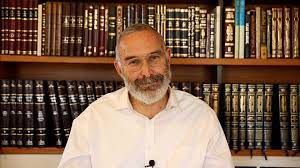
Who or what are the most significant influences on your musical life and career as a composer?
Generally speaking, the whole and varied world of classical music has been a great source of inspiration to me. If I had to pick some of the composers who are especially close to my heart they would be Beethoven, Dvorak, Haydn, and Vaughan Williams.
What have been the greatest challenges of your career so far?
I think the greatest challenge of my musical career has been just staying the course.
It’s hard to describe the amount of energy, time, and money that goes into creating and producing an album, only to be greeted by the thundering sound of silence. It’s a little bit like when someone spends a few hours preparing a meal, and then nobody gets to eat it.
In the past, I had been labouring under the mistaken illusion that it would be sufficient to just create a work of quality and beauty and then ‘get it out there’. If I had any spare money to invest, it would always go into the creative process of producing an album. Unfortunately, it is only quite recently that the penny dropped, and I realised the need for investing in PR and distribution.
For many years, I laboured in a kind of bubble with only a small circle of friends and family to give me feedback. The only thing that kept me going was my very strong belief in the inherent worth and potential of the melodies I had been given.
What are the special challenges/pleasures of working with particular musicians, singers, ensembles or orchestras?
It has always been a thrill for me to be in contact with musicians. It was particularly exciting for me to make a recording with London Brass many years ago. The recent recording with the Orpheus Chamber Orchestra has also been one of the highlights of my musical life. Over the years, I have become quite close with the arrangers I have worked with. Particularly with Israel Edelson, who has become my friend and main musical partner.
Of which works are you most proud?
I’m happy with the way most of my pieces came out, but I would have to single out my latest recording with Orpheus as my best achievement so far. Having said that, I would like to stress that this project, as well as my other albums, including the inspiration for the melodies the arrangements, the recording, and the final production, are all G-d’s doing! I had very little to do with it.
How would you characterise your compositional language?
Practically all my pieces are on the short side, ranging from 2 and a half to 4 minutes. This, together with the fact that they are built around a melody, makes them accessible and easy to listen to.
How do you work?
I must stress right from the outset that I’m not a real composer, in so far as I lack the craftsmanship that composers normally pick up as the result of their musical studies.
Apart from a few piano lessons, I never got down to really learning music. I run on pure inspiration which is why all my pieces are the result of a collaboration between the arranger and me.
My moments of inspiration often come to me after having listened to some music, and while playing around with the piano. Unlike most composers, I play a major role in the production of the album. I accompany the piece from its initial inception in my mind, through some give and take with the arranger, and up to the recording process with the musicians and soundman.
Finally, I normally decide upon the packaging and presentation, including the titles of the pieces, the concept of the album, and the accompanying artwork.
As a musician, what is your definition of success?
My definition of success is two-fold:
In respect to the creative process, success is creating something of true quality.
In respects to the impact on others, success is when I hear that people are moved and uplifted by my music.
What advice would you give to young/aspiring composers?
My advice to any aspiring composer is to always remain true to your inner authentic voice and beware of always going by the book. Believe in yourself and in the worth of your compositions, and that will help you overcome the setbacks you are bound to encounter later.
Finally: Be humble. Inspiration is a gift, and like all gifts it’s something you’ve been given, as opposed to being responsible for.
What do you feel needs to be done to grow classical music’s audiences?
If classical music is to have a future and remain relevant, it must become popular and be able to talk to large sections of the population, young as well as old.
This will be done by reinstituting melody to its proper place at the centre of musical creation. Contemporary classical music often sounds like an academic exercise for the select few. Classical music must remain an art form that is capable of uplifting and moving us, it must come from the heart and speak to the heart. It is precisely the element of melody within music which is best equipped to achieve this lofty goal.
‘Piano & Strings’, a new album of music by Johanan Cinnamon and Israel Edelson, performed by the iconic Orpheus Chamber Orchestra and the late pianists Haim Tukachinsky and Eliyahu Zabaly, is available now
Discover more from MEET THE ARTIST
Subscribe to get the latest posts sent to your email.
 MEET THE ARTIST