Who or what are the most significant influences on your musical life?
Even though I was quite late to find my way to choral music, music itself has always been present in my life from my mother, who teaches singing and academic music. I started simply singing pop songs and playing in orchestras, then finding my way to jazz as a brass instrumentalist, musical theatre during my teenage years and then when I was 16, I started singing more classically. Despite being very early in my career, I already find myself bringing different areas of these genres into my singing or direction to understand music better, be that externally in a form of creating a particular vocal tone, or internally with jazz rhythmic influence or harmony, for example.
Who or what inspired you to pursue a career in music?
The idea of high-level singing and conducting as a career, for the most part, came following my participation on a Rodolfus Foundation Choral Course in Eton, which introduced me to other like-minded young singers at a higher musical level than I’d ever experienced before. The singing tuition and choral training I received during this week was a real turning point and probably the first time I was introduced to the notion of choral music as a career. More recently, my time as a choral scholar at Durham Cathedral, under the direction of Daniel Cook, was extremely formative for my conception of a career in church-specific music as singer/conductor. At this time, I really looked up to my lay clerk, Simon Lee, as a musician and person, as well as my fantastic choral scholar colleagues, who’ve gone on to great musical endeavours elsewhere since then.
What, for you, is the most challenging part of being an Artistic Director and conductor? And the most fulfilling?
Musically, something I’m working on is completely changing the way I work depending on whether it’s the University choir or a youth choir, trying to make a rehearsal tailor-made rather than relying on the same tips and tricks everywhere. I was fortunate to spend some time with choirs abroad last year in Spain and then Estonia, which involved a language and cultural aspect into the challenges, having to use my second language whilst also working with a massive age range of singers. Aside from this, it’s the formative things going into the consort, such as the email marketing, website design and social media that were all a learning curve, made easier by one of my singers, Ella, who takes the strain of the publicity off my hands.
The most fulfilling part is undoubtedly that feeling when you’ve finished a perfect recording take or run through, having stitched together a piece which first resembled an incomplete jigsaw puzzle; creating an atmosphere there and then which will never be replicated is what encourages me.
Tell us more about Phoenix Consort and the recording project with music by Alexander Campkin?
This project marks our first step as an ensemble into commercial recording, as well as first session experience for many of the singers, exclusively young professionals at the start of their careers from Durham University. It started out as a conversation about programming some of Alex’s music, but we went on to come up with a concept for a new album with some of his unrecorded choral music. The album, featuring premiere recordings of works such as ‘Bright Apollo’ reflects Alex’s own personal experiences when writing the music, circling around the Henry Vaughan texts ‘I Saw Eternity’. It is an atmospheric disc, conceptualised to transport the listener through darkness and light, in as much an emotional sense as lyrical.
It’s been brilliant to work with Convivium Records for this project as they’ve been extremely supportive throughout the process, from first discussions with Adrian Green and the production insight of George Richford and Adaq Khan during the sessions. We were also extremely lucky to have Alexander Campkin with us for the duration of the recording, allowing us to convey all that the music means to him as well as my own interpretations. We recorded the album in Durham in early December and are hoping to fundraise towards releasing it with Convivium in the near future. If you feel you can support us towards this goal in any way, we’d be hugely appreciative: C
Is there one work which you would love to conduct?
Alfred Schnittke’s Choir Concerto.
Do you have a favourite concert venue to perform in?
The Chapter House of Durham Cathedral.
What do you do off stage that provides inspiration on stage?
Simply listening to great singers/watching others conduct. Listening to groups like Tenebrae, Voces8, Gesualdo Six, or some of my favourite soloists, inspires me to persevere and hopefully one day achieve as high a musical standard as possible.
What do you feel needs to be done to grow classical music audiences?
I feel quite passionately about the diminishing arts in the school curriculum. No matter where you look, within or outside of the UK, there is no school system that regards the arts as even an equal of ‘core subjects’. Whilst I understand the notion of necessity in school timetabling, it’s the psychological effects of side-lining arts subjects, cutting their hours and funding, that prohibits their introduction among young people, let alone the prospect of them being taken as seriously as a STEM subject. The fact that nowhere are arts subjects deemed compulsory speaks to the belief of the UK government that the arts are not as vital to our mental health, culture and worldview as a subject like physics, which I’m not sure is true; more equality in the receival of subjects in schools might promote a more even balance.
I think, whilst it may start as more difficult to publicise, ensembles should do their best to venture beyond the South and, more specifically, South East, to perform in areas in which the classical music tradition is not as deep-rooted. I think the impact of even a smaller cohort of musicians from top ensembles regularly performing and workshopping in any area would eventually feed down into the younger generations which will or won’t be the future of classical music audiences.
As a musician, what is your definition of success?
I think it can be summed up as ‘surprising someone’. If it’s high-level singing work, it’s creating an atmosphere that surprises the listener as to the power or the intricacy of the music being performed. If it’s working with young people, or less experienced singers, I think the success is made in the surprise they experience toward their own ability, or a new world of music they perhaps haven’t experienced before. Changing perceptions is an ongoing fluid part of music, which I think we should be to open to, in order to engage with our listeners.
What advice would you give to young or aspiring conductors/musicians?
As an aspiring one myself, I don’t quite have true authority to give advice, but what I usually tell younger people is to start their own ensemble. There is always room for another group to cover a slightly different niche of music, which can engage even just a few more musicians and audience, providing opportunities. If you want to put on a project, or have always wanted to sing a particular work, start a group, and organise it yourself, because even if it goes no further, you’ve created your own opportunity and experience, rather than waiting for it.
What’s the one thing we’re not talking about in the music industry which you feel we should be?
We’re already talking about this, but more discussion is certainly needed: the budget cuts to classical music – if we’re having to fight to keep the BBC Singers, what will the situation look like for the less well-known groups? The reward for years of dedication, usually since childhood, and thousands poured into education and training, is an unstable job, evermore neglected and strangled by the government.
What is your present state of mind?
At the moment, I’m mostly looking forward to finishing my degree and starting something new, but what that will be, I’m not sure. I’m anxious and excited to see what the next stage of life brings, I suppose.
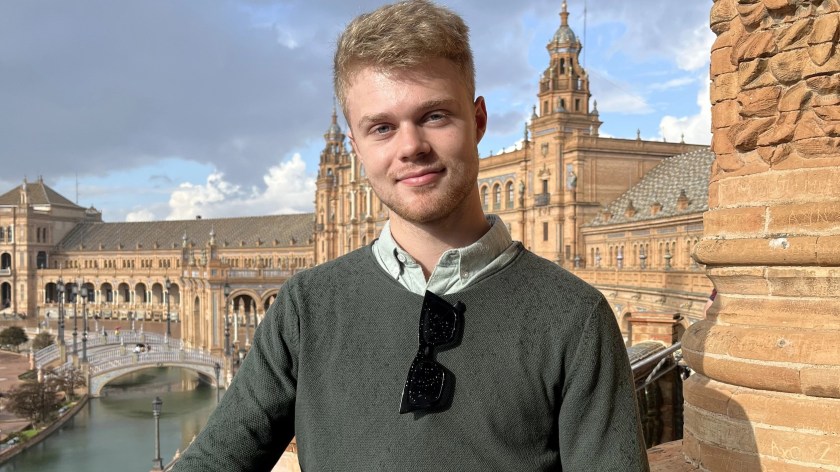
Adam Whitmore is Artistic Director of Phoenix Consort, an award-winning UK-based vocal ensemble, specialising in choral music from polyphony of the Renaissance to contemporary compositions of the 21st Century. The group consists of young artists, currently or formerly students at Durham University, and emphasises the perpetuation of choral music’s influence among young people today.
Phoenix Consort is currently crowdfunding to release their first album featuring music by Alexander Campkin
Discover more from MEET THE ARTIST
Subscribe to get the latest posts sent to your email.
 MEET THE ARTIST