Who or what inspired you to pursue a career in music and who or what have been the most important influences on your musical life and career?
I was inspired to sing initially by my father who used to sing my sister and me to sleep every night when we were little girls. He had a beautiful voice, like Bing Crosby’s (he came of age in that era) but never studied singing nor became a professional due to his own difficult childhood circumstances and the Great Depression. But he sang whenever he could, and we got to experience that at home. My sister and I were singing almost as soon as we were breathing. She and I continued to sing together with her at the guitar through our teen years. She then went her own direction with popular and roots music, and I went into classical. In my teens, my mother became an influence. Even though she didn’t necessarily encourage me to become a classical singer, she used to watch classical music programs on TV and tell me who the composers were, and then I became hooked on the beauty of that music. After that, I would say, the biggest influences were two high school teachers who encouraged me to continue on the path of classical singing. I believed them, because I was getting all the solos in high school!
What have been the greatest challenges of your career so far?
Confidence and self-promotion were the biggest challenges – I’d battled that the entire early years of my career. And during a time when there was no internet or social media, where you can really make yourself known without an agent, it was difficult to stay in touch with contacts one made during the career. Now that I’m later in my career, that has all been resolved: I am confident, I feel the joy of singing and not having to worry about those other things.
Which performances/recordings are you most proud of?
Singing Mimi in La Bohème with the Leipzig Opera, accompanied by the Gewandhaus Orchestra of Leipzig. (During one dress rehearsal, they applauded me after one of my arias!). Re recordings, I’m proud of my CD “Arias” I made 14 years ago, and very proud of my new CD release, From Al-Andalus to the Americas – An Odyssey of Spanish Song. It has been a long time coming, as the release was stopped due to many factors, including illness, the pandemic, family emergencies.
Which particular works/composers do you think you perform best?
In the opera realm, I would say I perform best Puccini, Verdi, Strauss, Barber. Anything lyrical and filled with long lines and emotion. I also love to sing Bach, Mozart, Handel but people wouldn’t associate those composers with my voice. I also adore Bizet, Tchaikovsky, Rachmaninoff, and of course all the Spanish composers that make up my new CD. Such gorgeous music that is not as well-known as it should be. Honestly, I could also name at least 10 other favourite composers!
What do you do off stage that provides inspiration on stage?
Listening to music, learning about new works. Teaching my students, learning from them. Taking long walks in parks and trying to guess bird calls. Looking at trees and plants and trying to name them. Spending time with friends and family and having long chats about life. On a sadder note, taking in through the news the devastating tragedies around the world reminds me to stay grounded and of how lucky I am to be alive, and to have a voice I can share.
How do you make your repertoire choices from season to season?
Based on what interests me at the moment, including trying out new composers or songs or arias I’ve never attempted to sing. I have a fully mature voice and artistry now, so I have nothing to lose any more.
Do you have a favourite concert venue to perform in and why?
Not particularly. I enjoyed my recent debut at Weill Hall at Carnegie. I would say singing at the Leipzig Opera House was a great experience and singing in Carnegie Hall (Isaac Stern stage) in the chorus for the Verdi Requiem (with Pavarotti!) was wonderful.
What do you feel needs to be done to grow classical music’s audiences?
Basically, what everyone already knows. Musical instrument programs must be funded and taught in primary schools, just like a second language, in order to gift these kids with the joy of music and a sense of accomplishment, and demystify them from what they will be told is elitist once they are grown up. Taking kids to concerts throughout their childhood. Reminding them it’s OK to listen to both Beethoven and Beyonce, or Tchaikovsky and Taylor Swift! Ticket prices need to be made affordable.
What is your most memorable concert experience?
Singing Schönberg’s Pierrot Lunaire with the Paxton Summer Festival in the Scottish borders. I was privileged to prepare it with renowned soprano and new music specialist Lucy Shelton; it was hard work, but when the performance came, it felt like magic. Singing the world premiere of a work by UK native Richard Thompson set to Paul Laurence Dunbar’s poetry at Merkin Concert Hall in NY. Curating and performing in “Nearer To East – Chamber Music from the Arab World” at the library at Lincoln Center’s Bruno Walter Auditorium.
As a musician, what is your definition of success?
It used to be defined by the goal and prestige of being hired to sing at the great opera houses, such as the Met, La Scala, Covent Garden, Paris Opera, as if that validated one’s talent or quality. However, these opportunities don’t come to everyone, and it can be rough squaring one’s mind with that at a certain point in life. But now that I’m older, success to me is having the ability to sing anything I want to at a high technical and artistic level and enjoying the process. Success is making myself and others happy through my singing. If something material comes from it, so be it, but outside validation via being hired by a major opera house or concert hall is no longer the end goal for me.
What advice would you give to young/aspiring musicians?
Be the absolute best you can be BEFORE you attempt to make a career. In terms of preparation, work hard on your musicianship – don’t make it easy on yourself. Learn your music the old-fashioned way, by sitting at a piano or keyboard and plunking out the notes and rhythms. Listen to recording after recording of all the great singers, both older and more contemporary ones. Listen to art songs in all languages, by older and contemporary composers, men and women, BIPOC. Learn about style. Learn to speak at least two of the foreign languages you will be singing in; speaking the languages you sing in feeds into your artistry. Don’t blame yourself if you don’t get the role or job you want – only blame yourself if you’re not prepared enough, as that’s on you. The great French comprimario tenor Michel Sénéchal once said he didn’t believe in luck. He believed in opportunity combined with preparation. If an opportunity comes and one isn’t prepared, that’s not bad luck, but a missed opportunity. I believe in this, especially as I didn’t live up to that for much of my early singing life. But first and foremost, don’t create unreasonable expectations and enjoy the process!
What’s the one thing in the music industry we’re not talking about which you think we should be?
Opportunities are shrinking for singers and other instruments, but music schools are still admitting thousands of music students without informing them of the percentages having a full-fledged career. I don’t think that they should discourage music students from applying, or once they attend, tell them they have little chance, but students should be made fully aware of this before they start.
What’s next? Where would you like to be in 10 years?
Singing on stage or in my home. Teaching more and more of my wonderful students. Traveling to places I’ve never been to. Having fewer possessions, but more life experiences.
What is your idea of perfect happiness?
Lying on my bed cuddling with my husband and my animals.
What is your most treasured possession?
My voice and my mind.
What is your present state of mind?
As the song goes, “I’m still here”.
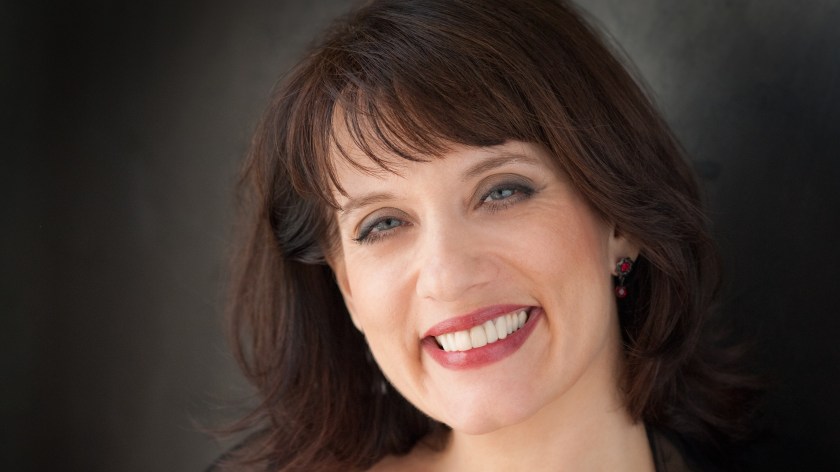
US soprano Christine Moore Vassallo’s album ‘From Al-Andalus to the Americas: An Odyssey of Spanish Song’ is available now on the Meridian label. Christine was inspired to make the album by her interest in the connection of Arabic, Middle Eastern and North African music regions to Spanish music as well as her own Middle Eastern Arabic background.
Image credit: Richard Blinkoff
Discover more from MEET THE ARTIST
Subscribe to get the latest posts sent to your email.
 MEET THE ARTIST