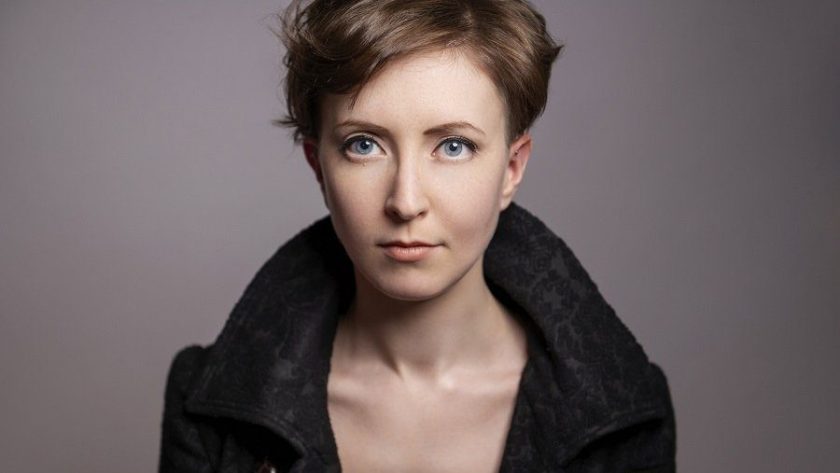
Who or what inspired you to pursue a career in music?
During a degree in Art and Design I realised singing needed to be a bigger part of my life, so I changed to read Music and went from there.
Who or what have been the most important influences on your musical life and career?
First and foremost is dramatic soprano Abbie Furmansky who has been my teacher and mentor since 2020. Another noteworthy influence was Barbara Bonney. During a masterclass, she said I was the next Ann Murray and ready for work. A representative from The Royal Liverpool Philharmonic Orchestra was in the audience, which led to a concert under Vasily Petrenko. The late Joyce and Michael Kennedy were also great champions of mine. I won their award as a postgraduate student at the RNCM, and they kept in touch for years after. They introduced me to David Agler, who at the time was artistic director of Wexford Festival Opera. I went on to work there for many years. That is where I honed my craft, roles including Meg Falstaff, Willie Guglielmo Ratcliff and Lucrece What Happened to Lucrece. I won their Emerging Artist Award with PwC and their Gerard Arnhold Bursary for my performance of Yelena Popova in Walton’s The Bear, and was a member of their inaugural Wexford Factory.
What have been the greatest challenges of your career so far?
I became affiliated with contemporary music after several successful performances with the likes of the BBC New Music Show, Longborough Festival Opera and Irish National Opera. Composer Conor Mitchell wrote some particularly challenging music for me in his opera triptych The Headless Soldier. Utterly beautiful, poignant work, and difficult to learn.
Contemporary repertoire aside – I took some years away from travelling and long contracts to focus on raising my son. Having mainly worked locally, it was a challenge to emerge into a wider market with further afield companies once he was older.
Which performances/recordings are you most proud of?
The Belfast Ensemble’s production of The Headless Soldier! Also, during the pandemic, The Ulster Orchestra continued to engage. They rearranged the Waterfront Hall so the orchestra could be spread apart, and we recorded Respighi’s Il Tramonto as part of a digital concert. Everything worked together beautifully, and it felt extra special to be creating and sharing such music during difficult times. Also, Mahler’s 2nd Symphony with Sheffield Symphony Orchestra conducted by Dane Lam. An epic work probing questions of life and death. I was pregnant at the time, and my son kicked along to the brass. Magical.
Which particular works/composers do you think you perform best?
I have a natural affinity with the music of Richard Strauss. To date, Komponist Ariadne auf Naxos is the role that has fitted my voice with most ease. I adore the music of Mahler, Wagner and Schumann. Recitals centred around German Romanticism have had some of my best singing.
How do you make your repertoire choices from season to season?
I have a list of music that I want to perform at some stage. It depends upon my diary what I can fit in when. Usually my concert/recital programmes have to fit with the venue’s theme or requirements. I wanted to play with the concepts of recitals and unwritten rules around them. I got a chance last June with Dearbhla Collins at the National Concert Hall of Ireland. My coach Keith McAlister helped programme an unconventional recital connecting material by compositional traits like triads. Hopefully I’ll be able to do something like that again in the future.
Do you have a favourite concert venue to perform in and why?
Every time I work for The Royal Ballet and Opera I feel fulfilled. I performed in their inaugural ‘Create Day’, covered Hansel in Hansel and Gretel, performed on BBC Radio 3 with them and gave a recital in the Paul Hamlyn Hall. The hall has an easy acoustic, the audience were particularly receptive, and I was pleased with my programming (a mix of highlighting their upcoming season and presenting myself as an artist). So I’d say the Paul Hamlyn Hall.
What do you do off stage that provides inspiration on stage?
Live life. From a technical point of view, I watch plays, shows, films, operas. I observe and assimilate from the whole arts industry. In my opinion, it is the application of real life experience that makes a performance stand out.
What is your most memorable concert experience?
During the interval of Guglielmo Ratcliff at Wexford Festival Opera, we could hear the hustle and bustle of hundreds of people chatting and moving around. Tenor Angelo Villari hummed to warm his voice and the entire auditorium fell silent. It was remarkable. Another was during a concert for Cameratina. Roderick Williams OBE and I were performing Vaughan Williams’ duet setting of ‘Dirge for Fidele’. One of my best friends had passed away the week before. Shakespeare’s text, the music, the harmony and blending of our voices all combined to create a very special performance.
As a musician, what is your definition of success?
A technically secure performance which communicates deeply with people. Regardless of who, or how many are in the audience, my goal is the same. Be a vessel for the music to allow others to feel. If the audience has a reaction, I consider that a success.
What do you feel needs to be done to grow classical music’s audiences?
Outreach projects reach new audiences, like the interactive sensory concerts I delivered for under 3 year olds. Go into schools and normalise classical music from a young age. With Pavilion Opera we toured a Die Zauberflöte that went into schools to perform a shortened version. The classes also had educational workshops beforehand about costumes, the plot etc so they really engaged. Companies that tour smaller and wider reach more people than the standard central audiences. Tickets need to have accessible prices. Lots of major companies run offers for cheaper tickets for under 25s, for example. Word needs to get out about the offers that exist. Embracing the digital era (as much as I don’t like social media) reaches younger generations. Advertising on social platforms and using streaming services is accessible. Some audiences invest in the performers as much as the art form, so things like Instagram take overs. Co Productions with venues outside of the art form, for example when companies team with straight theatres to produce a musical. Genre crossing in general is a good idea to reach new audiences. We need to be programming and commissioning contemporary relevant music. Audiences need to know classical music is for them. It’s relatable and current.
What’s the one thing in the music industry we’re not talking about which you think we should be?
In recent years important conversations have opened up around all sorts of prickly inequalities. I feel conversations around the dismantling of music education need more attention. If we want a thriving diverse future, decisions forcing music to become elitist at the foundation level won’t bode well.
What advice would you give to young or aspiring musicians?
Love the process!
To those considering a career in the industry – remember your instrument is not your self worth
What’s next?
I have a proven track record of ‘jump in’ engagements so who knows, but as it stands, next up is Carmen highlights in concert with UCD Symphony Orchestra conducted by Dr Ciarán Crilly.
What is your idea of perfect happiness?
Inner peace and global peace. Mind, heart and world in harmony.
What is your most treasured possession?
I don’t treasure possessions. I treasure relationships. Having said that, I am very grateful for my car.
Sarah Richmond’s new SOMM album of music by the Spanish composer Manuel de Falla is out on 17 January: https://listn.fm/fallaorchestralworks/
(Artist image: Glenn Norwood)
https://www.ulsterorchestra.org.uk/
Discover more from MEET THE ARTIST
Subscribe to get the latest posts sent to your email.
 MEET THE ARTIST