Who or what inspired you to pursue a career in music and who or what have been the most important influences on your musical life and career?
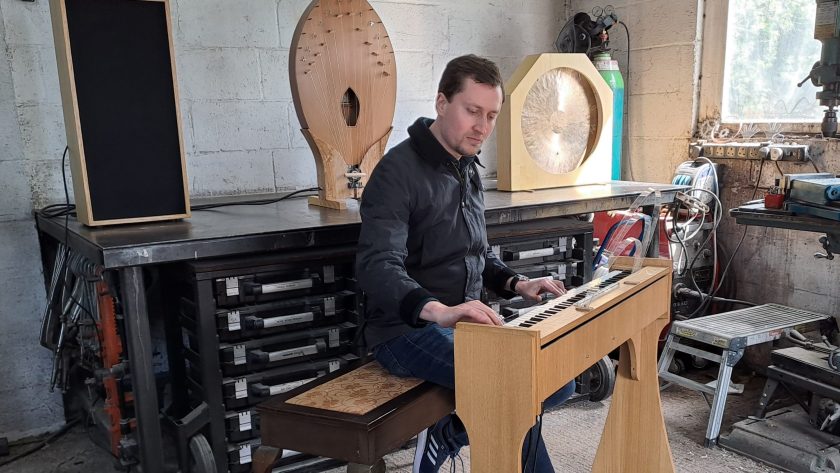
The instrument that first drew me into music was the theremin. At fourteen, I stumbled across its haunting vocal timbre via a grainy VHS of Clara Rockmore, and tantalising clips of other players online. A group of remarkably encouraging music teachers indulged what must have seemed a strange obsession, and helped persuade my parents to fork out roughly £150 for a starter instrument. Hearing Carolina Eyck’s interpretation of the Spellbound Concerto unlocked something, and I was hooked. Years later, I was fortunate to acquire a prototype ondes Martenot from the Japanese master craftsman Naoyuki Omo, and later, a full-sized instrument built by Jean Loup Dierstein in Paris. These proved a gateway into the beguiling world of the theremin’s French cousin, the instrument whose otherworldly tones we hear on Ailsa Dixon’s “Shining Cold”.
What have been the greatest challenges of your career so far
Both the theremin and the ondes Martenot sit on the fringes of musical respectability. They look odd, they sound odd, and there’s always a tension between novelty and artistry. Repertoire has been another challenge. For the theremin, I owe a lot to Lera Auerbach, who’s written some superb orchestral music over the past twenty years. I loved playing the theremin part in her Symphony No 1 “Chimera” with the RSNO earlier this year. Thomas Sondergard absolutely commanded the piece, and it was great to have the opportunity to hear the piece for the first time too! (It was the UK premiere). Repertoire for the ondes, invented in 1928, is a lot richer since it gained a foothold at the Paris Conservatoire, attracting the attention of several members of Les Six, Olivier Messiaen, Tristan Murail and so on. But there’s still so much music for it that’s wonderful yet unheard. Ailsa Dixon’s music is a perfect example.
Which performances/recordings are you most proud of?
Well, whenever I’m listening back to my recordings I tend to become my own worst critic! But when Radio 3 broadcast the BBC Scottish Symphony Orchestra’s performance of Lera Auerbach’s “Icarus”, live from Glasgow earlier this year, I ended up very happy. It brought back some great memories. Gemma New really captured something with the piece, it was so expressive. And of course, I’m really pleased with how the recent recording of “Shining Cold” has turned out too. It was really illuminating to get deep into the details of the music with the Villiers Quartet. Every bar, every direction, and every dynamic was carefully considered. We pondered the composer’s opening text over tea in south London. By the time we got to York, the piece felt like a familiar friend imbued with those memories and images. I’d love to perform it live somewhere!
Which particular works/composers do you think you perform best?
I really enjoyed working with Natalie Holt. I recorded theremin and ondes Martenot for her score to the Disney/Marvel series “Loki”, and had so much fun. Natalie’s combination of electronics, orchestra, and traditional Norse instruments was utterly unique and one of the most interesting, innovative and creatively generous television scores to be written in ages. And it gave me the opportunity to use everything in my music cupboard, from the ondes’ gong speaker to my valve-operated 1929 RCA theremin, designed by Leon Theremin himself. The show had started production during COVID, and this unlocked a raft of opportunities for international collaboration that would have been unthinkable only a few months earlier. We got to play a concert suite version of the piece with the London Philharmonic Orchestra earlier this year, as part of Tommy Pearson’s London Soundtrack Festival. That was really a dream come true.
How do you make your repertoire choices from season to season?
As an ondes and theremin player, the choices are usually made for me! Sometimes it’s thematic, sometimes it’s film scores (think Miklós Rózsa, Bernard Herrmann, Danny Elfman and so on…), sometimes it’s composers’ anniversaries, sometimes it’s an event that wants something scientific. I’ll occasionally programme chamber concerts too, often with my harpist friend Holly Lowe as “Stranger Strings”. We’ve done a lot of transcriptions: art songs, contemporary minimalism, titles from film and television scores. That’s a lot of fun. I also constantly hunt for scores in archives, libraries and other places, and found some very interesting things that way too!
Do you have a favourite concert venue to perform in and why?
Usher Hall in Edinburgh. The acoustics are fantastic.
What’s next? Where would you like to be in 10 years?
In much less than ten years, I’d like to be performing the ondes Martenot solo in Messiaen’s Turangalîla-Symphonie again, with a world-class orchestra. My first performance of it with Lev Parikian last year was unforgettable. It’s expansive, sensual, and unapologetically excessive. No two performances or recordings are the same. In rehearsal, Lev dissected the score, revealing Messiaen’s unique counterpoint of entire interweaving “musics”. The performance was a joy, and left me with a renewed conviction that this work belongs at the heart of modern orchestral repertoire.
Charlie Draper appears with the Villiers Quartet and soprano Lucy Cox on ‘The Spirit of Love – Chamber Music by Ailsa Dixon’, released on 22 August on the Resonus Classics label
Header image: David Cranmer
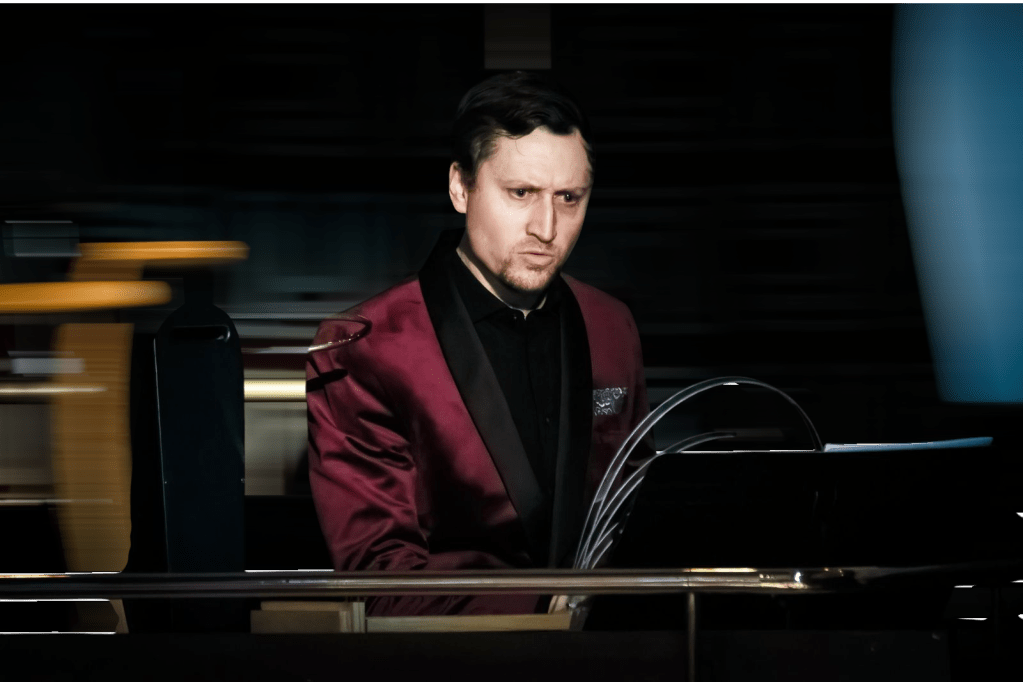
Above image: Julie Edwards Photography
Discover more from MEET THE ARTIST
Subscribe to get the latest posts sent to your email.
 MEET THE ARTIST