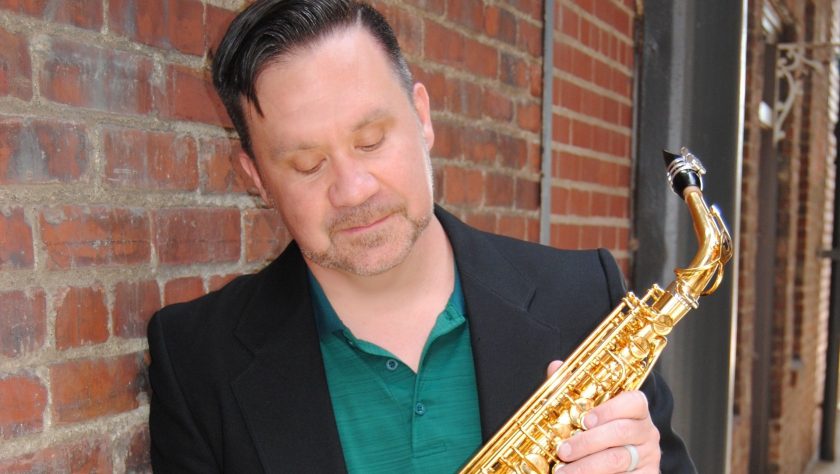
Who or what inspired you to pursue a career in music and who or what have been the most important influences on your musical life and career?
I have always had a great passion and love for music and couldn’t see my life in any other way. My band director and private teacher Sue Krapf inspired me early on to love music and then hearing Navy band soloist Dale Underwood’s wonderful recording Fantasia, with the Texas Tech wind ensemble, sealed the deal for me. The most important influences on my musical career and life have been the support of my wonderful wife, the teachers I have worked with along the way and wonderful performers I’ve had the fortune to perform with on other instruments. I give thanks to God for blessing me with music, the gift of teaching and the ideas for projects and performances.
What have been the greatest challenges of your career so far?
I am caught between two worlds. I consider myself a great teacher being nominated and advancing in the Grammy Music Educator award and an artist level performer winning numerous awards in saxophone. I am happiest when I have a consistent balance between the two and I find that teaching makes me a better player and performing under different conductors and musicians makes me a better teacher. Furthermore, some people feel I don’t really want to teach or I’m not a serious performer! This simply is not true, and because I do both some people don’t take me seriously on either side. Regardless, the success of my performances and music programmes tells a different story.
Which performances/recordings are you most proud of?
I had the opportunity to perform in the KKL Luzern Concert Hall in Luzern, Switzerland, and it was an incredible performance that I will remember for a lifetime. I just released my 4th album and am proud of the growth of my playing with the release of each one.
Which particular works/composers do you think you perform best, and what do you do off stage that provides inspiration on stage?
I find that I perform different styles of music from many different composers. I perform a lot of classical, neoclassical, modern with some popular music thrown in there. It really depends on my audience what repertoire I choose. Off stage I do a lot of planning and practicing that makes me the best I can be on stage.
How do you make your repertoire choices from season to season?
It really depends on what groups I’m playing with, the audience I’m playing for and where I will be performing.
Do you have a favourite concert venue to perform in and why?
I love playing in new venues. I’ve played in concert halls, Libraries, college recital halls, a Mansion, etc… and each one brought something new with more connections to people through music.
What do you feel needs to be done to grow classical music’s audiences?
We need to programme more varied music to attract people of all ages. We shouldn’t focus on only one genre at a time and should use community outreach programmes to connect to people at a personal level. Audiences want to connect to artists at a concert, like in popular music, and we should do the same for classical concerts.
As a musician, what is your definition of success?
Success to me is doing what you love, making a living and being happy with what your doing. You can be making money, but not really happy. I don’t think you are successful if you aren’t happy. Happiness can be hard to find, but once you find it, every day of every year is a joy to live.
What advice would you give to young/aspiring musicians?
If you have a dream, dream big go for it and plan out how you are going to reach your goals. Talk to people who are in your field that have been successful and ask questions how they got there. I made my own path that worked for me and my dad would tell me if you have a will you will find a way.
What’s the one thing in the music industry we’re not talking about which you think we should be?
We aren’t talking about how students can make a living playing their instruments. We teach students how to get better on their instruments and how to get to an artistic level, but we don’t show them what to do after college. Most of the problem lies with their teachers who only went through college and teach college and didn’t get any life experience. Not every student will teach college and should know how to promote themselves and to develop a performing/business model that will help them be successful.
What’s next? Where would you like to be in 10 years?
More recordings, more performing, guiding future teachers, living in the country enjoying life with my family, animals and inspiring future generations.
Discover more from MEET THE ARTIST
Subscribe to get the latest posts sent to your email.
 MEET THE ARTIST