Who or what inspired you to pursue a career in music and who or what have been the most important influences on your musical life and career?
I remember very clearly the moment that I decided to become a musician: I was 8 years old and my mum took me to my first classical concert, a Chopin recital by Artur Rubinstein. Getting to be both a musician and a historian has meant that my childhood dreams really did come true! So many great musicians and musicologists have influenced my thinking about women’s voices and women’s music – Peggy Seeger, Maddy Prior, Emma Kirkby, the Boswell Sisters, Donna Cardamone, Bonnie Blackburn, Suzanne Cusick – and of course my supervisors (Gerald Gifford at the RCM; Tim Carter at the University of London). But far more than any of them, my late cherished friend, Deborah Roberts, with whom I co-directed Musica Secreta for over twenty years. We completed each other’s musical dreams: she used to say, if she’d have been a better musicologist she wouldn’t have been a singer; I would say the same the other way around. My life would have been entirely different had we not collaborated on a conference presentation way back in 1996.
What have been the greatest challenges of your career so far?
Probably the same as any women in the music business – to be taken seriously! I’ve felt this less in terms of the recordings we’ve made or articles I’ve published than I have in terms of getting live concert bookings for Musica Secreta. I’ve worked almost my entire music and musicological career to get promoters to understand that there is an audience for female voices, and that all-female ensembles really do have a historically valid place in early music. There are always more adult women than men wanting to sing in amateur choirs, and I want them to be able to see Renaissance music for high voices as part of their core repertoire. But it’s a bit of a chicken-and-egg situation –after all these years it’s still novel and strange to hear women singing polyphony: audiences need to see and hear professional groups and church choirs who champion women’s voices, so promoters and choral directors need to be positive and bold. But even if they are on board theoretically, it’s hard to be bold in an adverse economic climate, so change has been and will be frustratingly slow.
Which performances/recordings are you most proud of?
Oh goodness, that’s hard! Maybe premiering The Veiled Sisters, the piece Joanna Marsh wrote for us, in 2022 at Kings Place. Seriously, though, I’m equally proud of all Musica Secreta’s recordings, since they have all come from very different musical and creative places, and they have different energies animating them. My first recording with the group, Dangerous Graces, back in 2002, won a Diapason Découverte – that was when Deborah and I really started feeling like we were making progress. Getting into the New Yorker and the New York Times picks for 2022 for Mother Sister Daughter felt unreal, and the 2020 Gramophone nomination for From Darkness Into Light was also totally unexpected. I think our 2017 recording, Lucrezia Borgia’s Daughter of the motets I attributed to Suor Leonora d’Este probably has had the most lasting and widespread impact. But I have to say that our new recording, Ricordanze: a record of love is the one that has come closest to fulfilling my musicological purpose, as it shows what full and varied musical lives sixteenth-century nuns had, even in quite a modest convent – so many different kinds of music-making, all from the same manuscript.
And I’m hugely proud of getting not just one, but two female-voice ensembles into Broadcasting House at the same time, when Musica Secreta and Papagena appeared together on In Tune, on Radio 3, on the Feast of St Agatha, which also happened to be World Cancer Awareness Day. We were publicising our In corpore et anima project to raise awareness and money for Breast Cancer Now and MetUpUK (the metastatic breast cancer charity), and despite the producer’s warning, Katie Derham announced the charity names on air and asked listeners to donate. We made half a dozen tracks with “ubera” (Latin for breasts) in them and released them monthly. We still get correspondence about the project!
How do you make your repertoire choices from season to season?
We have always been very much a project-based group – so our repertoire is drawn from whatever research or creative idea we have going. My musicological research into sixteenth-century polyphony and women’s performance practice has been the biggest driver for the last twenty-five years or so – I keep finding things, so we have to record them!
What do you do off stage that provides inspiration on stage?
Deborah and I both had a passion for the practical skills of living that we might have shared with sixteenth-century nuns: gardening, baking, cooking, knitting… I think the times we spent in her vast house in Triora, in north-west Italy, teaching and living in a community of women probably were the most inspirational times of our musical lives together. So, when we recorded Lucrezia Borgia’s Daughter at the Anglican convent at Ripon College, Cuddesdon, the group stayed there all week and shared meals with the nuns – it bonded us in a way we’d not experienced before. And since then, I try to ensure that when we record, everyone is staying in the same place and eating together as much as possible.
What is your most memorable concert experience?
Goodness – individually, being a buzzard in what I would later learn was Jonathan Miller’s first opera production, Noyes Fludde, at the Round House in 1972. That must have been the first time I ever sung the words “Kyrie eleison” – girl choristers didn’t exist in those days. With Musica Secreta, probably singing in the Florentine convent of San Salvi, surrounded by pictures painted by the nun artist, Plautilla Nelli. Closely followed by romping around Latitude Festival dressed as nuns for a performance of Sarah Dunant’s Sacred Hearts. I seem to remember serious side-eye from Mark Thomas in the Literature tent, early on a muddy Sunday morning.
As a musician, what is your definition of success?
Leaving the audience with a feeling of connection or transcendence (depending on the repertoire). As a musicologist, inspiring more women to sing polyphony together.
What do you feel needs to be done to grow classical music’s audiences?
Bring music instrument learning and choral singing back into primary and secondary schools, connecting children with the music early; supporting that learning with schools’ ensembles, county orchestras etc.
What’s the one thing in the music industry we’re not talking about which you think we should be?
I actually think the grass roots of the industry – the musicians and the promoters – are pretty vocal already about problems with diversity and representation, funding crises for live music, the effect of streaming on artists’ incomes, even the impact of the music business on the environment. But I think we should all be making the most noise about the lack of equal and adequate access to music learning and musical activity in every school and every local education authority, and the way in which it’s been normalised that extracurricular outreach projects should be taking up the slack.
What advice would you give to young or aspiring musicians?
Find ways to make music with other people at every opportunity. Learn to practise efficiently; don’t be scared of improvisation. Join the union while you are still a student so you can use its resources to stay on top of the admin: learn about tax, copyright, contracts. Don’t be discouraged if your career doesn’t come together immediately, or doesn’t go the way you thought it would – there are many ways to be a musician. Above all, stay curious.
Musica Secreta’s new album ‘Ricordanze: a record of love’ is out on 1 October on the Lucky Music label
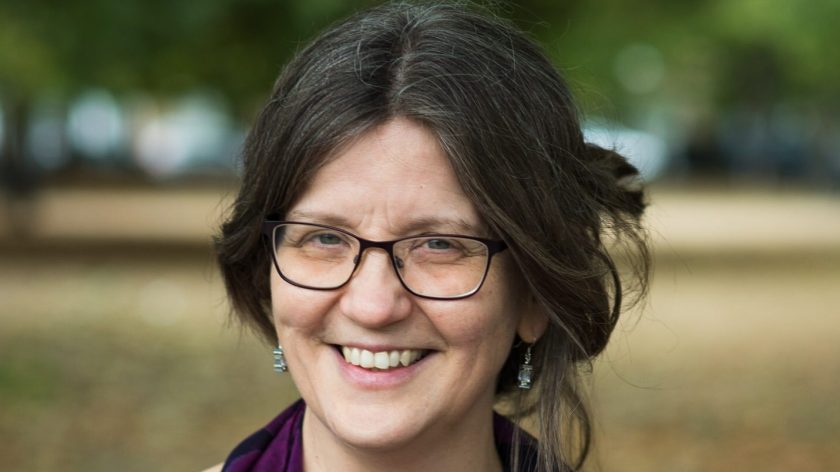
(Artist image: Andrew Mason)
Discover more from MEET THE ARTIST
Subscribe to get the latest posts sent to your email.
 MEET THE ARTIST