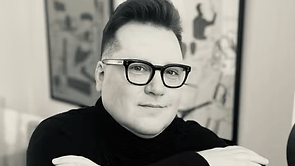
Who or what inspired you to pursue a career in music?
My earliest memories of music are centered around hearing my father perform with the Tommy Dorsey Orchestra, under the direction of Buddy Morrow. I was dazzled by the sound of big band music and captivated by the drummer. Sometimes my older brother Nelson and I would sit on the edge of the stage listening to the band perform. Those were transformative experiences and the foundations of my musical life.
As a boy, I also heard jazz artists Miles Davis, Bill Evans, and others. I was mesmerized by the rich harmonies these artists were using. Around age 12, I also heard Claude Debussy’s “Arabesque No. 1,” and I wondered innocently, “Can I write something this beautiful too?
These are all touchstones in my early life. But to be honest, I really have no memory of life without music. I come from a family of musicians, so it was always around me, and I knew early on that I would pursue music as a career. I never even considered another field.
Who or what have been the most significant influences on your musical life and career as a composer?
I’d have to first mention the so-called impressionist composers. I’ve had a love affair with the works of Debussy and Ravel since my youth. Among other innovations, they were master colourists. Through their work, I learned how to see music like a painting.
But it all started for me with jazz music, especially the now classic albums from the 50s and 60s. Bill Evans was a massive influence; I was rather obsessed. But I also heard a 1977 record called “Watercolors” by guitarist Pat Metheny with pianist Lyle Mays. Soon I began studying their records from a compositional perspective. For example, the song “The First Circle” is a masterclass in soaring melodicism, mixed meter clapping patterns, and a “series of events” that keeps developing and undulating until the music circles back to the rhythmical patterns found in the introduction. I really view Metheny and the late Mays as contemporary composers of the finest calibre.
For around 20 years, I also performed regularly as a percussionist with orchestras and percussion ensembles too, so I was introduced to the full scope of Western Music. Not only was I absorbing the 18th and 19th century masters, but I was also regularly performing the music of 20th-century percussion composers.
My teacher, Jan Williams, at the University of Buffalo, introduced me to a wide range of eclectic music that still resonates with me, even though I work primarily in tonal music. Through him, I learned how to interpret sound differently. He also introduced me to musical styles and forms that I never would have taken seriously. This included the chance or aleatoric music of John Cage and a panoply of composers who’s work integrated instruments and tuning systems from non-western traditions. Jan also taught me how to appreciate the beauty of “found instruments.” I’m currently working on a piece for percussion ensemble that will incorporate this expansive, nontraditional sound pallet.
What have been the greatest challenges/frustrations of your career so far?
To be candid, securing funding for projects is the most significant hurdle. In my niche market, bringing audiences to concerts can also prove difficult. With so many distractions in modern life, music that isn’t pop often ends up confined to academic circles. I think music by living composers deserves wider recognition and support by arts organizations, governments, and the general public.
How do you work? What methods do you use and how do ideas come to you?
Usually, my best ideas come to me when I stop trying to control or regulate the music that appears to me in my thoughts. I believe that we are all a conduit or vessel through which the essence of music flows. The music we write is probably already “alive” in our environment. It’s just waiting to be tapped into.
I’m fascinated by Carl Jung’s ideas of the collective unconsciousness. I think great composers draw upon common human experiences, both profound and mundane, living and ancestral. And music may arise from a realm beyond individual identity. I don’t know, but I welcome mystery into the creative process.
How would you characterise your compositional language/musical style?
For my piece “Between the Sandhills and the Sea,” I explored the life of WWI nurse and social campaigner Vera Brittain. This music contemplates her loves, losses, traumas, convictions, and courage. In my upcoming futuristic work for violin, piano, and narrator called “The Great Silence,” I am probing loneliness and isolation. I even have a central character, Aubrey, who, in my story, is the last person on earth. She leaves home to search among the stars for other sapient life forms.
Both works described above are multimedia, blending the written word with music. But they are not settings. The music and spoken word are presented in juxtaposition.
Even though I often write for “classical” instruments such as the cello, the foundation of my musical language is rooted in jazz, whatever that term means nowadays. Nonetheless, I am not interested in, nor tethered to, any genre or form. I just want to create something engaging for audiences. In addition to tonality, I employ elements of free atonalism, soundscapes, and minimalism as effects in my music.
Of which works are you most proud?
This is a hard question to answer. I am proud of all my work. Yet, I also try to maintain a humble attitude about it all. Certainly, there are pieces in my early years that are not up to my current standards. But I still appreciate their importance in my life on the sometimes-weary road to self-discovery.
This is a jazz chart (ballad) I wrote many years ago for my friend, saxophonist Iain Ballamy. Although it didn’t occur to me when I wrote it, it’s probably influenced by Miles Davis’s Kind of Blue. I play drums on this, and my brother Nelson plays piano.
This piece is fully notated, except for the drum groove I play. It started off as a repeated or circular set of chords designed to act as a coda for Part I. Originally, the musicians were supposed to use these chords as a springboard for improvisation. When this didn’t go well, I stripped it back then fully orchestrated it. The violin solo heard here is performed by Cornelius DuFallo. I notated this solo shortly before giving it to him. It’s pretty tricky, but I think he nails it.
This is the first piece in my collection “Twelve Pieces for Solo Piano.” It’s rather impressionistic but it also contains an atonal linear section towards the end that acts as a kind of foil to the otherwise dreamy opening theme.
This playful piece originated from a frustrating experience I had while composing. I was sitting at my piano exploring ideas, but next door, a piano tuner kept striking the same note over and over.
At first, I found this irritating, and I tried to ignore this intrusion. Eventually, I gave up working and laid down to take a nap. As I dozed off, the tuner was still striking the note “F” over and over. I fell into a REM state and dreamt much of what you hear here.
Olive Thomas was a silent film star best known for her leading role in The Flapper (1920). Her life was tumultuous and ended tragically at the height of her career from drinking mercuric chloride. Her death became one of the earliest Hollywood scandals. Did she commit suicide or was she accidentally poisoned? To this day, her demise remains controversial. A risqué portrait titled “Memories of Olive” was painted by Peruvian artist Alberto Vargas around the time of her death. It is said that her ghost still haunts the New Amsterdam Theatre in Manhattan.
This solo piano work was created for Olive. Inspired by her photograph, I sought to produce a piece that conveys the complexity of her expression. In my interpretation, she appears both beautiful and wistful, exuding confidence while also revealing traces of apprehension. During the compositional process, I occasionally sensed an intangible connection to her presence.
Was her spirit guiding me?
Between the Sandhills and the Sea – Movement IV: A Plea
This movement begins with the sound of bombs exploding. This is achieved by striking the strings of the piano with the palm of the hand. You’ll also hear a scratchy record player effect used in this movement. Lastly, the repeated pizzicato notes in the cello suggest the “dits” and “dahs” of Morse code.
The Great Silence – Part IV: Into the Dark (To Find the Light)
This is a computer-generated audio sample of my newest music. It has not been recorded yet, but I think this is still quite listenable. This piece incorporates repeated notes, sudden dynamic shifts, and “cold water plunges” into various musical currents. Please check my website for official 2026 release!
As a musician, what is your definition of success?
I don’t think success is about money, fame, or awards. It may include the respect of your peers. But I feel most successful when my music inspires another person. I think Bob Dylan was right when he said, “The highest purpose of art is to inspire. What else can you do for anyone but inspire them?” To me, this is the highest measure of success.
What advice would you give to young or aspiring composers?
I have a handful of maxims I adhere to.
- Unless it’s a work for hire job in movies or media, make the music that you would like to listen to. It’s that simple.
- Branford Marsalis is right when he said, “Music is not about music.” Music should be about the world around us: the human condition, nature, the universe, love, loss, beauty, etc.
- Focus on an economy of notes. Use the least amount of notes to tell your story.
- Listen to constructive criticism with an open mind. But in the end, trust your musical instincts above all else.
What’s the one thing we’re not talking about in the music industry which you really feel we should be?
Regardless of genre, the recording industry should stop marketing music as single tracks. Artists often design music to be experienced in order and as a complete work. Cherry picking individual, random tracks on streaming platforms has killed the concept album. It’s also destroyed the symphony, the sonata, and more. For example, The Beatles’ Sgt. Pepper’s Lonely Hearts Club Band is meant to be played sequentially from start to finish. And Beethoven’s “Moonlight Sonata” has more than one movement. Many students don’t realize that Beethoven’s piece is really a stunning three-movement sonata worthy of our attention—again, start to finish.
How do you go about fusing poetry and music?
Initially, I thought about embedding the poetry into my music, but I began to question this, since the authors aren’t alive to grant me permission to do this. I really didn’t want to interlope on their artistic visions, so I decided to present the poems in juxtaposition to my music. I do, however, hope the music complements the poetry and enhances the mood and nuance of their powerful words.
Tell us more about the inspiration behind your project ‘Between the Sandhills and the Sea’
Vera Brittain’s writing made a profound impression on me, especially when I read her poetry collection, Because You Died. Among others, the poem “Perhaps” immediately resonated with me. It may sound exaggerated, but her words had a life-changing effect upon me.
After reading her poetry, I decided to seek out all her books, including Testament of Youth and Letters from a Lost Generation. Eventually, I pored over her original manuscripts and personal diaries at McMaster University where her archives are housed.
Vera suffered so much. Yet, she turned pain into action. After studying her work, I decided to create a program of music honoring her and her dear friend Winifred Holtby. With humility, the whole project felt like a calling.
What would you like the audience to take away from these performances?
On the surface, this project may seem, well, depressing. It is largely about loss, after all. But that is not the whole story. This work ultimately centres on themes of perseverance, hope, and enduring love. This project also attempts to bridge generations, transcend time, and spread a message of peace and compassion. Audiences generally leave the concert hall feeling uplifted.
What is your idea of perfect happiness?
When my children are doing well, smiling, and enjoying life, I am about as close to perfect happiness as I can get.
Eric Starr’s From the Sandhills to the Sea: A Tribute to Vera Brittain and Winifred Holtby is at the Laidlaw Music Centre, University of St Andrews, on Thursday 20 November 2025. Find out more
Discover more from MEET THE ARTIST
Subscribe to get the latest posts sent to your email.
 MEET THE ARTIST