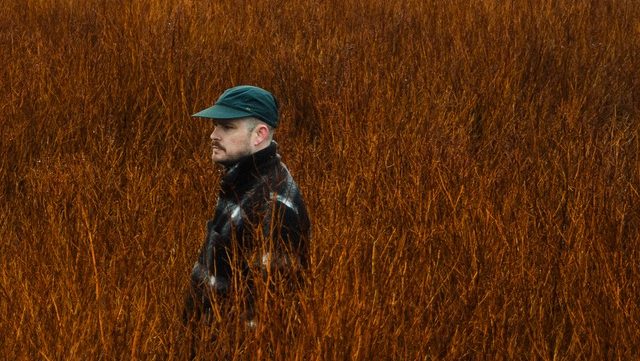
Who or what inspired you to pursue a career in music?
I grew up in a small, rural community in Canada (Peterborough, Ontario) where there was and is an incredibly vibrant and distinct working-class arts community. I was very fortunate to come up in a place where there were many models of people making unconventional livings as artists and, notably, in a place without the infrastructure and resources of larger Canadian cities like Toronto or Ottawa. The inspiration that I received from these examples was such that I never considered anything other than a career in music; it was presented as an obvious and attainable path and I am very grateful for that. I didn’t study music in school; I learned from mentors and other artists in my community. One example of these informal mentors is my collaborator on Closed City, Mathias Kom. I met Mathias in Peterborough, where he was a transplant, joined his band (The Burning Hell) and started touring with him at a very young, formative age. Mathias takes a truly radical DIY approach to his work, especially at that time when he toured to parts of the world that most bands would never consider going to. He really instilled in me a sort of ‘if you can dream it, you can do it’ attitude, which is not something I would have been formally taught in music school, and has shaped my attitude and approach to music as a DIY, collaborative, and
community-minded practice ever since.
Who or what have been the most significant influences on your musical life and career as a composer?
As a young musician my first major influences were the American songwriter Vic Chesnutt and Canadian musician Veda Hille. I discovered Vic’s music on online music forums when I was 14 and it turned my understanding of music upside down. In his lifetime he released a dozen distinctly different and equally transfixing records, each with wildly divergent ensembles and collaborators and their own unmistakable sonic aesthetics. Aside from being a songwriter of rare talent, his recordings presented me with an example of a musician uninhibited by idiomatic designations; he was a true original relentlessly pursuing new modes of expression while maintaining a clear and singular artistic voice. Veda’s 2005 album Return of the Killdeer made a tremendous impact on me as a young composer. The record contains layers and layers of depth; it’s ostensibly a pop record but deceptively avant-garde in its arrangements and presentation. It’s a masterclass in auditory and narrative world-building that I found incredibly instructive at that time, and continue to. I still listen to it regularly, twenty years later.
Later in my musical life, after a compulsory exploration of minimalist composers, I discovered the school of American post-minimalists – Elodie Laute, Arnold Dreyblatt, Jon Gibson, and David Van Tieghem are some examples – which had a major impact on me. The work of Mikel Rouse, especially his trilogy of operas, really opened my ears and mind to ways of fusing complex structural ideas with pop accessibility. From there I found the Italian post-minimalists – Lino Capra Vaccina, Riccardo Siningaglia, Luciano Cilio – composers who created work of astounding beauty, foregrounding discourse between synthesized and orchestral elements, as well as vocal accompaniment, all of which motivated me to explore new compositional approaches. Giusto Pio’s Motore Immobile especially has influenced me in thinking about deconstructed melody and drone in pop forms. I could listen to that record every day.
Recently, I’ve drawn a lot of influence from the interminable and brilliant output of south London artist Klein. She is another artist whose work stretches in so many directions, often simultaneously, but is so clear-eyed and confident. Her work provokes moods and feelings that I can barely identify even though they’re often overwhelming. I think she is one of our greatest living artists. I’ve been deep into the work of soviet punk composer and pianist, Sergey Kuryokhin. His piano playing evokes Art Tatum, Cecil Taylor, Carla Bley and Conlon Nancarrow and his masterpiece, Sparrow Oratorium, an avant-prog synthesis of dream pop and Eastern European folk music, is some of the most inspiring work I have ever heard.
The American composer Phillip Kent Bimstein’s use of field recordings as compositional elements has been a major influence on my work in the last few months. Bill Laswell is a perennial inspiration – his collision music methods have been a longstanding influence, and he’s an example of a producer whose studio practice is so compositional, there is so much overlap between composing and production in his work, which is an approach I emulate.
Quite often, I draw influence and inspiration from my friends and peers. My friends Ky Brooks, who mixed the Closed City album, and Jairus Shariff are both artists whose raw, emotional approach to sound inspires me to uphold authenticity as a central value in music-making. My friend Sam Wilson, a composer and guitarist from Halifax, Nova Scotia, is a writer and player whose emphasis on tonality has influenced me to rethink my approach to harmony.
Andrew Mackelvie, with whom I co-operate Watch That Ends The Night Records and collaborate in many ensemble projects (Scions, Many Worlds, Talismanic Episode Assembly), inspires me not only by creating brilliant, life-affirming music but by directly encouraging and affirming my place as a self-trained composer in a community of highly-trained and exceptionally technically skilled musicians and composers. Meeting Andrew and becoming collaborators is when I bridged the gap between the music I was making and the music I wanted to make.
What have been the greatest challenges of your career so far?
Finding my authentic voice as a composer has been a long, circuitous journey. I was prolific and exploratory as a young artist, but my early career was dominated by working as an accompanist which, though very educational and rewarding, left little time for developing my own ideas. I experienced a nearly decade-long period of illness from my mid-twenties to mid-thirties during which I made no music whatsoever. When I returned to my career and practice in 2018, I was pretty lost. That mid-twenties to mid-thirties period is when many artists develop their compositional language. I was encumbered by an unproductive instinct to make up for lost time and some backwards priorities; my head was still a mess. After a year or so I realized that I was in a toxic and dangerous place, in a vulnerable state and depending on people who weren’t interested in supporting authentic creative expression. I made a conscious and unequivocal decision to dissociate from those people and energies entirely, and to be a lot more vigilant moving forward. Unsurprisingly, it wasn’t long before I found myself creating work that felt aligned with my intuition and my values and I started developing a community that fostered authentic expression. In some cases this was brand new community, but it also included reconnecting with old friends, such as Mathias Kom on the Closed City project, which has been a unique joy. Now, after about a decade of composing music again, I have started to understand and express myself through that authentic voice. At least I’ve started to string together sentences. I am not a virtuosic musician but I have big ideas, a really big imagination, and I understand now how to translate those ideas into music.
How do you work? What methods do you use and how do ideas come to you?
I nearly always start with a concept – a guiding idea that might be a broad narrative or specific subject I want to write about, a genre I want to reference, an instrument I want to compose for, or a collaborator I want to work with. My practice is habitually collaborative so I am often assembling an ensemble before I’ve even started composing. I frequently take an electroacoustic approach to composition – I’ll develop an idea on an acoustic instrument, then record it, process it, resample it and organize it into a new structure and start over from there.
Recently, I have been exploring a method of subtractive composition where I compose or improvise and record an entire piece, respond to it myself or have other musicians compose or record new parts, then remove the original foundational composition completely and use the responses as a new foundation or source material for successive compositional phases. My composition and production practices are very entwined, and, typically working outside of controlled studio environments, I take an aleatoric approach to spontaneous composition where I respond to the attributes of a space or a timeline and the sometimes complex problems that are inherent to unconventional processes. ‘There are 100 pigeons in the rafters of this barn? This is a piece for 100 pigeons now. Our flight to the sessions was unexpectedly cancelled? This is an airport record now.’ Those are only slightly exaggerated versions of real instances; I work best under pressure, in situ, folding problems and their solutions into the work.
How would you characterise your compositional language/musical style?
Like most composers, my language is evolving, but my style is consistently experimental
maximalism. I favour complexity, massive arrangements, and large ensembles influenced by
punk and minimalism. My style is rooted in genre exploration, free improvisation, electroacoustic methods, and the exploration of hauntological themes through field recording, structured performance, and spontaneous creation. I am not a jazz musician but I work with a lot of them, and that shows up in my work. I am interested in sonic recontextualization through musique concrète techniques and by placing traditional forms within abstract frameworks. At my core, I am a folk musician and a storyteller, but I am always seeking out and exploring new containers for stories through collaboration and creative processes.
Of which works are you most proud?
I’ve released a series of production projects as albums in the last three years that have felt consistently in conversation with one another in terms of my approach as a composer and producer. My 2023 release, Succeeder, a body of work I composed in 2020 and recorded in 2021, was the first time I cracked the code on an authentic compositional language and an approach to production that felt true and natural. My effort as producer on Scions’ To Cry out in The Wilderness and Quinton Barnes’ Black Noise – wildly different projects where I was only one of many constituent forces – were opportunities to apply the ideas and methods I was developing in totally different contexts, with totally different artists and ensembles, and totally different but equally as satisfying results. Closed City is the most recent iteration of this lineage, again with totally different context and results but a successful articulation of this language and these methods. I have a few more releases coming in 2026; an album of organ compositions as well as an album by my drone/dub duo with percussionist Liam Cole, Global Sadness, which are also part of this conversation.
These are all projects where I’ve taken a compositional approach to production, and a
production-minded approach to composition; approaches that have been transformed by the artists, collaborators, and spaces I’ve worked with but generated from the same creative motivations. Sonic recontextualization, storytelling, field recording + musique concrète methods, spontaneous composition, improvisation, large ensembles, and immersive collaboration have all been themes of this material. It has been a very active period and I’ve contributed to a lot of projects, but this specific repertoire represents a consistent model of thinking and working with outcomes that feel genuine and that I’m proud of.
As a musician, what is your definition of success?
On a purely professional level, being able to support myself as a self-employed artist in 2026 feels like a win. I am grateful for a career that entails a lot of travel, meeting lots of other artists, creating and collaborating in a lot of different contexts. I’m grateful that it has been a long time since I’ve had to work on something that didn’t excite me. Ultimately, I think success is determined by the quality of the relationships in my life and practice.
Belonging and contributing to a diverse community of artists who engage in a genuine reciprocity of support, skill and knowledge sharing, honest communication, mutual aid, collective problem solving, healthy conflict resolution, creative exchange and non-competitive collaboration makes me feel like I am where I want to be. Everybody around me is kind, thoughtful, and brilliant; that feels like a success.
What advice would you give to young or aspiring composers?
If somebody attempts to make you feel embarrassed or insecure about how you write, or play, or express yourself in your work, get as far away from that person as you can. Work with people who encourage authentic expression. Be somebody who encourages authentic expression.
What’s the one thing we’re not talking about in the music industry which you really feel we should be?
Listening.
What next? Where would you like to be in 10 years time?
I am currently deep in the early stages of a major composition project that is going to occupy a lot of my energy for the next few years. I am intentionally shifting my focus to one primary project as opposed to many, which has been my normal speed for a while. We’ll see how long that lasts. After a number of years of high-intensity collaboration, I’ve been thinking about my independent practice and what it might be like to approach some new work entirely on my own; not as a rejection of collaboration, which I love, but as an experimental new approach to developing my voice. I’m working more and more with younger artists in my immediate community, Peterborough, as a producer and mentor and I hope that keeps up. I love running the label, Watch That Ends The Night, and I am excited to participate in its future. I would love to take on more commissions, hear my work performed by more ensembles, and do more work as a composer in theatre and film.
Generally speaking, I am pretty content with where I am professionally and I won’t be disappointed if things are more or less the same in 10 years time. Creatively, I hope I never stop growing, never lose my love for creative exploration.
What is your idea of perfect happiness?
Imperfect happiness.
What is your most treasured possession?
I am the sort of person who gets excited about whatever is new to me, be it new music, or a new city, or a new possession, so this question could receive a different answer every time it’s asked. My current obsession is the Sony WH-1000XM6 noise cancelling over-ear bluetooth headphones I recently purchased. I have been very skeptical about bluetooth headphones but these came highly recommended by some mastering engineer friends. They have incredible clarity and precision, incredibly high fidelity and balance. I use them for everything now – recreational listening and monitoring material in playback situations. They have genuinely made listening to music more fun and exciting, which is something I hadn’t thought possible.
What is your present state of mind?
I’m drinking a delicious cup of coffee, looking out at a snow-covered lake, listening to Ornette Coleman’s This is our Music, I couldn’t ask for much more.
“Closed City” is a new collaborative album by composer/producer Michael Cloud Duguay and songwriter Mathias Kom, released on 27 March
Discover more from MEET THE ARTIST
Subscribe to get the latest posts sent to your email.
 MEET THE ARTIST