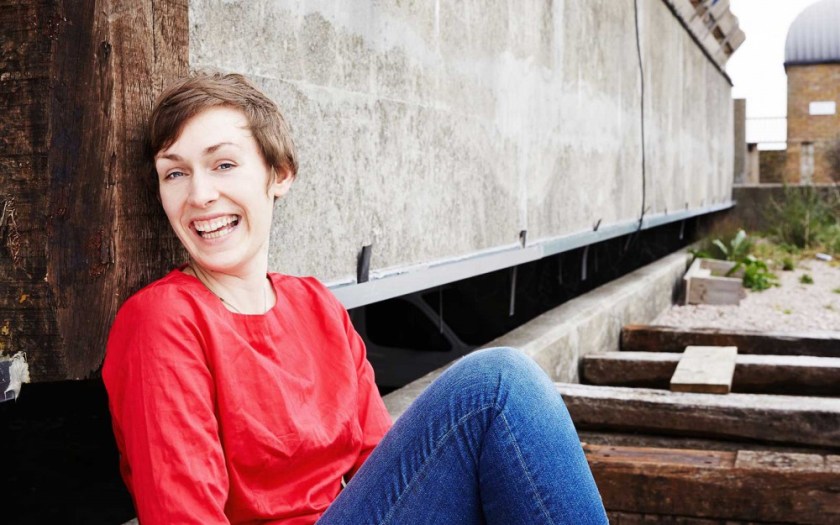
Who or what are the most significant influences on your musical life and career as a composer?
When I was a teenager I had a music teacher called Peter Norris who taught us chamber music. In chamber music class, normally a group of us would play a piece, and then the teacher would then tell us what to do differently – saying things like ‘play this phrase louder’, or ‘be careful not to rush here’.
With Peter though, after we played the piece through, he wouldn’t say anything at all. There’d be awkward silences for ages, and eventually one of us would ask him what we should do. He’d reply “what do you think you should do?”
It was the only time a teacher asked us to make up our own minds about how to play the piece, rather than being told by someone how to do it. Even if we didn’t know what to do at all, he never stepped in. Sometimes we had whole classes where we never got anything done, because he never told us what to do!
Ultimately I learnt more from Peter than any other teacher I had. He taught me to start thinking for myself, and I learnt so much from that.
In my more recent career, I have been trying to learn to be more like him, and I am finding that really hard! My temptation is always to jump in and tell people what I think, rather than letting them think for themselves.
What have been the greatest challenges of your career so far?
I set up and run my own organisation after I left uni, and keeping that going over the next 11 years has been by far the biggest challenge of my career. I’ve wanted to quit so many times! It’s such a lot of responsibility to keep the whole thing going and can be very lonely and relentless. But at its best, it’s the best job I can imagine having.
What are the special challenges/pleasures of working on a commissioned piece?
Last year I wrote a piece for Royal Northern Sinfonia and Bournemouth Symphony Orchestra plus a large group of soloists from Resound and Moves ensembles.
It included soloists on electronic instruments I hadn’t written for before – such as Clarence Adoo who plays headspace, Charlotte Bott on linstrument – as well as the incredible blind pianist Rachel Starritt, and many others. It was a super complicated piece and took me a while to get my head around it. Learning how the electronic instruments worked was a big challenge, and translating the music into braille was lengthy! Me and James Risdon (recorder) were once on the phone for more than an hour and a half reading through every note to check it…
We workshopped the peice over a few months and also created improvised sections which the players devised with me, so it felt like everyone had a lot of ownership of the final thing. It was a great way to work, and they were some of the most inspiring and lovely musicians I’ve known. I learnt a huge amount from taking into consideration ways of playing I hadn’t even considered before.
I think the best thing about commissions like that is getting to know everyone, and feeling like we became a community who created something together.
Of which works are you most proud?
A few years ago an incredible group of young people and musicians from my orchestra (The Multi-Story Orchestra) made a show together called The Endz. I worked on the music with everyone, and orchestrated it.
Following the death of Malcolm Mide-Madariola, who used to go to one of the schools Multi-Story Orchestra works with, some of our young people came to me saying they wanted to create a piece of music telling the story of two friends torn apart by gang culture, and the whole inspiration and drive behind the piece came from that.
What we finally created – which was developed over a few years – was incredibly powerful, and I am so proud of it. I have a piece of paper on the wall by my desk with the original scribblings of one of the raps written by Toni – one of the stars. Every time I see that peice of paper and remember the huge journey we went on to create that piece and what it turned into, I feel so proud.
We started making it in 2019, spending hours in a classroom jamming and coming up with songs, and now this September we are performing The Endz in the opening weekend of the Classical Music Season at the Southbank Centre, which is mad! There are some highlight clips from the show here
How would you characterise your compositional language?
I like having clear structures and shapes in my music – clear sections that repeat, or clear builds and drops for example. A lot of it is inspired by minimalist music.
More recently I’ve been doing more collaborative work which includes a huge variety of different styles such as gospel and R&B.
How do you work?
I start by playing the piano until I find something I like. Then I generally use the programme sibelius on the computer for the rest of the process, playing the piece back and editing it.
As a musician, what is your definition of success?
My definition of success as a musician is being happy!
One of my favourite quotes from Philip Glass was that he worked as a taxi driver to make money so that he didn’t have to enter musician competitions. He said he wanted to ‘be the captain of his own ship, whether it was a big ship or a small ship, it was his own’.
I studied music at Cambridge university and I often say that I have spent all the time since I was at Cambridge trying to unlearn everything I was taught there, including the definition of ‘success’ they have.
What advice would you give to young/aspiring composers?
The advice I would give to aspiring composers is not to think that music is a viable financial career on its own. Almost all people who make their living as musicians today either actually make money from something that isn’t music, or have other sources of money (like family money).
I’m a composer maybe 10% of the time. Most of the time I am managing my organisation and raising grants. It’s often seen as the dream to make your money just from music, but I don’t actually think that is necessarily the best thing. It’s great to have variety in your work because it’s more sustainable, and it keeps things in perspective.
Also the way our education and social systems work today mean that it is very difficult to get the training and opportunities to become a musician if you aren’t from a very privileged and well off background already. I never would have been able to do it without the support and resources my parents could put in.
We often think people become musicians just because they are good at music but that’s not the case. A huge amount of it is circumstance and luck. I’m not saying any of that to put anyone off doing it, it’s just worth remembering.
What’s the one thing in the music industry we’re not talking about but you think we should be?
I think we should talk more about being happy. When I was growing up learning classical music, everything seemed to be very serious and all about achievement and competitiveness. It’s only music!
Kate Whitley and the Multi-Story Orchestra’s Young Creatives present ‘Verified’, a large-scale work with blends of orchestral instrumentation, R&B, reggaeton, song and rap especially commissioned by the Borletti-Buitoni Trust to celebrate its 20th anniversary. Performances on 8 & 9 June 7pm at Bold Tendencies. https://boldtendencies.com/events-tickets/
Kate Whitley is a composer and pianist. She runs The Multi-Story Orchestra, which performs in car parks around the UK: “forget fusty concert halls, the future of music is emerging in a municipal car park” (The Times).
She writes music for orchestras, choirs and instrumentalists. Her music has been broadcast on Radio 3 and performed as part of the BBC Proms.
Her pieces for choir and orchestra include Alive to words by poet Holly McNish, which won a 2015 British Composers Award and was described as “a remarkable feat” (The Telegraph), and I am I say to words by Sabrina Mahfouz: “a tremendous work” (The Times).
Discover more from MEET THE ARTIST
Subscribe to get the latest posts sent to your email.
 MEET THE ARTIST