Who or what are the most significant influences on your musical life and career as a
composer?
My loved ones are the biggest influence on me – they have been constantly and unfailingly supportive. My parents took us to concerts from a really young age and played lots of CDs at home so I grew up immersed in an incredible mixture of different styles of music which I love to this day. I’m so grateful for having been introduced to such an eclectic range of music – our car journeys were soundtracked by music ranging from Ravel to Radiohead and beyond! My teachers and mentors have had an immense impact on me. I started learning the piano aged 4 at our local Yamaha Music Centre where I was encouraged to explore and create. Playing in youth orchestras with the Oxfordshire County Music Service and my incredible state school music department both had a huge impact on my development and love of music making. I am so grateful to my clarinet teachers both at the Royal Welsh College of Music and Drama and the Royal College of Music who have supported my growth not only as a clarinettist but also as a composer.
When I started my studies in clarinet performance at RWCMD, I was composing in my spare time
but I hadn’t had any formal tuition. I was at a real crossroads and almost gave up composing, but I was encouraged to knock on Head of Composition John Hardy’s office door – his incredible encouragement, kindness, warmth and support from that day is one of the biggest reasons I am still composing.
What have been the greatest challenges of your career so far?
Dealing with performance anxiety and self doubt. I think a huge challenge for musicians is the
contrast between the resilience required to deal with things like nerves, rejection, imposter
syndrome, auditions and the vulnerability and openness needed to express and communicate to
a listener as a composer or performer. Working through periods of creative block – especially when a deadline is looming!
What are the special challenges/pleasures of working on a commissioned piece?
The challenge is making sure to hit the brief within the deadline and to write music that both the performers and audience can connect to, whilst also writing something that I feel is true to myself. It has been a huge pleasure to have been commissioned to write pieces for two of my teachers – Robert Plane and Richard Hosford. It was a total honour and joy to write for two musicians who have inspired me so deeply and have left such a lasting impact on me. They have been two of the most inspiring and fruitful collaborations of my career so far and also really pushed me to develop my compositional voice.
Shivelight:
What are the special challenges/pleasures of working with particular musicians, singers,
ensembles or orchestras?
The writing process can often be quite solitary and so I relish the chance to collaborate and nurture connections with musicians. I believe the dots on the page are nothing until a musician brings them to life. As ‘Emerging Composer’ with the Presteigne Festival I am hugely grateful to
receive mentoring from Artistic Director, George Vass, and to be a part of a supportive network
that allows composers to develop and learn.
Of which works are you most proud?
It was a total dream to be commissioned by the BBC Concert Orchestra in 2018 to write ‘And the
Sun Stood Still’. The whole experience was life-changing and instilled a real hunger and determination in me to keep working and creating. I was 20 at the time and it was my first
experience of writing for full orchestra which was terrifying but exhilarating! The whole BBC
Concert Orchestra team, both on and offstage, are phenomenal – the most inspiring and supportive people and I feel incredibly proud to have had the chance to work with them. Working with conductor Bramwell Tovey was a transformative experience – he enabled me to try out ideas and taught me so much about collaboration. Experiencing how he worked with the orchestra was staggering – the atmosphere he created was electric, intensely focused but always with an incredible warmth and humour. I will always be grateful to him.
And the Sun Stood Still: https://www.bbc.co.uk/programmes/p06x3tc0
How would you characterise your compositional language?
I am driven to create striking, atmospheric and immersive sound worlds, which take the listener
on a journey. I love exploring rich, layered, kaleidoscopic harmonies that ebb and flow and mutate. Orchestration really excites me – I love trying to find combinations of instruments that create evocative soundworlds. I try to write music that comes from my heart which the listener can connect to.
Trallali, Trallaley, Trallalera:
How do you work?
I work best early in the morning so I try to get my composing done then if possible and then spend the afternoon on clarinet practice if I can, but sometimes I do the opposite. I have to go on a walk at some point in the day, or I get very restless! Often a walk in the early evening helps me to clear my head – that is sometimes when I formulate ideas. When writing, I am mostly driven by feeling, listening, instinct and am often influenced by the natural world.
The Coming of Night:
As a musician, what is your definition of success?
I think success is a tricky concept and my definition of it has changed a lot over the past couple of years. A definition of success for me would be to advocate for the importance of the arts in our society and to bring music to as wide an audience as possible. To communicate my ideas in as truthful, raw, direct a way as possible, whether composing or performing. To have moved
someone.
What advice would you give to young/aspiring composers?
Keep going! Try things, experiment. Always stay humble and curious – there will always be more to learn. Immerse yourself in as wide a range of music as possible. Rejection is part of the route – we all experience it and I think it can be useful to think of it as a redirection rather than a failure. Be true to yourself – I am a big believer in trusting your gut.
What do you feel needs to be done to grow classical music’s audiences?
Give everyone access to music from a young age. Outreach projects are a wonderful way to introduce music to a wider audience; I am currently involved in a community education project with the Presteigne Festival called ‘Water’s Edge’. It involves five primary schools in the Welsh borders. During workshops, the pupils’ came up with their own ideas which I then turned into a
brand new cantata to be performed by the children this summer. I think concert programming is also crucial in forging and nurturing new audiences.
What’s the one thing in the music industry we’re not talking about but you think we
should be?
The catastrophic cuts in funding to music education and the Arts.
What next – where would you like to be in 10 years?
To still be creating and performing and to live in the present as much as possible. Creatively, I’d love to write music for film and theatre as well as the concert platform. I would also like to have developed my outreach and teaching work. To know myself and others more deeply.
What is your most treasured possession?
I treasure people much more than things! I really cherish things that belonged to my grandparents and the places that were important to them.
What do you enjoy doing most?
Spending time with loved ones – family and friends are incredibly important to me. Going for a long walk in nature and staring at a beautiful view. Listening to music I love (especially Stephen Sondheim’s ‘Sweeney Todd’ – I could listen ALL day!). Also birdsong and laughter.
Guitarist Jack Hancher performs Veiled Dawn by Sarah Frances Jenkins, inspired by J M W Turner’s paintings of Mount Rigi, at Hertfordshire Festival of Music on Saturday 10 June. Further info / tickets
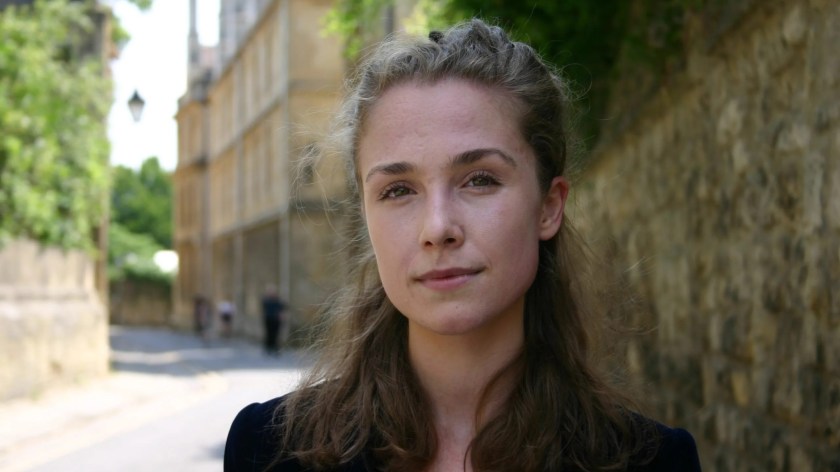
Sarah Frances Jenkins is a composer and clarinettist based in the UK.
As a composer, Sarah has recently been commissioned by prestigious organisations such as the BBC Proms (where Music and Meditation was performed as part of The Dream Prom 2022), Vale of Glamorgan Festival (where she was Featured Composer in 2021, alongside composers Judith Weir and Peteris Vasks), the Presteigne Festival (where her suite for solo violin, Tincture of the Skies, was premiered by Fenella Humphreys), and the Corbridge Chamber Music Festival 2021 (where Shivelight for clarinet and piano was commissioned and premiered by clarinettist Robert Plane).
Since winning BBC Young Composer in 2017, Sarah’s music has been commissioned and premiered by ensembles including the BBC Concert Orchestra, BBC National Orchestra of Wales, Aurora Orchestra, Solem Quartet, Magnard Ensemble and the Kaleidoscope Chamber Collective. Her music has been performed in venues including the Royal Albert Hall, Queen Elizabeth Hall, St David’s Hall, the BBC Radio Theatre at Broadcasting House, BBC Hoddinott Hall and has been broadcast live on BBC Radio 3. Her work inhabits striking and atmospheric sound worlds and is often inspired by the natural world.
Discover more from MEET THE ARTIST
Subscribe to get the latest posts sent to your email.
 MEET THE ARTIST