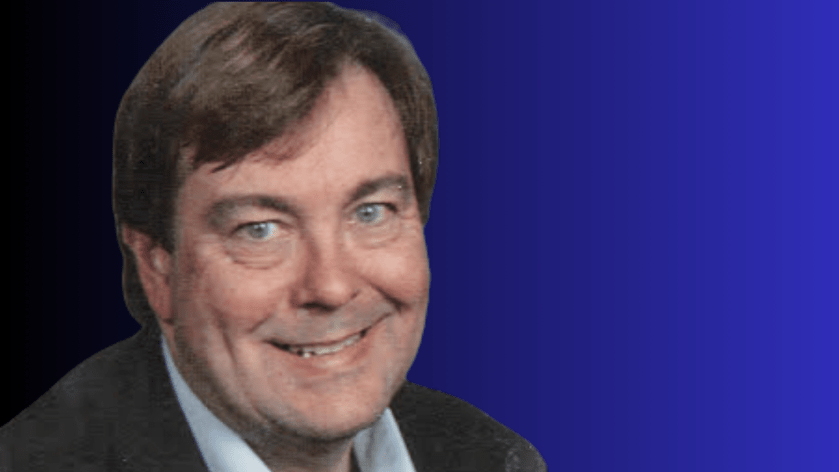
Who or what are the most significant influences on your musical life and career as a composer?
There was no one person that greatly influenced me. But for decades I have engulfed myself in listening to music on classical radio stations, and going to concerts and operas. And when I was young, I performed in school orchestras and bands that exposed me to all sorts of music literature. I surrounded myself with music, and this helped influence the music that I write down on paper.
What have been the greatest challenges of your career so far?
It has been continuing to compose even though in previous years my music was not given much exposure. I enjoyed composing and finishing a work, but if it was not performed, then my interest would wane. But I knew that eventually my hard work at composing would reap benefits and be performed and/or published. So, the hardest part was “sticking to it.”
What are the special challenges/pleasures of working with particular musicians, singers, ensembles or orchestras?
I know that when I hear a work of mine performed, there will be some differences as to how I heard the work when I was first composing it. This is good, because if you give four performers your work, they will probably perform it four different ways—even though the notes will be the same. They will add subtleties and nuances to the music that are personal to them, and of which I didn’t hear myself. It is good to hear one’s music sounding a little different than when it was first composed.
Of which works are you most proud?
My Symphony Capriccio (2018) that was premiered in Eastern Europe, because it was my first symphony. And my choral work that won the international AGO award, May Your Life Be Filled With Gladness (2008), because it was the first major award I was able to win.
How would you characterise your compositional language?
Primarily neo-classical, as I take classical forms and put them to contemporary harmony. This isn’t always true with everything I write, but it’s the closest designation for my music that I can think of. Other evaluators and reviewers of my music seem to agree with my designation, and use similarities of my music with Hindemith, Prokofiev, and Shostakovich.
How do you work?
I don’t have a timetable. I work at my own pace, and when I have something that is ready to put down on paper. I usually write rather quickly, and never catch myself just staring at a blank sheet of music paper because the thoughts have already been developed inside.
As a musician, what is your definition of success?
Performing something or composing something that has an impact on the listener. Even if the impact is just pure enjoyment of the piece. I would rather have one of my works performed in front of only 40 people in the audience but have 20 of them moved by the music, than to have it performed in front of 400 and it moves only 10. The same is true if I perform other composers’ works for an audience.
What advice would you give to young/aspiring composers?
Write a lot of music so that you eventually acquire your own style and your own voice at a young age. Then you have attained your musical identity. With me, I didn’t acquire my voice until I was practically past middle age, because I didn’t write that much and didn’t know what style I was truly comfortable in staying with. I know what my style and voice is now, so I’m writing more prolifically now than in my younger years.
What do you feel needs to be done to grow classical music’s audiences?
Teach classical music in the schools starting as young as the first grade. Have them listen to musical works of art, and also teach them some music theory. I was the music theory teacher for a private Christian school in Florida when I was young. I would go from class to class each week and taught from kindergarten to the sixth grade! The children generally loved the subject and enjoyed me coming in, and so did the other teachers who could get their breaks.
What’s the one thing in the music industry we’re not talking about but you think we should be?
Demand that some extra money in the school district’s budget be set aside for teaching music to the younger children. It has been scientifically proven that those children that play musical instruments have their test scores improve. They improve in math because of rhythm, their coordination improves, and they learn teamwork when playing in an ensemble.
What next – where would you like to be in 10 years?
I would certainly like to add more to my repertoire as a composer. I eventually want to write a mass, a requiem, another symphony, and perhaps a one-act opera if I can find a really good story. I’ve written many works for organ and one other instrument, and so I need to write more works for piano and one other instrument.
Discover more from MEET THE ARTIST
Subscribe to get the latest posts sent to your email.

