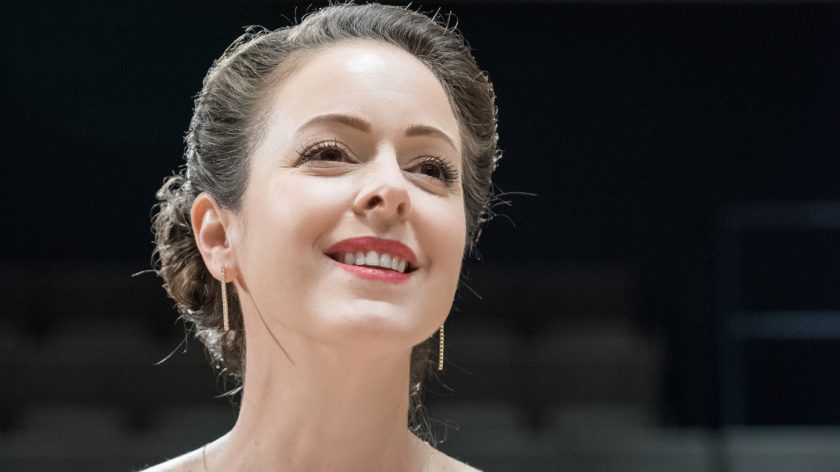
Who or what inspired you to take up conducting and pursue a career in music?
Growing up in a musical family, I caught the conducting bug early—at the age of six, to be exact. Somewhere in the family archives, there’s footage of me passionately leading a “concert” featuring my younger sister and a lineup of very cooperative stuffed animals. Music was always at the heart of everything I did, and from the very beginning, my path toward a career in music felt as natural as breathing.
Who or what are the most significant influences on your musical life?
Of all the influences, my mentor, Donald Neuen, stands out the most. In a field historically dominated by men, Don challenged me to pursue excellence while always staying true to myself. His guidance shaped not only my conducting but also my confidence in forging my own path.
What, for you, is the most challenging part of being a conductor? And the most fulfilling?
I believe that if you truly enjoy the process of what you do, any challenges along the way are worth it. For me, the most rewarding part of my work is collaborating with people—connecting, shaping, and inspiring. To bring a musical vision to life, you have to genuinely love working with others, guiding them toward a shared interpretation that resonates and inspires.
As a conductor, how do you communicate your ideas about a work to the orchestra?
One of my greatest passions is conducting major choral-orchestral works. When leading an ensemble of 200–250 musicians, clear communication is essential. Long before the first rehearsal, I invest significant time in studying the era’s performance practices and the composer’s intent, ensuring that the music comes to life with authenticity and depth.
How exactly do you see your role? Inspiring the players/singers? Conveying the vision of the composer?
Both—As a conductor, honoring the composer’s intention is essential, but it’s just as important to bring genuine passion to the music in a way that inspires my musicians.
Is there one work which you would love to conduct?
I love Frank Martin’s “Mass for Double Choir”. That one is definitely on my bucket list!
Do you have a favourite concert venue to perform in?
As a New York native, Carnegie Hall will always hold a special place in my heart. But a few close seconds include the Beijing Concert Hall and even the charming little St. Patrick’s Chapel in Maynooth, Ireland.
What do you feel needs to be done to grow classical music audiences?
As a practitioner of classical music, I believe it should be accessible to everyone—not as a dividing force, but as a unifying one. Classical music has the power to connect, inspire, and enrich all who engage with it. Expanding diverse programming and prioritizing educational outreach are essential in cultivating and growing our audiences for the future.
As a musician, what is your definition of success?
The greatest compliment I can receive as a conductor is knowing that my audience left the performance truly moved by the music. As musicians, our purpose is to create an atmosphere that invites connection—where listeners can feel excitement, find peace, and experience something profound. Otherwise, why do it?
What advice would you give to young or aspiring conductors/musicians?
The best advice I ever received as a young conductor was to say yes to every opportunity. You never know where it might lead or what doors it could open.
What’s the one thing we’re not talking about in the music industry which you feel we should be?
Sustainability – both artistic and personal. We need to talk more about how we sustain classical music’s relevance in a rapidly changing world. How do we balance honoring tradition with fostering innovation? How do we engage new audiences without compromising artistic integrity?
A career in music is a gift but can also be demanding—constant rehearsals, travel, financial uncertainty sometimes—can take a toll on mental and physical well-being. Yet, discussions around work-life balance, and long-term career sustainability are often overlooked.
If we want classical music to thrive for generations to come, we need to ensure that both the art form and the artists themselves are supported, valued, and given space to evolve.
What is your idea of perfect happiness?
I believe I’m living it. I’m incredibly grateful to do what I love—to wake up each morning excited for the opportunities to create, collaborate, and impact lives through the transformative power of music. It’s truly a blessing.
Irene Messoloras has founded a new London-based choir, Meridian. Their debut EP, Serenity, is out now on Signum Classics
Discover more from MEET THE ARTIST
Subscribe to get the latest posts sent to your email.
 MEET THE ARTIST