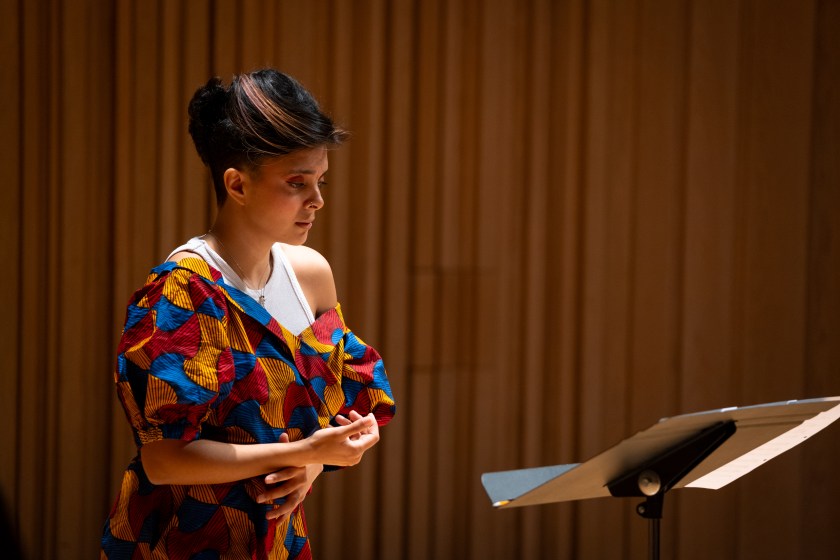
Who or what inspired you to pursue a career in music and who or what have been the most important influences on your musical life and career?
Music was always part of my life. It is part of my culture and we express so much of our day to day through music. But not classical music per se.
I never imagined I would become an opera singer or that my life would be dedicated to performing and sharing music I do nowadays. I did four years of industrial engineering and music/singing came as the most beautiful unexpected set of events during that time.
I didn’t grow up listening to Mozart, and Schubert was an unknown name to me until my early 20s. The music I was used to hearing was filled with drums and rhythms that inevitably make your body reply with movement. This two extremes are the biggest influences in my career. I see music as a universal language with many different branches of expression.
Pursuing art as a career truly came from a deep desire to follow my instinct. I didn’t know how to make a living from it and everyone told me it was a big mistake but I knew that I could not stop thinking about making art. So I jumped into what, at the time, felt like an abyss and hoped that my resilience and creativity would find a way to see the path that no one else could see.
What have been the greatest challenges of your career so far?
This is a tough question as it is subjective. Personally, I find it hard and really exhausting having to move around and having to adapt to a new environment for varying lengths of time much like an itinerant traveller, according to the demands of individual engagements. And if you add all the visas/paperwork involved in travelling, you get a recipe for high stress. But….that is not the greatest challenge…
The most difficult part has being far from people you love deeply while at the same time you are in “survival mode”. The first step of my international career started when I left my home in Colombia with no money in my pocket and with very little knowledge of English. So the first few years were a true emotional and mental challenge in terms of fulfilling my dreams as a professional musician.
Which performances/recordings are you most proud of?
It sounds a bit of a cliché but I am really proud of the CD we are just launching. It truly is a compilation of works that I adore and that speak directly to my soul. My pianist João and I poured a lot of love into making this a reality.
I also admit that every time that I get to sing and perform in my country, it has a special magic for me.
Which particular works/composers do you think you perform best?
I think that question will have three answers: 1. Puccini is the twin of my soul. I think this is repertoire that suits my voice beautifully in terms of performing. 2. Mozart operas – specially the Da Ponte trilogy- (The Marriage of Figaro, Don Giovanni and Così fan tutte).Singing in any of these feels like a balm for the voice while also having the most fun on stage. 3. Boleros. Just all boleros…..composers of this genre just knew how to express what my soul feels.
How do you make your repertoire choices from season to season?
It really varies. I usually plan on what I would like to do and study as my voice is changing. But sometimes those plans don’t match the work you get offered.
The reality post-Covid is that not many artists get the privilege to plan their seasons long-term according to their vocal strengths or desires.
I try to listen to my gut instinct and my instrument and understand what could be enough beyond my comfort zone so as to be a challenge but not so far beyond that I become overwhelmed. I also try to always find repertoire that enriches my artistic view and development
Do you have a favourite concert venue to perform in and why?
Not really. In my mind, any place can become a stage and your audience and you make that place special.
I have performed in some gorgeous places with brilliant acoustics throughout the years but I think that the audience is more important than the place itself.
For example, I love performing for people that hear classical singing for the first time because their expression tends to be so spontaneous and honest that their immediate reactions and feedback always come as a delightful surprise.
What do you do off stage that provides inspiration on stage?
I believe that an artist needs to live to be able to communicate on stage. So I try to soak life in many different ways….I try new hobbies constantly and go to random events all the time. From talks on wellness and beauty to Pilates or boxing. I love to read, to meet new people and experience different cultures. Everyday life is a massive source of inspiration.
What is your most memorable concert experience?
I will never forget performing as a soloist at The Royal Albert Hall. The place is gigantic of course, but it was realising that I had travelled so far away from home and that after many years my career enabled me to sing the music that I love so much and that thousands of people were listening.
It was a day when I became aware very clearly that my voice was worth being listened to. A day that still today reminds me that I have strength and courage.
As a musician, what is your definition of success?
Tough question!! I think the definition of success changes as we change as humans too. If you asked me this 5 years ago, my answer would be different and I hope that in 10 years, I will also choose new words to answer.
Right now, Success for me lies in safety. I feel successful as a musician if I get to make art in a safe mental and physical space. Being able to express, create, experiment without the pressures of an end goal.
What do you feel needs to be done to grow classical music’s audiences?
We need more honesty. We need to make classical music more human and take it to unexpected stages. Remind audiences that the people making classical music, are just like them. Normal human being that have decided to pursue art. Not some sort of robot that you can’t talk to and that never makes a mistake.
I think we also need to encourage young people to make music themselves and widen the programming of the music they listen to. Classical music is not just German or Italian in origin. Quite a few people don’t relate to it and feel that is why it is not for them. But if they had the chance to learn more about the wide variety of composers and classical music, I am sure they would find something that interests and excites them.
What’s the one thing in the music industry we’re not talking about which you think we should be?
I would say mental health. Every day I see more changes in this and the conversation around it is growing. But I think sometimes people romanticise the job and are not aware of the immense pressure that comes with pursuing this career and what it entails.
I think the industry sometimes doesn’t understand the immense physical, spiritual and mental strain involved in being an artist. And because of this we lose many artists who could otherwise be making wonderful special things in their careers. I wish there were a way in which the industry could be reminded that those making art are humans beings.
What advice would you give to young or aspiring musicians?
BE YOU! We all have a guiding compass inside that sends signals of distress when something is not right but we also have that same thing for moments that glitter. Find that and listen to it. Follow what makes you happy and believe in it strongly. Even if no one else has done it before.
Also….don’t be afraid to follow different paths. Your art lives in you all the time. Even when you are not in performing mode. You are allowed to reinvent yourself, to find different forms of income, to learn new abilities and STILL be an artist.
What is your present state of mind?
This year I had a big accident on stage that has stopped me from doing many things I wanted and for the first time it brought the fear of not being able to sing/perform again. I have had time to reflect on things that have happened to me through my life and question many things around the business. It has also taught me a lot about the industry and my position in it.
All of this has brought me to reflect more deeply on who I am and what I want to bring to this world. It has made very clear to me that singing is one of the ways I communicate but not the only one, and that my art is burning strongly inside of me. My mind, at the moment, has stopped running on other people’s clocks and has given me peace and an open path to create and express freely.
I am now more convinced than ever that choosing to become a musician was the right thing to do and that I have in my hands the power to grow the exact flowers and colours I want in my path.
Julieth Lozano Rolong’s album Alma with pianist João Araújo: Ibero-American Songs is out on 18 July 2025 on the SOMM label. Find out more
Discover more from MEET THE ARTIST
Subscribe to get the latest posts sent to your email.
 MEET THE ARTIST