Who or what inspired you to pursue a career in music?
Music has been woven into my life for as long as I can remember. I grew up surrounded by it — my mother and grand-father sang, my aunt played the violin, and my uncle was a kind of musical magician who could pick up and play multiple instruments. My grandfather, who deeply valued the cultural tradition of our family, encouraged them to bring me into this world early on. I must have been around five years old when they gave me my first instrument — a tambourine. I still remember the feeling of playing rhythm alongside my uncle at traditional Ukrainian weddings and musical evenings. That’s how I began at the age of 5.
My uncle was my first musical hero. Watching him move from one instrument to another made me dream of becoming a multi-instrumentalist too — someone who could speak through many voices. From the tambourine I moved on to the buben, a Ukrainian folk drum, and then to the piano, where I learned traditional Ukrainian melodies by ear before I even understood music theory.
Who or what have been the most significant influences on your musical life and career?
Ukraine is an incredibly rich and diverse cultural land — there is no single dominant musical style, but rather a living mosaic that evolves constantly. I was born in the western part of Ukraine, near the Carpathian Mountains — home to the Hutsuls, a mountain-dwelling community known for their trembitas, their epic polyphonic singing, and their musical intuition. Being surrounded by this deep folk spirit and the power of nature shaped me profoundly — and helped me grow with every step, from music school to college. There are several Ukrainian composers who have deeply inspired me: Myroslav Skoryk, Valentin Silvestrov, Volodymyr Zubytskyi, and also Eduard Kravchuk, a brilliant neoclassical piano composer. Their work helped shape my own inner musical voice — blending old and new, structure and soul, Ukrainian and modern. When the full-scale war began in 2022, I remember how suddenly the world turned its ears toward Ukrainian music. That moment felt like a call — everybody felt it was role to protect, preserve, and share what is ours. Ukrainian music carries a cultural code — one that some forces may try to erase, but that we, as artists, must defend it.
What have been the greatest challenges of your career so far?
One of the first big challenges I remember was my very first public performance. I was 11 years old and had only been playing music for three months. I was extremely shy, but I played calmly and without mistakes. However, it was very quiet. After the performance, my teacher told me, “You need more sound, more energy.” That moment became a turning point: I realized I had to push myself further, develop my sound, and work much harder on my craft.
Another important challenge came three years later, at my very first competition. I was 13 and had high hopes of at least receiving a diploma. But when the results were announced, I was the only participant who didn’t receive any award or even feedback. For a young musician, it was painful and confusing — I didn’t understand why or how it happened. But that experience pushed me to work twice as hard.
Those early challenges eventually led me to my dream — in 2022, I represented my country at the World Trophy of Accordions. It wasn’t always easy balancing between accordion and piano, but thanks to the unwavering support of my parents and family, I kept moving forward.
Of which performances are you most proud?
Honestly, I try to give my all in every performance. Each one is a chance to open my heart to the audience. But there are a few that truly shaped me as a musician. My very first performance at 11 years old was unforgettable — it was the moment I discovered what it means to share music with people. Another milestone was my first big competition victory at 17, which completely changed my mentality and showed me the power of perseverance.
I also have a special memory of recording for the Manhattan Music Competition in the USA. I performed works by Gorka Hermosa, Pietro Roffi, and Domenico Scarlatti. Those pieces felt completely in tune with me: Hermosa’s music carried the fire of Spain, Roff’s piece reflected the calm power of water, and Scarlatti’s work tied everything together like a delicate thread. The video turned out beautifully, and I’m deeply grateful to Oleg Mykytyuk and Eugenia Cherkazova, who supported me and helped bring that performance to life.
What do you do offstage that provides inspiration on stage? Since childhood, I’ve been surrounded by art. I used to love drawing, and that creative atmosphere shaped who I am today. Many of my friends eventually left the arts because it can be such a difficult path, but I’m grateful I stayed — it made me stronger and more passionate about music. My biggest source of inspiration is my faith. God is an integral part of my life and my greatest support, guiding me where I need to go. My family is another pillar — their love and belief in me constantly inspire me, and one of my dreams is to make their lives feel like a fairy tale through my music. Outside of music, I’m a huge football fan. Playing or even just watching the game fills me with both emotion and energy. Sports in general keep my mind sharp and my body alive — both are essential for creating powerful music. I also find inspiration in books, especially those about gentleman’s style and the stories of successful entrepreneurs and musicians. Learning from the top 5% of people who’ve reached great heights motivates me to keep pushing my own boundaries every day.
As a musician, what is your definition of success?
First and foremost, success is the ability to be free in self-expression and creation. It’s about being independent by doing what you love, because the resources are energy. They allow you to keep the spark and fire you bring to music, to art, or to any field. For me, real success means feeling supported — by your loved ones, and yes, even by financial stability, because music is also a form of business that needs a foundation to grow. Ultimately, it’s a combination of core elements that create true harmony.
What advice would you give to young or aspiring musicians?
Follow your dreams — but understand that the dream alone is not enough. People often speak about passion and motivation, but they rarely talk about the path you need to walk. That path is built on discipline, consistency, and dedication. Motivation comes and goes, but discipline and determination stay with you. There will be moments when you feel stuck, when failures seem endless, and the finish line is nowhere in sight. I’ve been through it myself — and sometimes I still do — but I’ve learned to see those moments as my growth zone. Every challenge is either a gift or a lesson, and both move you forward.
What’s the one thing we’re not talking about in the music industry which you really feel we should be?
That’s a difficult question, but for me it comes down to the psychological and the health aspects of being a musician. Speaking about Ukraine in 2022, at the beginning of the war, I saw so many artists in deep emotional and mental struggles. In times like that, creativity becomes a lifeline — it’s what helps you transform pain into music, paintings, or any form of art. In the music industry, we talk about business, charts, and success. But we rarely talk about what’s behind it: sleepless nights, dozens of rejections from producers and labels, burnout, the heavy emotional weight that comes with giving everything you have to your art. During my studies, I conducted research on the health of instrumental musicians and came to an important conclusion: we live in a constant triangle of soul, body, and mind. If one side dominates and the others are neglected, the whole system begins to break down. Music requires enormous intellectual, emotional, and physical resources — and to create something that truly touches people, a musician needs harmony in all three segments.
What next? Where would you like to be in 10 years time?
Like every Ukrainian, I long for the day when this war ends — when our country can heal, and our culture can grow, recover, and evolve. But life continues now, in the present, and so does our responsibility to create meaning. If I could name the impact I hope to make, it would be rooted in gratitude. Gratitude for the opportunity to share Ukrainian culture — not in isolation, but in dialogue with British history and community. The UK is such a unique place, with its own deep heritage, mindset, traditions, and character. I want to be part of that great, unique British scene — among musicians, composers, actors, entrepreneurs, and creators who dare to follow their dreams. And in that space, I want to bring Ukrainian culture into conversation with UK culture, letting them enrich and empower each other. For me, music is about connection. If one day I have the chance to unite people in a large stadium — to feel that colossal energy, that shared heartbeat of tens of thousands of people — that will be the moment when you truly feel life: free, independent, and alive.
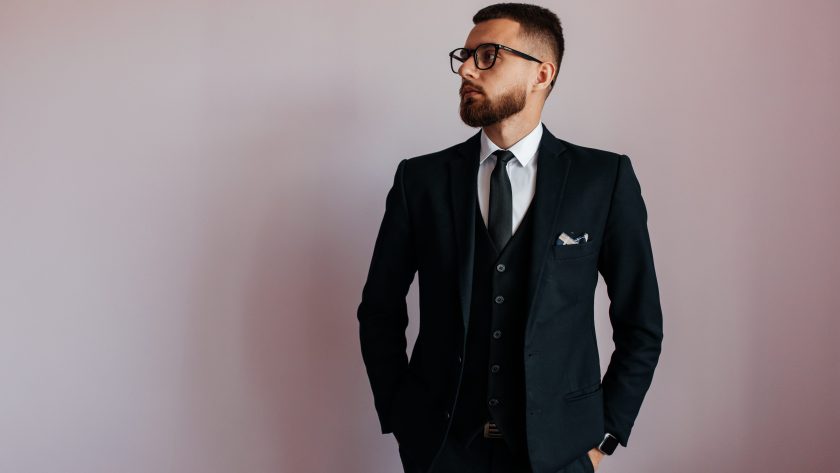
Artur Dotsiak (stage name Arthur Kingford) is a Ukrainian musician, composer, educator, and music coach based in the UK.
Discover more from MEET THE ARTIST
Subscribe to get the latest posts sent to your email.
 MEET THE ARTIST