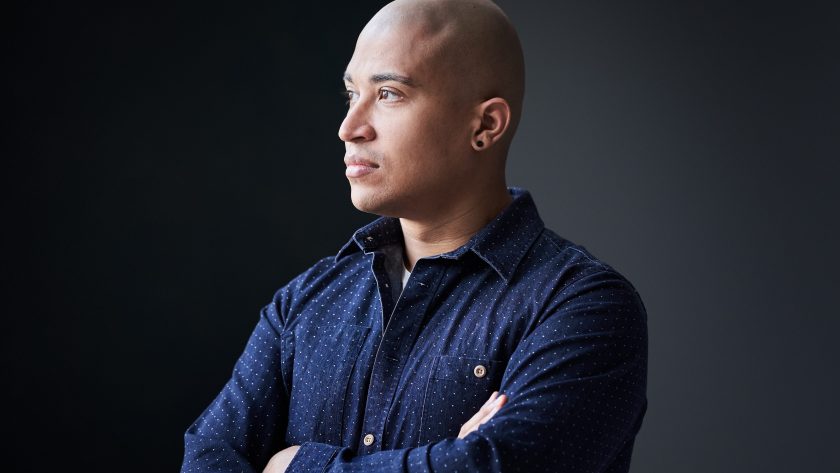
Who or what are the most significant influences on your musical life and career as a composer?
I have been lucky enough to have some wonderful pedagogues along the way. These people have widened my horizons and also helped me hone my skills. Having a supportive family who have encouraged me to explore my creative side has also been vital.
What have been the greatest challenges of your career so far?
The industry can sometimes be archaic. Learning to deal with these challenges and giving yourself space to process things that test you is an art in itself.
What are the special challenges/pleasures of working on a commissioned piece?
The journey ahead is always exciting. Distilling your possibilities to create the final piece and painstakingly building the work note-by-note are both rewarding and demanding.
What are the special challenges/pleasures of working with particular musicians, singers, ensembles or orchestras?
Most collaborators want to really delve deep into your world, as a composer, and do their utmost to understand and interpret your music. These musicians are the ones I like to work with the most and it’s always a joy to work with new people who you click with.
Of which works are you most proud?
It’s hard to pinpoint one particular piece that I am most proud of. I like different pieces for different reasons – whether it is the energy of a piece, the orchestration, a particular phrase within the work, or a fond memory about the creative process.
How would you characterise your compositional language?
I have always been drawn to music that has drive and energy. Having said that, in the last few years I have also enjoyed writing pieces that are perhaps a bit more contemplative. Ultimately, whether writing fast or slow there has to be invention and a certain je ne sais quoi that grabs my attention.
How do you work?
Everywhere and anywhere. I am not a composer that has a prescribed methodology. Once I have a musical idea that I am happy with I let it take me on a journey and as I spend more time with the piece things become clearer as to where the piece should go.
As a musician, what is your definition of success?
Keep on keeping on and be happy along the way. The journey isn’t always easy but it should bring you happiness.
What advice would you give to young/ aspiring composers?
Don’t let negative or no responses knock you. Sometimes things feel like a bit of a lottery – but if you don’t buy a raffle ticket, you’ll never win.
What do you feel needs to be done to grow classical music’s audiences?
Appreciation for arts and culture should be encouraged and cultivated from an early age. Not only to the benefit of the young people engaged in learning but also to society as a whole. Alas, successive UK policies have meant that the arts and music education have been neglected in the UK.
What’s the one thing in the music industry we’re not talking about but you think we should be?
The rise of artificial intelligence and the automation of music creation seems daunting. I think as time goes on, we’ll be having many more conversations about this topic.
What is your idea of perfect happiness?
On a beach, with my family, about to enjoy a wonderful meal and having just finished a new piece.
This interview first appeared in the 2025 Aldeburgh Festival brochure
Photo: Kaupo Kikkas
Discover more from MEET THE ARTIST
Subscribe to get the latest posts sent to your email.
 MEET THE ARTIST