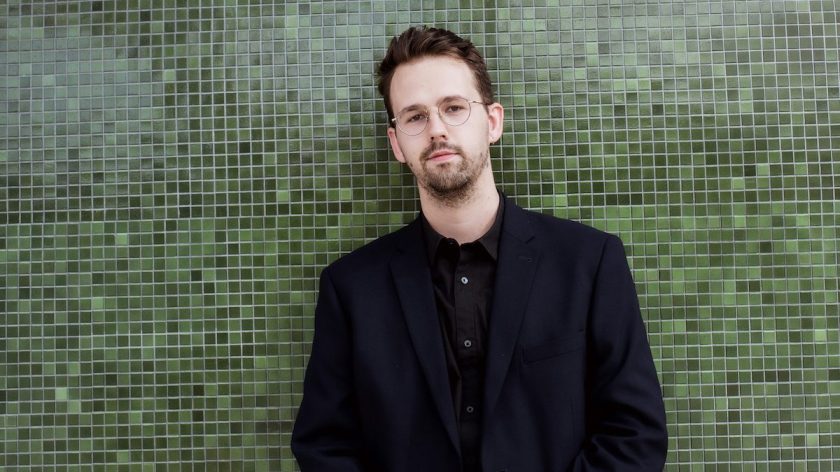
Who or what inspired you to pursue a career in music and who or what have been the most important influences on your musical life and career?
Music has always been part of my life, even though I did not grow up in a family of professional musicians. From a very young age, I felt a deep and almost instinctive need to devote myself to music, long before I understood what that choice would really imply. Some of my earliest and most vivid musical memories are connected to my mother. She is a pharmacist by profession and an amateur classical guitarist, and despite long working days, I often heard her practising late at night. Those moments left a lasting impression on me. Music quickly became a place of refuge, a private space where I could express things that words could not always convey.
As I began to discover the piano more seriously, recordings played a crucial role in shaping my musical imagination. I was particularly struck by the playing of Krystian Zimerman, Martha Argerich, and Evgeny Kissin. Their artistry opened up entire worlds of sound and expression and deeply influenced my will to become a professional musician.
As my path became clearer, my teachers naturally became some of the most important influences in my life. I was fortunate to study with inspiring musicians such as François Dumont and Edna Stern, whose guidance shaped not only my pianistic development but also my artistic values, my curiosity, and my relationship with music as a living, constantly evolving art form.
What have been the greatest challenges of your career so far?
A musical career is inherently full of challenges. It requires a great deal of discipline, hard work, and self-denial. Of course, there are specific works, projects, and concerts that represent challenges in themselves, each demanding a high level of commitment and preparation.
Beyond these artistic demands, my greatest challenge has been finding a sense of balance. Navigating between personal life and musical life is not always easy, and the nature of this profession – sometimes exhilarating, sometimes marked by uncertainty – can be emotionally difficult to live with.
Over time, I have been learning to discern what truly matters to me, both as an artist and as a young man. It is a constant process of returning to myself, of reassessing my priorities, and of maintaining a sense of inner alignment in a career that is by nature unstable.
Which performances/recordings are you most proud of?
My first album, released in September 2024, remains one of the projects I am most proud of to date. It was a deeply personal undertaking, beginning with the choice of programme. I decided to record works by Claude Debussy and Cécile Chaminade, two French composers from the same period whose musical aesthetics are strikingly different.
I discovered Cécile Chaminade’s music and life relatively late, and I was genuinely struck by the realisation of what an exceptional pianist and composer she was. Pairing her music with Debussy’s felt important to me, as a way of highlighting the richness and diversity of French musical life at that time, while also drawing attention to the work of a French woman composer who has been unjustly overlooked.
This project was also a profound learning experience. I was closely involved in every artistic decision, from choosing the label and the recording engineer to selecting the recording venue and shaping the visual identity of the album. For the first time, I felt able to fully express my artistic vision from beginning to end, and to bring together a team of people who trusted both me and the project, and who chose to follow me in this shared artistic journey.
Which particular works/composers do you think you perform best?
I have always felt a strong affinity with French music, particularly the works of Claude Debussy and Maurice Ravel. As a French musician myself, this repertoire speaks to me instinctively, and I feel a deep and natural understanding of its language.
The search for colour, timbre, layers of sound, and harmonic listening is an integral part of my approach to the instrument, both physical and intellectual. These elements come very naturally to me and represent real strengths in this repertoire, where nuance, imagination, and sensitivity to sound are essential.
How do you make your repertoire choices from season to season?
As pianists, we are fortunate to have access to an immense repertoire – far more than a single lifetime could ever fully explore. Making choices is therefore always both difficult and essential.
Depending on the projects, my repertoire choices can be guided by very specific requirements, while in other situations I have complete artistic freedom. In general, I try to find a balance between the repertoire I am asked to perform, the more “functional” repertoire required for competitions or auditions (which can sometimes be quite restrictive) and the music that genuinely resonates with me.
I am particularly committed to developing my French repertoire, which feels like my musical home, while also seeking to broaden it by engaging with other aesthetics and composers. I am also drawn to programmes that bring together different periods and styles around a shared theme, emotion, or artistic question. This approach, which allows for dialogue across eras, is at the heart of my next recording project.
Do you have a favourite concert venue to perform in and why?
During my studies at the Royal College of Music, I had the opportunity to perform countless times in small churches across the country. Beyond the invaluable stage experience this gave me, these concerts allowed me to share music in a very direct and intimate way with audiences.
Often, people came simply out of a genuine love for music and the desire to spend a meaningful moment together. At a time when I had slightly lost my bearings, these experiences helped me reconnect with the deeper reasons why I wanted to pursue this profession in the first place.
Today, I cherish those memories deeply. For me, every venue and every concert represents a new space to explore and a new opportunity to connect with an audience, regardless of the size or prestige of the place.
What do you do off stage that provides inspiration on stage?
For me, feeling mentally and physically balanced is essential in order to feel free and inspired on stage. To cultivate that balance, I make space for regular physical activity, I am attentive to getting enough rest, and I place great importance on spending time with friends – talking, laughing, sharing, and enjoying everything that life in London has to offer.
I see music as the expression of deeply human and universal emotions, and it is through connection with others that I nurture my inspiration. Living fully, staying curious, and remaining open to the world around me are as important to my artistic life as the hours spent at the instrument.
I am also an enthusiastic listener and music lover in the broadest sense. Regardless of style, I am deeply interested in following the paths, artistic choices, and commitments of other artists of my generation, which continually feeds and renews my own musical thinking.
What is your most memorable concert experience?
Many concerts remain vivid in my memory, but one experience stands out in particular: my first performance of the Second Piano Concerto by Sergei Rachmaninoff with the Dorking Philharmonia, conducted by Paul Newbold.
As a child, I was obsessed with this concerto for years. It was one of the works that first drew me deeply into the piano and into classical music more broadly. I could never have imagined that one day I would have the chance to perform it myself on stage.
That concert was filled with a profound sense of pride. It made me realise how far I had come and how much work and dedication had led me to that moment. I remember thinking that my younger self – the one who first discovered this piece – would have been very proud.
How does collaborating with living composers and performing new music shape your artistic voice and the dialogue between tradition and innovation?
I always find it deeply exciting to learn and perform music by living composers, especially when I have the opportunity to meet them and work alongside them. Each time, I am struck by the discovery of new sounds, new colours, new ways of playing, and new ways of thinking about music itself.
This process is extremely enriching because it opens up fresh perspectives and greatly expands the imagination. Very often, there are no recordings or established performance traditions to rely on, which creates a genuine space for sonic exploration. I experience this as a form of play ; a shared search for sound, meaning, and expression.
Collaborating with living composers places us at the very heart of the creative process. We can exchange ideas directly, ask questions, and engage in dialogue ; something that is no longer possible with the traditional repertoire. This music feels intrinsically connected to the present moment and to live performance. Perhaps even more than in a traditional recital, it invites audiences into a unique sonic experience, and that sense of novelty often generates a great deal of excitement and curiosity.
The feelings of exploration, immediacy, and presence that I naturally experience through contemporary music are something I try to bring into all the repertoire I perform. Regardless of the period or style, my approach remains the same: the essential question is always what message the music is seeking to convey.
As a musician, what is your definition of success?
For a long time, I believed that success was measured by the number of concerts one gives or by prizes won in competitions. Today, my perspective has completely changed.
For me, success means being able to make a living through music while remaining free to choose my projects, my concert programmes, and the people I work with. It is about building a career that allows for independence and genuine artistic choice.
Freedom, in that sense, is inseparable from integrity. It means staying true to oneself, remaining aligned with one’s values, and being able to express oneself fully and honestly, without compromise.
What do you feel needs to be done to grow classical music’s audiences?
Reaching and engaging a broader audience for classical music is a genuine challenge. On the side of concert halls and institutions, many important initiatives are already in place, such as affordable ticket schemes, concerts for young audiences, and mediation or outreach projects that help contextualise the music.
I am deeply convinced that classical music has the potential to speak to everyone, as it expresses emotions and tells stories that are fundamentally universal. In that sense, it is not an exclusive art form by nature.
As artists, I believe it is essential that we take these questions into account in the way we conceive our artistic projects and in how we communicate about them. The instability of a musical career can sometimes push us towards safe choices, but I am convinced that bold, innovative, and imaginative projects may well be one of the keys to engaging and attracting new audiences.
What’s the one thing in the music industry we’re not talking about which you think we should be?
We often grow up with the illusion that being a musician simply means playing an instrument, and that making a living from music is limited to giving concerts. In reality, it is far more complex. Living exclusively from performances is extremely difficult and uncertain ; even if it remains possible for a small number of artists.
Today, the vast majority of musicians need to diversify their activities in order to build a sustainable career, whether through teaching, entrepreneurship, work in arts administration, or other professional paths connected to music. I believe it is essential to make these diverse trajectories more visible and to value them, rather than focusing solely on the few careers that rely entirely on concert performance.
Alongside my work as a concert pianist, I am also a private piano teacher, and I co-founded and run Ozyss, a website creation service designed by musicians, for musicians. Through this project, we support young artists in developing their online presence and shaping their professional image in a more global and autonomous way.
What advice would you give to young or aspiring musicians?
I would encourage them to work with rigour and seriousness, and to do so consistently ; finding a routine that allows them to grow over time. Discipline and regularity are essential foundations.
I also believe it is vital to remain surrounded by others: teachers, family, and friends. Having a strong support system makes an enormous difference, both artistically and personally.
Above all, I would say: stay curious. Curious to discover, curious to learn, and curious about what life has to offer beyond the instrument. Curiosity is what keeps the mind open and nourishes the soul.
Louis-Victor Bak performs in London on 14 March for Mosaic Season’s Music of Our Time: A celebration of contemporary piano works at Bechstein Hall. Together with pianists Edna Stern and Evelyne Berezovsky, Louis-Victor Bak will perform a range of works by living composers, allowing audiences to hear a selection of different works by different musicians. Curated by composer Tatiana Svetlova, Founder & Artistic Director of Mosaic Seasons, the concert showcases the breadth of piano music being composed in the 21st century.
Find out more: https://bechsteinhall.com/events/music-of-our-time/
Website : https://louisvictorbak.com/
Discover more from MEET THE ARTIST
Subscribe to get the latest posts sent to your email.
 MEET THE ARTIST