Who or what inspired you to pursue a career in music, and who or what have been the most important influences on your musical life and career??
My parents were both musicians and so I always saw music as a very viable and normal way of earning a living. Music as a career was normalised in our household to a degree that it became a realistic option for me. Despite having other passions at school, such as literature, history and languages, Music was the thing I took to so naturally that it became the obvious choice. The most important influences on my musical life and career are probably my teachers. I was originally a violinist and fortunate enough to have a stream of excellent teachers, starting at the Junior Guildhall with Faith Whitely – a superb technician and formidable lady whom I adored. I was hugely influenced by the institutions I passed through, including Guildhall, NYO and Cambridge. The people I met have become friends and colleagues that I still work with regularly and I learnt through those experiences how to rehearse, how to prepare and how much respect I could hold for all my friends and their innumerable talents. My more recent influence comes from my current teacher, Susan Roberts, who is the most incredible technician and has taught me that, through technique comes freedom of expression. I most probably owe my career to her knowledge and guidance over the last 13 years or so.
What have been the greatest chalenges of your career so far?
I have worked through Brexit, Covid and major government funding cuts to the Creative Arts. However, the greatest challenge I have encountered in my career would have to be becoming a parent whilst trying to maintain a burgeoning career. I had my two (beautiful) boys right at the start of my professional career. The juxtaposition of early parenthood and devaluation of the industry proved an almost insurmountable obstacle. It was during this time that I recognised how much I love music and working with other artists to create beautiful things. Such realisations, paired with the economy of time I learnt to use with two tiny children, made me determined and surprisingly efficient in my preparation. I believe the challenges I faced – and continue to face – make me a better human and artist.
Which performances/recordings are you most proud of?
There are so many performances I have loved and found exhilarating in the moment (many of them ‘firsts’) – my first Contessa, first Verdi Requiem, even my first Elgar Violin Concerto (a very long time ago, in a different life!). However I can honestly say I am most proud of a recording of Brahms Abendlied, Op 92, I made together with lovely friends, on the 10 year anniversary of my Dad’s death. This recording raised thousands of pounds for the National Hospital of Neurology and Neurosurgery and HelpMusiciansUK. Made during the pandemic, in isolation, it was a strange but extremely gratifying and unifying moment, which made me very proud.
Which particular works/composers do you think you perform best?
I am fortunate enough to have sung a rather wide range of repertoire and really couldn’t say what I ‘sing best’. However I am fairly certain I do my ‘best singing’ when singing Mozart and Strauss. The legato and purity of vowel required to make the music of these composers speak best in emotional terms, is such that I have to be as technically sure as possible when performing them.
What do you do off stage that provides inspiration on stage?
I always endeavour to prepare well off-stage so that I can be as creative as possible on-stage. If I can leave the mechanics at the door, I can garner freedom of expression in performance so much more easily. It’s all about serving the music to the best of my ability.
Do you have a favourite concert venue to perform in and why?
I have a few favourite concert venues: I love singing at York Minster. It’s such a beautiful, open and light space that just allows the sound to bloom, creating a generosity of performance that befits the splendid surroundings. In contrast, performing at the Wigmore Hall feels like singing to friends in my sitting room (no, I don’t have a 500+ capacity sitting room…). The intimacy and warmth that hall endows is conducive to the most moving and tangible performances. There is a special place in my heart for Gregynog Hall in mid-Wales, where my grandparents held positions on the board of the festival that my Dad ran for 15 years and my brilliant husband and I had our wedding reception. The hall is situated in one of the most beautiful buildings and grounds I know and always holds such a joyous atmosphere.
What is your most memorable concert experience?
There have been so many memorable performances for many different reasons, from overcoming difficult repertoire, to coming together with wonderful colleagues, to being faced with unexpected and often hilarious situations. For example, a few years ago, I was doing a Creation in a church outside London and, just before I started to sing my second aria “On mighty pens” (which has some lovely onomatopoeic interjections, impersonating doves), a somewhat inebriated chap entered. As soon as I started said bit, he started doing the “Dove from above” actions from the incomparable ‘90s panel show, Shooting Stars (with Vic Reeves and Bob Mortimer) and blowing extravagant kisses my way. I have always been a class corpser, so this was not just memorable but extremely challenging for me! He was eventually asked to leave, which I felt was a great shame.
What do you feel needs to be done to grow classical music’s audiences?
Education is key to growing audiences. I have always taught in schools and universities and have found of late, that Music is increasingly being put on the backseat by Senior Leadership teams in both state and private education. When I was at school, all children were taught to read music and state school peripatetic provision was free and extensive. This is no longer the case. Classical music has gone from being normalised in all households to dangerously obsolete across the board. It is a fallacy to believe that Music is not academic enough a subject to affect other parts of a young person’s education. Music allows for creativity of thought and expression, analytical proficiency, acquaintance with languages and other Art forms, all within a lived context. After all, it is relatively recent in the existence of Classical Music that prime-time telly was dominated by household name, Dudley Moore, doing impressions of Peter Pears singing Britten songs and playing spoof Beethoven sonatas to a live audience. In order to grow audiences, Classical music must be normalised and made accessible in an educational setting, from an early age.
As a musician, what is your definition of success?
My definition of success is being in a position to develop further every time I perform. Ambition can often present a distraction from the realisation of artistic achievement. Success is when I am able to measure my ability against myself and perform to a high level consistently and in the face of adversity. Obviously, I also consider being able to contribute financially to the support of my family through my work, a true success.
What advice would you give to young or aspiring musicians?
1) Keep going! With the dawn of AI, live performing arts are destined to be one of the only lines of work still exclusively available to humans.
2) Keep the courage of your convictions and be specific in your musical intentions. If you can relate the music to your own experiences, the audience will read your meaning with greater ease and you will become a more immersed and engaging artist.
3) Be happy at home. Whether that means having a base that you love returning to, or people that ground you outside of the industry. On the whole, if you are happy in life, you can put all of your energy into your work, knowing you have a separate existence and value that always brings you back to yourself.
What’s the one thing in the music industry we’re not talking about which you think we should be?
I would argue we don’t talk enough about late development or late vocal change, specifically in women. Hormonal change has such an incredible impact on the voice and can effect women at so many points in life – pregnancy, peri- and post- menopause, the menopause itself, not to mention within the intricacies of the menstrual cycle. Often these changes result in increase of vocal warmth, size and range, amongst other things. Discussion around flexibility of understanding and expectations of the changing female voice needs to start happening in the industry, especially at casting level. The voice is a physiological instrument and, just as the body alters through life, no one voice remains the same throughout a career. Such debate would do much to address further issues within the industry, including ageism and sexism.
What is your most treasured possession?
It is not possible to own people (otherwise I would have said my husband and my little boys), so I would say my most treasured possession is my violin – a 1740 Klotz Mittenwald. My parents bought it for me when I was 14 and it has been my companion ever since. We are a perfect match and I have loved playing it ever since the day we ‘met’. Really I should say, the violin owns me – it is a beautiful thing, has never let me down and will still be around when I am long gone.
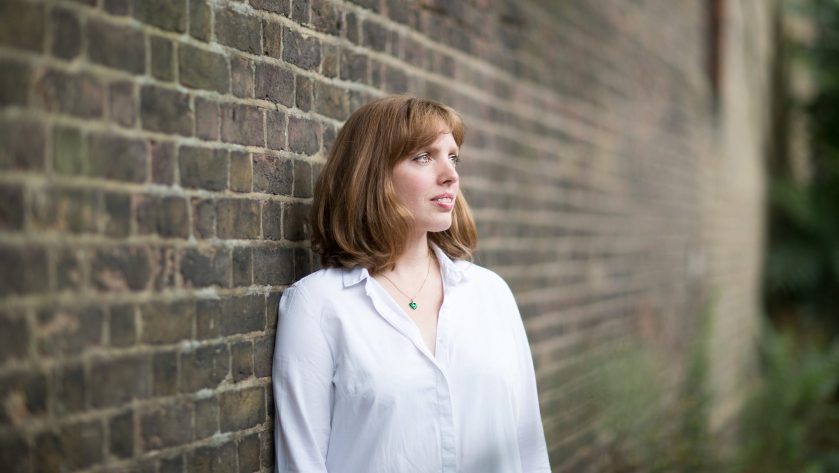
Elinor Rolfe Johnson performs at this year’s Leith Hill Music Festival on Friday 10th April at Dorking Halls. Find out more https://lhmf.org.uk/future-events
Artist photo by Ben Mckee
Discover more from MEET THE ARTIST
Subscribe to get the latest posts sent to your email.
 MEET THE ARTIST