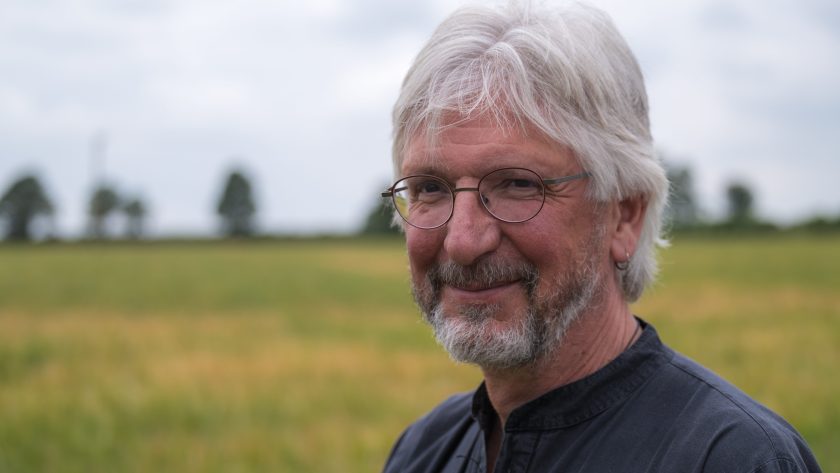
Who or what inspired you to take up composing, and pursue a career in music?
I was always working with or listening to music from as early as I can remember. My mother told me that I had insisted on listening to our recording of Mozart’s Don Giovanni over and over again when I was 2 years old. My early memory is of being allowed to pluck the inside of our upright piano – such a world of sound. I had piano lessons but my practice mainly consisted of improvising music that sounded like simple Beethoven but never actually reading the music or learning the pieces. So creating music was where I started. School was incomprehensible to me and I suspect I had dyslexia although it was to do with writing words rather than reading books, so the language I could use to talk to the world was music. After taking up the guitar and having classical lessons at 14, I went on to learn composition and ended up at an experimental music school in Hertfordshire. From there to The Royal College of Music where I studied guitar and composition. I had the good fortune to learn composing with John Lambert who was a master at bringing out original and authentic music in his pupils.
Who or what have been the most significant influences on your musical life and career as a composer?
Like many composers I was enthralled by the music of J S Bach, but later came to Stravinsky whose ‘Rite of Spring’ literally blew me away. I heard the music that gave me vivid images and for the first time I understood something about writing music for film and indeed imagined doing so. Other composers who had a big influence on me were Ravel, Vaughan Williams, Bartok and Shostakovich. Later on I was influenced by the minimalists: Terry Riley, Philip Glass and John Adams.
What have been the greatest challenges/frustrations of your career so far?
Getting ‘stuck on the fence’ when I was younger because I was too focused on getting famous rather than on the music itself. Once I stopped worrying so much about the fame thing, I was able to get on with the task of writing the music that I needed to write.
What are the special challenges and pleasures of working on film/tv scores?
Probably the first and greatest challenge is to understand what the film director wants. It’s about transferring his or her words into music – which is a different medium from the visual and word world that they are working in. When communication is made and starts to work, it’s a thrilling process to watch the music gradually come to work with the film – hugely satisfying. Sometimes a special creative friendship will develop such as with David Yates, with whom I worked on many films culminating with Harry Potter.
Of which works are you most proud?
That’s a difficult question to answer. The hardest music I had to write was for the Harry Potter films – Dumbledore’s Farewell took a huge amount of effort and time and as I look back now, it seems so simple! Anyway, I’m very proud to have been part of the Potter story, but there are many film scores that I still love and on a smaller scale there’s a beautiful piece I wrote to accompany Michael Gambon reading ‘The Song of the Wandering Aengus’ by W B Yeats. It’s on YouTube and it’s directed by the wonderful Thaddeus O’Sullivan and my wife Judith is playing the violin solo.
How would you characterise your compositional language/musical style?
Melodic and emotional and uncluttered. I would say that my style is English and so is often influenced by folk music, but also there’s a minimalist element to it. Perhaps ‘modern romantic’ would sum it up?
How do you work? What methods do you use and how do ideas come to you?
I go down to my shed (studio) and metaphorically throw paint at the wall. In other words, see what music comes out in the moment without fettering my creative impulse. I would look at the film sequence first and think about what the director said and then quickly produce a number of possible music cues to go with it. Each piece would either start with a melody or with a chord progression and then I would build it up from there. I would give up to six choices for the director to listen to and then work meticulously on the piece that had been chosen.
As a musician, what is your definition of success?
That the music wins hearts and minds and that it has a chance to be heard.
What advice would you give to young or aspiring composers?
Don’t get stuck – just compose whatever comes, even if you think it’s rubbish. Also, if you’re composing music for films, learn to compose in a number of styles. John Williams is a past master at this! Many young composers fall into the trap of writing too many notes and I always advise to keep things as uncluttered as possible.
What’s the one thing we are not talking about in the music industry which you really feel we should be?
To be honest, I have no idea what the music industry is talking about. Obviously A.I. is an abomination when it starts (pretending) to create music while simply imitating what others have done.
Tell us about your new album ‘Out of The Silent Sky’ with fellow guitarist, Gordon Giltrap and how it came about.
Gordon and I were giving a house concert at my home in Oxfordshire and just before we started playing, he turned to me and said “Why don’t we make an album? It could be a musical version of a photo album of our music-making together over the last eight years”. We had our existing repertoire and created some new pieces along the way. I found a studio to record in, Woodworm Studios, and Gordon found a record company to release it, with Rob Ayling of Gonzo Multimedia. It was a joy from beginning to end. Unfortunately its release was held up by my needing a heart operation, but here we are now and ready to go!
What next? Where would you like to be in 10 years time?
I retired from writing film music 10 years ago, and since then, have turned my creative activities to playing my guitar with many amazing musicians including Gordon and my wife. I have also been writing books as well as music. I now release my ‘Dawnings’ collections (poems and unedited musical improvisations) online every two weeks. I hope to continue to follow a creative path so that the joy of this is still with me in ten years’ time.
What is your most treasured possession?
I have two: my Fylde guitar which I got from Gordon. Its sound and playability is unique. Then there’s my Blüthner Grand Piano, which is over a hundred years old and on which I record my ‘Dawnings’ most mornings before breakfast.
‘Out of the Silent Sky’ with fellow guitarist Gordon Giltrap is out now on Gonzo Multimedia.
Discover more from MEET THE ARTIST
Subscribe to get the latest posts sent to your email.

