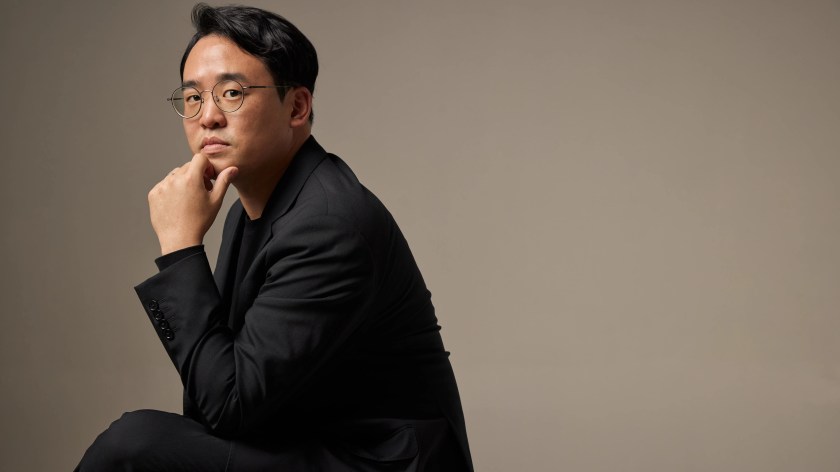
Who or what inspired you to pursue a career in music and who or what have been the most important influences on your musical life and career?
Like many musicians, the biggest influence on me was my parents. Especially because of my mother’s interest in classical music, I had many opportunities to listen to it. My dream started in a small music academy I happened to visit when I was six years old. I got a chance to play a very short piece at a concert held by the academy at the end of the year. I don’t remember if I played well, but I remember the moment when all the audience focused on me and applauded after my performance. That was when I dreamed of becoming a pianist. Since the age of six, my dream has never changed from being a pianist, and I think I have reached this position thanks to my family who supported and encouraged me in every situation.
The most memorable teacher for me was Matti Raekallio, who studied in New York. He was the teacher who had the biggest influence on my musical career. At a time when I was feeling my own limits, he gave me the courage to become a better pianist and tried passionately to teach me new things during lessons. I think without the help of Matti Raekallio, I wouldn’t have made such great progress in my musical career.
What have been the greatest challenges of your career so far?
The most challenging part for me was having poorer eyesight than others, which meant that it took me longer to read music scores compared to other friends, and I had to put in several times more effort. Especially for musicians, for whom reading scores quickly and learning new pieces is important, it was an incredibly difficult time. Before tablets were available, I remember constantly striving not to fall behind others in reading scores by copying the music into 1.5 times larger print, reading the notes I couldn’t see by standing at the piano, and quickly memorizing them. I particularly remember my mother, who went through a lot of trouble with me to find a bookstore that could make these larger scores. Although it took me several times longer than others, I am grateful for having overcome those tough processes and still being able to do so now.
Which performances/recordings are you most proud of?
My performance in the first round of the 2022 Edvard Grieg International Piano Competition is the most memorable. Although I didn’t achieve a good result in the competition, because at that time my daughter had only been born two months earlier, so I remember practicing only about two hours a day on an electric keyboard, not a grand piano, after the baby had fallen asleep at night. I had considered giving up on the competition, but being selected as one of the 26 out of 247 applicants, I decided to go and tried to focus on each round. Despite being very nervous due to insufficient practice and failing to manage my condition, the performance remains memorable to me because I could share music with a wonderful audience in such a beautiful hall, amidst a challenging environment.
Which particular works/composers do you think you perform best?
The piece I play with the most confidence is Brahms’ Variations on a Theme by Paganini Op. 35 Book II, included in my debut album. I believe every performer has a piece they can always play with excellent quality, and for me, this is the piece I can confidently play even if I wake up in the middle of the night, even after not playing it for months. It’s a piece I’ve performed numerous times and at international competitions, and it’s my favorite and the one I can play the best.
What do you do off stage that provides inspiration on stage?
I often watch videos of other performers. I draw inspiration particularly from watching performances of famous 20th-century musicians such as Emil Gilels, Stanislav Richter, Mikhail Pletnev, Leif Ove Andsnes, Maurizio Pollini, among others. Understanding and empathizing with their interpretations plays a very important role in preparing my performances and helps me develop my own unique style.
How do you make your repertoire choices from season to season?
First, I fill half of my program with pieces that I am good at and feel comfortable with, and for the other half, I try to choose new pieces, keeping in mind the overall balance of the program. Since musicians need to deliver their best performance on stage, I think it’s important to choose pieces that suit one’s style. Every season, I select a repertoire that allows me to develop further, but among them, I make sure to choose pieces that I am confident will not fail on stage.
Do you have a favourite concert venue to perform in and why?
The Troldhaugen Concert Hall in Norway was my favourite concert hall. It doesn’t have the seating capacity of over 1,000 like some huge halls, but with its 200-seat size, the acoustics are superb. Additionally, it’s beautiful because you can see Grieg’s birthplace on the left side and a river as well, making it the most beautiful hall I’ve experienced.
What do you feel needs to be done to grow classical music’s audiences?
Many people think that to appreciate classical music, one must have a deep understanding of it. However, I believe that if one can be moved and share emotions by listening to the music, even without fully understanding it, that is enough to qualify as an audience member. In the United States, it’s common to see concerts where performers explain the piece for about a minute before playing. This helps the audience enjoy the music comfortably, even without reading the program notes. While a performer’s main job is to accurately interpret the composer’s intentions, I think sharing a brief explanation before playing can make the music more accessible and familiar to the audience.
What is your most memorable concert experience?
In 2013, I had the opportunity to perform three times in the Netherlands, and my performance at Slot Hall, Schagen, stands out the most in my memory. During that time, I played Beethoven’s Piano Sonata No. 26 Op. 81a ‘Les Adieux’. What I remember most is the audience who breathed and empathized with me. At the end of the last chord of the third movement, I can’t forget the feeling of the audience exhaling the breath they had been holding, sympathizing with me as the performer.
As a musician, what is your definition of success?
If even one member of the audience can empathize with and understand the interpretation and performance of a piece as I intended, and if there are audience members who appreciate and understand my music, regardless of the size of the concert venue, I think that would be a success as a performer.
What advice would you give to young/aspiring musicians?
I think it’s significant to recognize your strengths and not just rely on your teacher’s advice, but to know yourself and move forward. There are no performers who do everything perfectly. Someone might be weak in interpreting certain composers, while others might always have shortcomings in technique or musically. Therefore, it’s most important to become a musician who knows what they’re good at and can make choices that highlight their strengths, regardless of the piece they choose. Of course, having a mindset to constantly fill in the gaps and learn is fundamentally necessary.
What is your present state of mind?
Be grateful for the current situation and continuously strive to become a better pianist in the future.
Brahms Resonances, Julian Jaeyoung Kim’s debut disc, is out now
Discover more from MEET THE ARTIST
Subscribe to get the latest posts sent to your email.
 MEET THE ARTIST