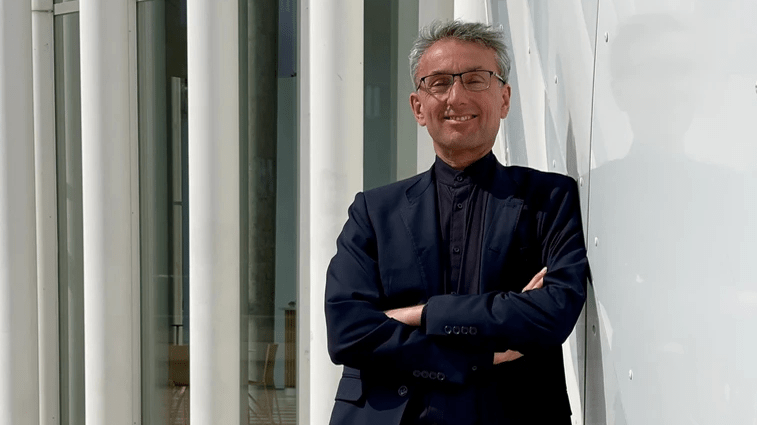
Who or what inspired you to pursue a career in music, and who/what have been the most significant influences on your musical career?
I had just started as a pupil at Oundle School and in the school concert that year was a complete performance of Mozart’s Piano Concerto in D minor K466, with three sixth formers playing a movement each. I remember being literally riveted to the spot and realised that there was no question that this what I had to do with my life. This piece goes totally beyond words and I still have this “tingling” sensation listening to it today….
I owe so much to my wonderful professor Hamish Milne at the RAM and you can read my tribute to him on my website. And of course, my three years studying at the Moscow Conservatoire in the late 1980’s – where music making felt as natural as breathing.
What have been the greatest challenges of your career so far?
Teaching has become a big part of my life and I absolutely love it. I think if I’m not exhausted at the end of a teaching day I probably haven’t taught properly. The problem these days is getting away from emails/onetime passcodes/Authenticator apps etc…etc…and finding precious time and space for myself to practice and think.
Of which performances/recordings are you most proud?
I always seem to play at my best in slightly odd and unexpected venues when none of my friends come. If they are reading this I apologise – it’s not intentional! I remember playing four Beethoven sonatas in a lovely hall in a small town in the Czech Republic and feeling that I was completely “flying” and that I couldn’t possibly have played better. Of course I realise I certainly could have done, but as I grow in knowledge and experience, I become less satisfied with what I do. (but don’t mind being dissatisfied as much as I used to!). I was performing Schubert’s Sonata in A D959 the other day, and as I was playing, I was thinking I was only achieving about 8% of what I should be doing…
In terms of recordings, like many colleagues, I rarely listen back (it’s so strange that we don’t, isn’t it?…) but I managed to sit through the Rachmaninov G minor Piano Trio (with the Barbican Piano Trio) without leaving the room, and I am very happy with our recording of Taneyev’s Piano Trio and Piano Quartet. They are magnificent pieces and deserve to be more frequently played.
Which particular works/composers do you think you perform best?
I feel especially close to Beethoven. One of my lifetime projects was to perform all Beethoven’s Sonatas by the age of forty. I am now nineteen years behind, with three more to go. (a very odd list – Op 2/1, 49/1 and 49/2). I could probably dash those off in the next few days but there’s obviously something in me that doesn’t want to finish the project! I think I have given some decent performances of Moussorgsky’s Pictures at an Exhibition, Schumann’s Carnaval and works by Debussy over the years.
To be totally contradictory, one of my happier projects has been the complete cycle of Beethoven Piano Trios!!
What do you do off stage that provides inspiration on stage?
On a concert day, I tend to practice a little in the morning, but dispassionately – almost as if it’s not me playing. Even after forty years of performing, I still don’t really know what to do with myself in the afternoon (unless I’m travelling to the venue) and before the concert I like to lie on the floor and if there’s a piano backstage I’ll play some contrary motion scales.
How do you make your repertoire choices from season to season?
I’m lucky enough to be able to choose what I like to do these days (and have even learned to say “no!”) so I aim to play one recital programme a year and really explore it in depth.
Do you have a favourite concert venue to perform in and why?
Wigmore Hall, Kings Place, St George’s, Bristol, also the Great Hall and (especially) the Small Hall of the Moscow Conservatoire, and I have special affection for the beautiful Ballroom at Stamford Arts Centre in Lincolnshire, where I gave my first professional recital in 1982.
What do you feel needs to be done to grow classical music’s audiences?
To regard “classical music” as completely normal and natural – to make concerts friendly and welcoming experiences, but without feeling the need to dumb them down in such a way that becomes ridiculous and ultimately patronising. Maybe it is our responsibility as musicians when we perform to try to create an atmosphere in a hall where the audience are totally rapt and feel they can barely breathe, and the last thing they would want to do would be to take out their phone and take a photo. There are still concerts that I go to (and have been lucky enough to play at) where this still happens. We must treasure this, and easily can, if this behaviour is regarded as the norm. The recent policy by a renowned UK orchestra which invites the audience to film and take pictures is a disgraceful disrespect to composers and performers alike.
What is your most memorable concert experience?
As a student in the USSR in 1989, I went a tour of Yakutia in Siberia. I insisted on going in winter, and the temperature was minus 38 degrees. I did a recital on an upright piano in a reindeer skin factory and a performance with a violinist in a hostel for mechanics who made car spare parts. We were playing the Elgar violin sonata (possible first performance in Yakutsk?) and had to flee the concert when we were approached by a drunken, somewhat aggressive man who didn’t like the Elgar and wanted us to play some Russian pop songs. A few days later, I turned up to a hall in a small town, but was told the hall was booked all day and I couldn’t rehearse at all. Not great, I thought, but at least it wasn’t my Carnegie Hall debut I walked on stage in the evening to find there was no piano at all. So I spent an hour or so talking to the audience in Russian and we covered topics such as the British weather, the Royal Family and shopping.
In terms of being in the audience, I never missed performances by Shura Cherkassky. And I can clearly hear in my mind those concerts by Annie Fischer and Emil Gilels today. And a breathtaking recital of Chopin and Schumann by Eliso Virsaladze in the Alte Opera, Frankfurt. I eventually was able to study with her in Moscow.
As a musician, what is your definition of success?
It is slightly frustrating that as I get older my brain gets better but my fingers get a little worse, but I think success is to be able to feel completely at one with, and in love with the pieces one plays and (as many as possible of) the pieces one teaches.
What advice would you give to young/aspiring musicians?
Aim high. Practice hard (but not too hard – I practiced rather too much). Think even harder. Listen to yourself (make sure that you are hearing what you are doing, not what you think you would like to be doing). Listen to lots of old recordings. Read widely. Travel. Cook nicely. (After all, you are going to eat several times a day for the rest of your life). Explore nature and astronomy. Enjoy EVERYTHING.
What’s next? Where would you like to be in 10 years?
Maybe I really should get round to learning those last three Beethoven sonatas. I’d like to explore more works for violin and piano (do get in touch if interested!).
As I get older I seem to love music more and more. I want this to continue.
What is your idea of perfect happiness?
The joy of travel and exploration all over the world with my partner.
What is your most treasured possession?
My collection of farthings (which goes back to 1671).
What is your present state of mind?
Desperately concerned about so many aspects of the world, but there is no option but to be steadfastly positive.
Discover more from MEET THE ARTIST
Subscribe to get the latest posts sent to your email.
 MEET THE ARTIST