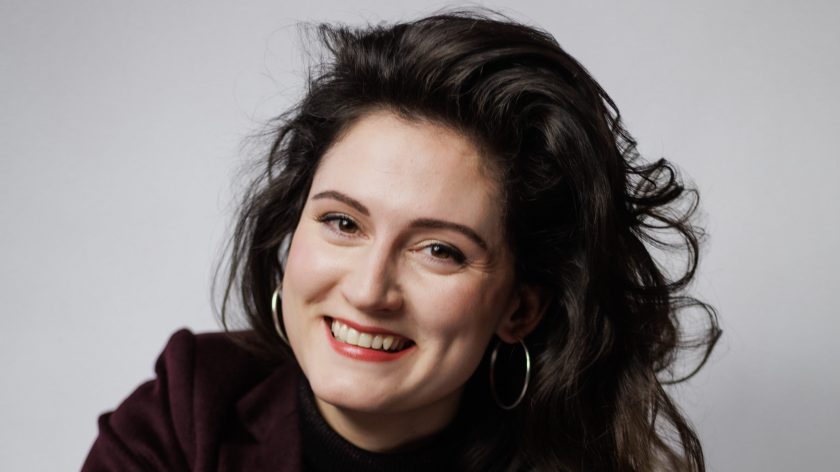
Who or what inspired you to pursue a career in music and who or what have been the most important influences on your musical life and career?
A big question to kick things off! There have been innumerable influences throughout my musical career so far, but my dad’s early encouragement is the most enduring. A secondary school teacher and the son of a paediatric nurse and a colliery electrician (“pit-spark”) from Chesterfield, Derbyshire, he made music the heart of our home. His vast CD library and rather eccentric listening schedule meant that my childhood had a built-in seasonal soundtrack: Bach cantatas on their corresponding feast days, Vaughan Williams in the spring, a Czech Lenten period (depending on when Easter falls), Latin American music for early summer, Stanford-Finzi-Parry in September, Bruckner Oktoberfest, Tchaikovsky and Mahler in November. Not to mention Led Zepellin, The Who and Pink Floyd. In retrospect, blasting Stravinsky at six in the morning didn’t exactly encourage an early appreciation for classical music, and may have led to a few arguments, but ultimately set me on the path to becoming a musician.
At age six, a violin was thrust into my hands, and I was dropped off at all the (free!) string ensembles, youth orchestras, Saturday schools, and soul/jazz bands that were available then to a child growing up in Manchester. At eight, an accompanist strongly encouraged me to audition for Manchester Cathedral Choir. I hadn’t made the cut for my primary school choir, so it came as quite a surprise that I was immediately accepted on a chorister scholarship, and started at Chetham’s School of Music a few weeks later. The next five years were a whirlwind of rehearsals, evensong, instrumental practice, and cassock-clad adventures under the expert guidance of Christopher Stokes, who remains Organist & Master of the Choristers today. I owe the ability to sight-read music fluently (and thus several successful ‘jump-ins’) to these formative years.
What have been the greatest challenges of your career so far?
The pandemic hit as I was finishing my final year at conservatoire, throwing everything into uncertainty. Looking back, the world didn’t end, but, like many of my peers, trying to pick up the pieces was pretty awful. That said, as my parents are fond of reminding me: “When the going gets tough, the tough get going.” Adapting has changed my outlook: though not considering myself very ‘tough’ at the time, the pandemic forced me to rethink my priorities and build resilience, and find new ways to stay connected to my art and my audience when the stage disappeared for a while.
Which performances/recordings are you most proud of?
HABANERA, released on SOMM Recordings, has to be one of my proudest achievements. I particularly enjoyed arranging some of the music for the CD; finding time to write has not been a priority in recent years, so I’m grateful to this project for galvanising me to make time and space for composing. I will always remember the energy and joy of bringing Roderick Williams’ arrangements to life with the expert players of The Endellion Cellists, which wouldn’t have been possible without Siva and the fantastic team at SOMM.
Which particular works/composers do you think you perform best?
I love performing oratorio and solo works with orchestra and ensemble. Recent favourites include Dvořák’s Stabat Mater, Strauss’ Vier Letzte Lieder, and Adámek’s Karakuri – Poupée mécanique. My all-time loves remain the great Baroque oratorios; Bach’s Passions, Monteverdi’s Vespers and Purcell’s Dido and Aeneas in particular. I think Abrahamsen’s Let me tell you and Barber’s Knoxville: Summer of 1915 would really suit me too!
Unusually for a high soprano, I have a robust lower register, which allows me to explore repertoire outside traditional voice categories, and draw unexpected works and genres together. I find great joy in performing works that challenge both the performer and the listener, and exploring the full range of my voice.
How do you make your repertoire choices from season to season?
The repertoire I choose largely depends on what I’ve been booked to sing each season. However, when programming recitals with my duet partner, Matthew Jorysz, or my baroque group, La Locura, I gravitate towards unusual works and commissioning new pieces as a starting point, threading these together with familiar works, telling a story and allowing the audience to connect in their own personal way. With this in mind, I have premiered works by several established and up-and-coming composers.
This approach often leads to unexpected pairings appearing on my piano. This season’s repertoire includes Handel’s cantata Silete Venti, Berio’s O King, Elgar’s Sea Pictures, and Nono’s ¿Dónde estás, hermano?, alongside the welcome ‘bread and butter’ of Bach’s Magnificat & Easter Oratorio and Brahms’ Ein deutsches Requiem.
Do you have a favourite concert venue to perform in and why?
There are many wonderful new and historic UK venues that I have loved singing in – Wigmore Hall, York Minster, and St Clement Danes, to name a few, but my ‘happy place’ is Casa Mendoza, in my parents’ village of Castro del Río, Córdoba. It has an Andalusian-style cobbled courtyard, at the top of the hill, wreathed in vines, unparalleled acoustics, an endlessly enthusiastic audience, and – crucially – the finest jamón ibérico and fino (sherry), to celebrate afterward.
What do you do off stage that provides inspiration on stage?
Really (boring) meticulous preparation. If I feel grounded and fully prepared, I have complete freedom on stage. That said, I’ve also done some high-pressure solo ‘jump-ins’ – most notably as Micaëla (Carmen) for Longborough Festival Opera, and with La Nuova Musica at Wigmore Hall – and the adrenaline of spontaneity can be just as exhilarating. There’s a balance between meticulous planning and embracing the unexpected; I find inspiration in both.
What is your most memorable concert experience?
Mahler’s Symphony No. 2 with Mark Elder, performing as a teenager in the Hallé Youth Choir at Manchester’s Bridgewater Hall. It’s on my bucket list to revisit the piece as the soprano soloist, this time without dissolving into tears at “Zu Gott wird es dich tragen!” – and hiccoughing uncontrollably for the final minute. It was a turning point in terms of my understanding of what effect music could have on people for healing and reflection, if it wasn’t for this performance, I may have stuck with my plan to study medicine.
As a musician, what is your definition of success?
Rest days. If I can take a day off and be fully present with my friends and family, without half my brain on ‘the next thing,’ or on admin backlogs, or on practice, then I know I’ve found balance. Ultimately, success is about finding that sweet spot between the art you’re creating and having a fulfilling personal life – both serve to nourish and support the other. Since I mentioned my dad earlier, it’s only right to bring my mamá into this too: she’s a masterclass in patience and kindness, and very much my role model for the life I aspire to lead.
What do you feel needs to be done to grow classical music’s audiences?
Fewer people are attending concerts, and participation in amateur choirs, orchestras, and choral societies is on the decline in the UK. One major factor is the shrinking access to music for children – some of those free orchestras and ensembles I was part of as a child are now struggling, and guaranteed exposure to music at school is increasingly scarce, unless parents have the time and resources to provide it. We all know the lifelong benefits of learning an instrument – discipline, patience, collaboration, enjoyment – yet musical literacy in the UK is alarmingly low, especially considering the country’s long-standing reputation for musical excellence.
A broader mainstream presence could work wonders. In the last century, classical musicians were frequently featured on primetime TV, and audiences knew their names and faces. Imagine a famous conductor being ribbed by Jo Brand on Have I Got News for You, or a cellist chatting openly on The Graham Norton Show with Ariana Grande about the hurdles they’ve overcome in the industry, or a baroque ensemble featured as the musical guests on The Jonathan Ross Show. ‘Classical music’ is so many things; it’s Turnage’s utterly devastating Festen last month at the Royal Opera House, it’s choral music, immersive theatre in pubs, not just New Year’s Day at the Musikverein. Shifting perceptions and demystifying the classical world would help make it feel more relatable and accessible to a wider (and younger?) audience.
What’s the one thing in the music industry we’re not talking about which you think we should be?
Honestly? We’re all talking about the same issues: lack of funding, the post-Brexit contraction of opportunities, and too many talented young musicians with insufficient work and nowhere to go. What advice would you give to young or aspiring musicians? You need to define career success on your own terms, and remember that no journey is ever linear. And, more importantly, ‘success’ should never come at the expense of your happiness and mental balance.
Conservatoires often push young musicians into incredibly narrow and oversaturated career paths, which does them a huge disservice. Diversification isn’t failure, and cultivating a portfolio of marketable skills can only serve to help your progression as a musician.
What’s next? Where would you like to be in 10 years?
At the end of 2025, my husband and I will be moving to Madrid, and I’m excited to build new collaborations in Spain while staying connected to the vibrant artistic community I’m part of in London. Alongside my bread and butter work, there are several opera roles I feel viscerally drawn to: Strauss’ Salome, Janáček’s Jenůfa, and Puccini’s Manon Lescaut, and I’m also eager to be part of creating new operas.
Looking ahead to 2035, I’d love to look back on this interview having accomplished a few of these goals, whilst making sure to enjoy those much-needed rest days! …and I’d really love to finally tick Mahler 2 off my bucket list.
Habanera, Music for Eight Cellos and Voice with Ana Beard Fernández, Roderick Williams, Iain Hall, the Endellion Cellists and conductor William Vann is out on 14 March on the SOMM label: https://listn.fm/habanera/
Montsalvatge: Canción de cuna (Cinco Canciones Negras) arr. Roderick Williams
Discover more from MEET THE ARTIST
Subscribe to get the latest posts sent to your email.
 MEET THE ARTIST