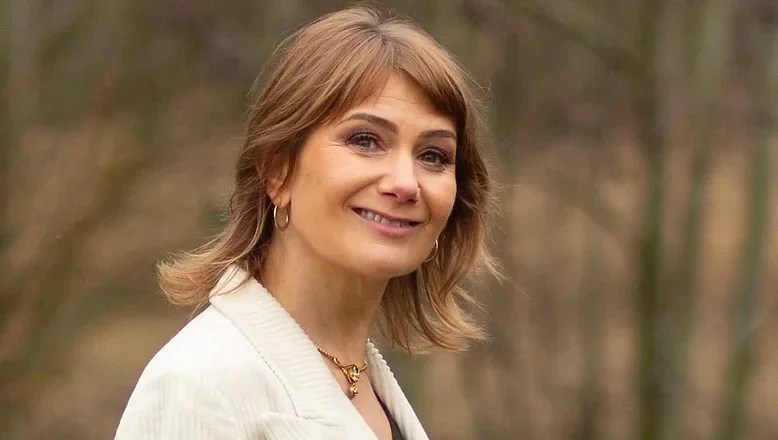
Who or what inspired you to pursue a career in music and who or what have been the most important influences on your musical life and career?
It was love at first sight with the piano around the age of 3 or 4, listening to my siblings play and my mum teach at home. The piano became my playground and, in a way, always has been. There was a lot of music at home and dancing to music was a natural part of my childhood play time too.
Whilst my mother was my first teacher, I was lucky to have parents who drove me for a 4 hour round trip to piano lessons and that support was incredible. Also to have parents who never pushed me- I was too stubborn for that. I was also lucky to have a very caring childhood teacher; Judith Burton who always made lessons feel like a joint adventure and discovery.
As to a career, I am not sure I ever thought specifically about music as a career. It was more of a case of what’s the next piece to learn, what’s the next concert or project and keeping following the road looking for the next musical challenge.
Choosing to go to music conservatoire from a normal state school was quite a change yet also liberating being surrounded by people who shared the same passion.
Later, I was lucky to study in Katowice, Poland. Andrzej Jasinski was an amazing piano teacher and a very kind person. Even just listening to him work with other musicians sitting in on lessons was a revelation and he always had a good humour. There was a great jazz department there too, yet it was also the toughest environment I had ever experienced and mentally quite a shock. I remember hitting a low point where I thought perhaps this is just too difficult. I ran back to Warsaw to visit my best friend. I spent the whole weekend in tears and then decided there was no turning back. Those moments test you and, in the end, push you further than you realise.
Lastly I would say my teacher in Denmark, Niklas Sivelöv was a huge influence. I thought I had finished with lessons and studies when I went to Scandinavia, but he taught me so much about sound. As a composer as well as a pianist, he had a different way of approaching things which somehow pulled all my other teaching together and made me really find my own voice.
What have been the greatest challenges of your career so far?
Life and work balance is always a juggling act. Music is not a career, it’s a vocation, but it is important to balance different aspects of your work which are always in flux.
Apart from that, the biggest challenge was getting back to full mobility after breaking my wrist in 2 places trying to pirouette on a balance board! I still have metal in my arm.
Whilst waiting for the results of the X-ray in the hospital and my arm in total distortion, I had a mantra which was, “ I will xxxx (cursing heavily) play the piano again”. I refused to think otherwise or even cry despite intense agony. I remember the moment a physio told me I might not get my rotation back. Beethoven sonatas flashed through my mind but luckily moments later he told me my mobility was fine. The road to recovery became like a sports competition, every week trying to prove to the physio nurse at the hand clinic, I could recover faster than any other athlete they had come across. I would record every single measurement and read up on every possible medical article about injuries as well as researching all aspects of physio etc.
I was very competitive about it!
Which performances/recordings are you most proud of?
Always the next performance. I find it hard to be proud of performances because I am very self-critical. I am a little bit proud of the latest recording I did championing Baltic composers, for FHR records, mostly because it was a project that I wasn’t sure would see the light of day. I did a lot of research discovering the scores and delving into the cultural scene but had several obstacles along the way. It led me on a different journey to the one I originally set out on, but hopefully it will shed light on some rather wonderful music and composers and encourage others to recognise and learn more about these composers.
Which particular works/composers do you think you perform best?
Perhaps Chopin and Eastern European composers like Bartok, Szymanowski. It’s in the blood and mothers’ milk as it were but I also love the clarity and colours of Scarlatti and Rameau. There is something in the tonal palette in all these composers that I can connect with and the rhythmic feeling and dance elements that are very instinctive for me.
How do you make your repertoire choices from season to season?
Often it is a balance of themes and ideas I want to explore combined with what makes a good programme. The seasons of the year also come into it. That might sound strange, but I really feel strongly about playing a programme that suits the time of year or that is somehow topical.
Do you have a favourite concert venue to perform in and why?
Not especially as part of the joy is that every concert venue is different and every audience unique. Even if it’s a venue you know well, each concert will be different every time and that surprise element is part of the magic. I do always welcome a venue with a piano that you can fall in love with – one with distinctive colours and a rich bass.
What do you do off stage that provides inspiration on stage?
Reading, reading and reading, dancing, travel, art exhibitions, the theatre and of course nature. Forests, sea and mountains!
What is your most memorable concert experience?
Performing the Schumann Concerto at 17 stands out. I love that piece with heart and soul. I had such a rush of adrenaline when I finished and was so elated that I fled out the concert onto the street, still in a medieval style long dress my mum had made me. (I had an obsession with medieval things in general at the time!) I ran as fast as I could for as far as I could. I had to expel such a buzz of energy somehow but didn’t know how to burn it or to come back down to earth. I am sure there must have been some passersby thinking what on earth is that girl doing flying down the street dressed like that?
As an audience member, hearing live Nelson Goerner perform Beethoven Les Adieux at the “Chopin and His Europe Festival” in Warsaw when England and much of Europe still hadn’t allowed live music back was incredibly moving. I hadn’t heard live music for so long it seemed like an eternity and prison sentence. To be in a concert hall with others and share this experience together made me realise why live music is so important. I think it made everyone remember not to take such experiences for granted.
I have to also add listening live to Brad Mehldau in concert in Shoreditch, London several years ago. He is a phenomenal musician with such a diverse career and he managed to conjure sounds that were so unexpected and different that they carried me away to a world I hadn’t even thought possible. He fuses so many worlds of music but always intelligently with great skill. That kind of creativity is rare.
As a musician, what is your definition of success?
To keep playing concerts and exploring more music! Also, to see my students grow, develop and progress. Helping others on that journey is very special.
What do you feel needs to be done to grow classical music’s audiences?
It is a tough question. I think not taking audiences for granted is vital but also to challenge audiences. It is essential that young people have access to live music because they are the audience of today and tomorrow.
I did a project with Peter and the Wolf in primary state schools because I felt that unless people hear live classical music at an early age then there is no chance of developing that enthusiasm or imagination. Children have no pre-conceptions and have such a spontaneous reaction to music. That needs more encouragement. When I go to Poland, the audiences are full of young and old alike. Partly because it is in the culture to go to live concerts in the park or wherever, but also because the arts board works hard to give special concessions to young people for cheaper tickets and to make it accessible for everyone. Also, they put a lot of thought into programming, from brochures and posters and marketing around the concerts to the reviews etc. All done informatively and creatively. They understand the value of the music industry and its cultural value for society. It creates a vibrant and interested audience culture. One of my favourite slogans during 2020 for the Warsaw Philharmonic posters was, “Music Is, Music will be, Music Always.” Such a great slogan. Classical music as an art form has a widespread space in the media and in everyday life. We could learn a lot from that here. .
What’s the one thing in the music industry we’re not talking about which you think we should be?
The importance of quality and integrity in music education and the need not to dumb it down. The way music is being pushed out of the state sector in this country and the increasing gap between those who have access to music education and those who don’t is shocking. Young people need to be involved in music making. The lack of funding for this is demoralising. So many local music centres have shut down due to a lack of funding.
The history of the International Chopin competition is a great example of the importance of engaging young people in music. The competition started because its founder was bemoaning the decline in the standards of playing Chopin. So what did he do? He turned to sport, noticing the way young people engaged in sports competitions. Not only did he raise the standards, but he also got the public involved. The level of enthusiasm and the special place the Chopin Competition holds in the cultural calendar still exists today and is a great success story. I am not saying we need to make more competitions but we need to realise the importance of music in education for everyone and value it.
I feel that people should not try so hard to make music fit into what people seem to think is an exercise of ticking a box. I don’t think television, or the media here, help at all in trying to promote good quality intelligent programming.
What advice would you give to young or aspiring musicians?
Be true to yourself and keep working hard without comparing yourself to anyone else. Everyone’s journey is different.
What’s next? Where would you like to be in 10 years?
Somewhere with a large wild garden not sure whether it would be in Poland or an island off the coast of Finland, moomin style. I would have a studio with a period piano – perhaps a Pleyel and a modern piano side by side and a big library and record listening room.
What is your idea of perfect happiness?
I have no idea of such a concept – it’s a little foreign as I enjoy being melancholy from time to time!
What is your most treasured possession?
Imagination
What is your present state of mind?
Buoyant with an underlying layer of anxiety for the state of the world.
Eva Maria Doroszkowska’s album BALTIC TIDES, piano works by Lūcija Garūta (1902–1977) and the Estonian Ester Mägi (1922–2021), is released on 20 June on DigiSleeve CD and on all digital platforms by First Hand Records
Discover more from MEET THE ARTIST
Subscribe to get the latest posts sent to your email.
 MEET THE ARTIST