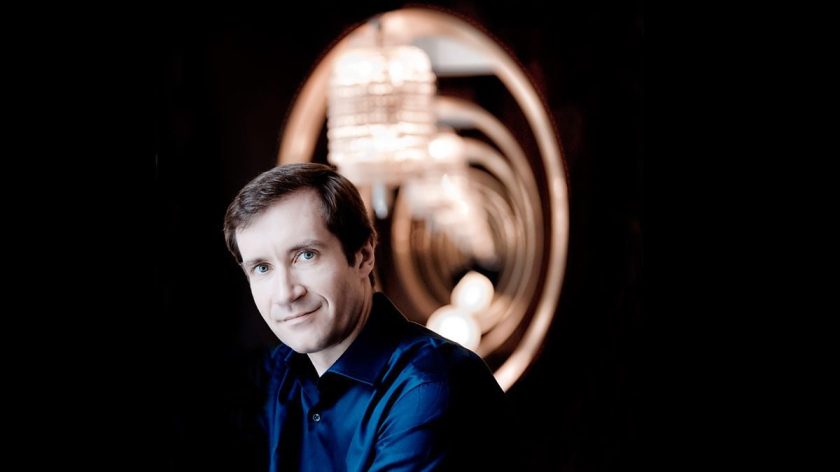
Who or what inspired you to pursue a career in music, and who or what have been the most important influences on your musical life and career?
There were no musicians in my family, and nobody ever encouraged me to study music. It was the music itself that spoke to something deep within me. I remember hearing certain recordings and immediately feeling the desire to play the piano. Over time, my most important influences have been Tatiana Nikolayeva, who was not only my main teacher but also a profound artistic presence in my life; Sviatoslav Richter, whose integrity and depth continue to inspire me; and Nelson Freire, an artist I deeply admire.
What have been the greatest challenges of your career so far?
Like many boys, I had my share of physical injuries growing up – broken fingers, elbows, even my back and neck. One of the most difficult moments came after a serious back injury that led to me being unable to play for nearly four months. Yet not long after, I decided to enter the 1994 Tchaikovsky Competition.
Of which performances or recordings are you most proud?
I’m particularly proud of my recordings of César Franck and Richard Wagner. The Wagner project with Harmonia Mundi is especially personal: I curated the repertoire myself, revisiting old notes and ideas I had collected over the years. The result was a very intimate and independent interpretation – one that truly reflects my own relationship with the music.
Which particular works or composers do you think you perform best?
It is any piece that I am currently playing. I’m often told that I play Rachmaninov particularly
well, though I try not to think in those terms.
What do you do off stage that provides inspiration on stage?
There’s no substitute for practice, but what truly nourishes my inspiration is simply listening to music. I listen constantly, to everything: recordings, the radio, whatever I come across.
How do you make your repertoire choices from season to season?
Each year, I try to prepare at least one new recital programme. When a recording project comes into play, that often shapes or guides my choices as well. There’s always a balance between personal curiosity and professional opportunity.
Do you have a favourite concert venue to perform in, and why?
I’ve been fortunate to perform in many of the world’s great concert halls, and each has its own atmosphere. That said, the Concertgebouw in Amsterdam and the Mariinsky Concert Hall remain particularly close to my heart.
What do you feel needs to be done to grow classical music’s audiences?
This is a huge question – we could talk about it for hours. But one of the biggest obstacles, I think, is the overwhelming presence of low-quality mainstream music, which has reshaped the way people, especially the younger generations, relate to sound and listening. Classical music demands time, patience, and education – not only in schools, but in culture at large. We need to nurture curiosity and provide the tools to engage deeply with this art form.
What is your most memorable concert experience?
It was a recital by Radu Lupu at the Concertgebouw. I was in the audience, and it was unforgettable.
As a musician, what is your definition of success?
To be honest, I don’t really care about success. For me, success isn’t something external – it’s more about being at peace with yourself and the choices you’ve made along the way.
What is your most treasured possession?
My score of Wagner’s Parsifal. It has accompanied me for years – full of markings, thoughts, and memories.
Nikolai Lugansky appears at this year’s Oxford Piano Festival which runs from 26 July to 3 August. Find out more here
studiolongardi.com/profile/NikolaiLugansky
Artist image by Marco Borggreve
Discover more from MEET THE ARTIST
Subscribe to get the latest posts sent to your email.
 MEET THE ARTIST