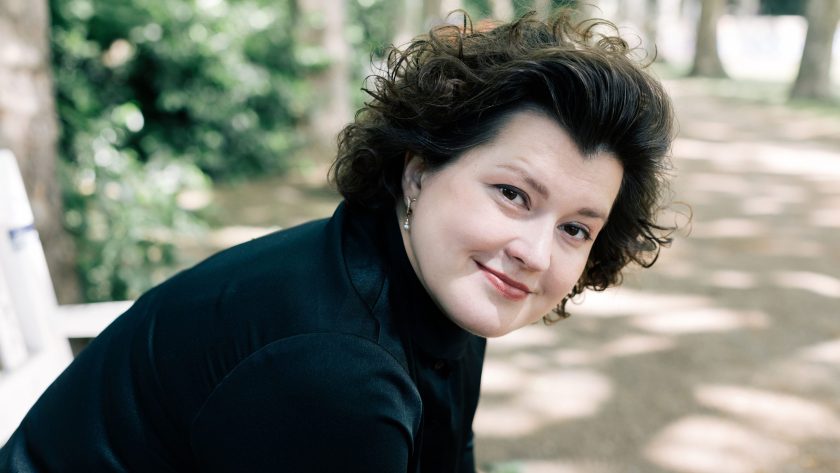
Who or what inspired you to pursue a career in music and who or what have been the most important influences on your musical life and career?
My starting point was a total failure at the entrance exam at the Chopin College of Music. In 2006 when I got the lowest mark in piano but nevertheless was admitted to take the theory exams. Thanks to perfect pitch and my ambitions – I ended up being second in the pool of the admitted students.
Then, perhaps Lukas Geniušas was a constant source of inspiration; we met when we were just 17 and made it all the way together. Another deep influence was his grandmother, Vera Gornostayeva, whom I admired profoundly as both an artist and teacher, and with whom I always dreamed of studying, though I never had the chance.
What have been the greatest challenges of your career so far?
Leaving my children when I travel for performances around the world. How I wish I could leave them at least with family members or travel with them… but it is so far from the reality as the demands of my own work requires a lot of time and dedication. Yes, every departure comes with its own weight.
Which performances/recordings are you most proud of?
The semi-finals of the Tchaikovsky Competition 2021 is something I am especially proud to have survived. Playing in my home country after leaving in 2016 at such a short notice (I received the invitation to play there three weeks before the opening ceremony) was nerve-wracking as the stakes were so high and the expectations even higher. It was an intense and transformative experience. I was absolutely convinced that life would never be the same after that round — and in fact, it wasn’t.
Which particular works/composers do you think you perform best?
I cannot judge my own work and style entirely fairly, but I would say that the worlds of Prokofiev, Tchaikovsky and Schumann are particularly meaningful to my heart and I can express a lot in this music.
What do you do off stage that provides inspiration on stage?
I rarely listen to other performers while working on a piece. Instead, I focus on deeply understanding the musical language, exploring its structure and emotions, and discovering subtle allusions to other composers’ works. This process inspires me profoundly when I perform.
How do you make your repertoire choices from season to season?
Repertoire choice is something I am truly obsessed with. Usually, I start by selecting a theme I want to explore then I construct a story around it using different compositions. Each season becomes an “musical expedition” that reflects both my interests and artistic journey.
Do you have a favourite concert venue to perform in and why?
My ideal venue is an imaginative one, perhaps existing in my head where the piano takes centre stage and becomes the heart of the story. A great piano (paired with a talented piano technician) has the power to transform any space into something miraculous.
What do you feel needs to be done to grow classical music’s audiences?
I believe speaking directly to the audience can make a big difference. We grew up in an era when pianists were often distant, almost untouchable figures. Today, in the age of social media, people can feel connected to artists, but surprisingly many musicians aren’t sure what to say about their craft except to give formal invitations to their performances. Pre-concert talks, discussions and sharing insights about the music right before you actually start playing can inspire people to return, helping concerts feel more approachable and less formal.
As a musician, what is your definition of success?
I see success as a state of transcendence — the moments when music becomes a bridge between souls, where the boundaries between performer, audience and piano dissolve… It is not measured by accolades… Also true success can be found in moments like the precious silence of people in a concert hall holding their breath as you play so softly that every note seems to float. It is in these fragile connections that music becomes a shared, almost sacred experience — a space where time slows and something eternal is touched.
What advice would you give to young/aspiring musicians?
Always be your own best friend. Trust your inner voice above all else; it will guide you more truthfully than anyone around you.
What’s the one thing in the music industry we’re not talking about which you think we should be?
The cruelty of competitions and similar entertainment formats for youth — they often serve the audience’s excitement but rarely the well-being of the competitors. And their parents.
OPTIONAL: Please select one from the following
What’s next? Where would you like to be in 10 years?
I just want to be alive!
Anna Geniushene’s latest album Opus 1 is available now
Discover more from MEET THE ARTIST
Subscribe to get the latest posts sent to your email.
 MEET THE ARTIST
One comment
Comments are closed.