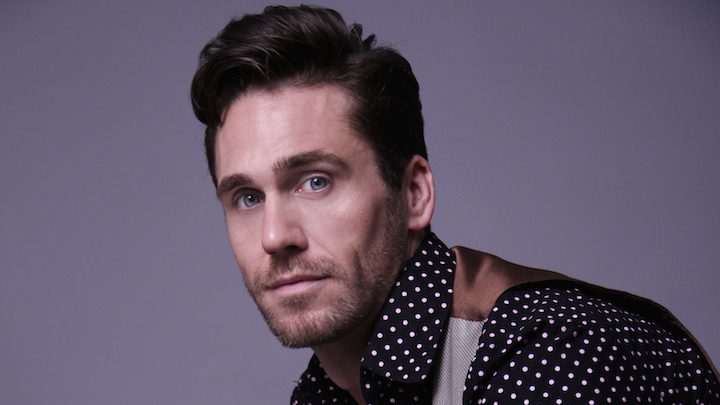
Who or what inspired you to pursue a career in music and who or what have been the most important influences on your musical life and career?
Truth be told, my first love was theatre. At school I was surrounded by some extremely talented (and one or two now world-famous) actors, which was inspiring but also perhaps made it more difficult for me to find my place. However, I also had a burgeoning interest in classical music and was initially drawn to the large choral works we were performing with my school choral society – St Matthew Passion, Verdi Requiem, Mozart Requiem, Elijah – and of course Messiah. I’m from Halifax, and the West Yorkshire tradition of choral societies must run in my veins!
From there, I became increasingly drawn to renaissance and baroque music. For most of my teens I was an aspiring countertenor, but towards the end of my time at school it became clear that I was a tenor. Once I discovered that I had a voice suited to classical repertoire, opera opened up to me. Visits to Covent Garden, ENO and Opera North proved my inspiration. I remember vividly watching Robert Carsen’s production of A Midsummer Night’s Dream, Elijah Moshinsky’s Aida, John Copley’s Semele (to name a few that really stuck with me) and knowing that the world of opera was where I wanted to be – with singers like Antony Rolfe-Johnson and John Mark Ainsley providing the vocal inspiration that I needed.
I then went to St John’s College Cambridge as a choral scholar, again alongside some extremely talented and now world-famous performers (can you spot a theme??), and was encouraged there by the wonderful music director at the time, Christopher Robinson, but also by my peers throughout the university. In my professional life, I have been lucky to work with some amazing conductors, but it was William Christie who really seemed to see my potential, and I had a wonderful seven years of work with him which cemented my love for baroque music. I have also been supported consistently by Peter de Caluwe, who gave me many diverse opportunities at DNO and La Monnaie.
What have been the greatest challenges of your career so far?
The greatest challenge of my career has been self-doubt. I can think of roles which have challenged me technically or dramatically (Colin in Denisov’s L’Écume des Jours, Monteverdi’s Orfeo, Edouardo in Adès’ Exterminating Angel, Don Gomez in Saint-Saëns’ Henri VIII), but the real challenges come when I question myself. I have certainly met artists who don’t seem to question what they’re doing – it seems to make them bullet-proof – but try as I might, I can’t help it. This might be wondering whether I’m vocally appropriate or being physically and/or psychologically honest in the role. And while this can make one a very hard worker, it can sometimes keep a sense of arrival out of reach. The test then is to stand up and present yourself in spite of your doubts – and for me that is the greatest challenge.
Which performances/recordings are you most proud of?
Undoubtedly my debut recital recording, 17th Century Playlist. I created the programme, worked closely with Liz Kenny on arranging the performances, and love that music so very deeply. I also had such an amazing team of collaborators from Liz, Reiko Ichise and Siobhan Armstrong accompanying me, to Rodolfo Richter and Jane Gordon on fiddles, and the incredibly talented and supportive team at Delphian.
I’m also very proud of my work on the DVDs of Theodora, Hippolyte et Aricie, Les Troyens and the Handel recordings I made with Ludus Baroque.
Live performance-wise, I have enjoyed so many. L’Écume des Jours in Stuttgart was a mammoth achievement, Ormindo at the Globe was the greatest joy and pleasure, but my work at Garsington, particularly Turn of the Screw in 2019 and Orfeo in 2022, has made me most proud. I am very much looking forward to working on my third opera at Garsington – Il ritorno d’Ulisse – in June 2026.
Which particular works/composers do you think you perform best?
An easy question at last! Monteverdi, Handel, Bach, Haydn, Mozart, Britten are what I sing best and what I sing the most. But there are composers whose works I also sing well but sadly don’t get much chance to perform i.e. Gluck, Debussy, Beethoven, Mendelssohn.
How do you make your repertoire choices from season to season?
I’m not quite in the position to choose my work – that privilege is for a very select few in our industry – but I’ve got much better at saying no to work which I don’t think I will do well. This might be because I feel technically overwhelmed, it might be an environment where I don’t think I will be able to flourish or music which simply doesn’t speak to me. It’s risky in an industry where work is scarce, but I try to prioritise a sense of safety and fulfilment over anything else.
Do you have a favourite concert venue to perform in and why?
Not really. There are wonderful acoustics in many venues for sure – the Wigmore Hall allows you to whisper and be heard – but there are specific events I look forward to in specific places. I regularly evangelise for the Bach Choir St Matthew Passion and, in that moment, the Festival Hall transforms into a warm bath of happiness.
What do you feel needs to be done to grow classical music’s audiences?
I think a lot is already being done. To my mind, widening the repertoire, enhancing the venue experience, modifying venue etiquette, altering the audience performer dynamic (us vs. them), a greater focus on smaller-scale (i.e. chamber) music, shorter concerts, lighting and projections to contemporise the concert experience should all be on the table.
What is your most memorable concert experience?
I did a tour of Messiaen’s St François d’Assise in Japan. The final five minutes of that five-hour opera is the single most overwhelming classical music experience I have ever had. I would burst into tears involuntarily every time.
As a musician, what is your definition of success?
To sing great music which speaks to me, with great colleagues, for appreciative audiences, and to earn a living doing it. I have aspirations (I’m wary of the word ‘ambition’) to certain roles, perhaps certain venues, and to working with certain people, but I try not to define success by future attainments, but by what my experience is day to day. Perhaps that’s the therapist in me talking … Or indeed, maybe I’ve misconstrued the question. Is success as a musician doing our very best to give life to the music we are given the opportunity to create? It certainly should be.
What advice would you give to young/aspiring musicians?
Think very carefully about what is motivating you to become a performer. Be very suspicious of external validation. Be honest about what you are good at. Don’t look sideways. The metaphor I use is ‘drive your own car’. It is unlike anyone else’s, but it is the one which no one else can drive as well as you can.
What’s the one thing in the music industry we’re not talking about which you think we should be?
How do we keep classical music a viable business model? How do we create more paid work opportunities for performers/creatives? How do we diversify the income streams? There is money out there (see how much people will pay to watch Taylor Swift on a TV screen from a quarter of a mile away!), so how do we make classical music aspirational? I have often wondered about our secular society, and the fact that classical music is often a route to an almost spiritual experience. Does it have that function? What is the secular equivalent of evensong or mass?
What is your idea of perfect happiness?
A hot day in early June at home in our house in Pitchcombe. The lawn was mown yesterday. We have friends staying. That evening, I have a performance of Monteverdi’s Orfeo with a group of amazing friends and colleagues.
Tenor Ed Lyon returns to The Royal Opera to sing the role of Lurcanio in Jetske Mijnssen’s new production of Handel’s Ariodante, 9 – 21 December.
Discover more from MEET THE ARTIST
Subscribe to get the latest posts sent to your email.
 MEET THE ARTIST