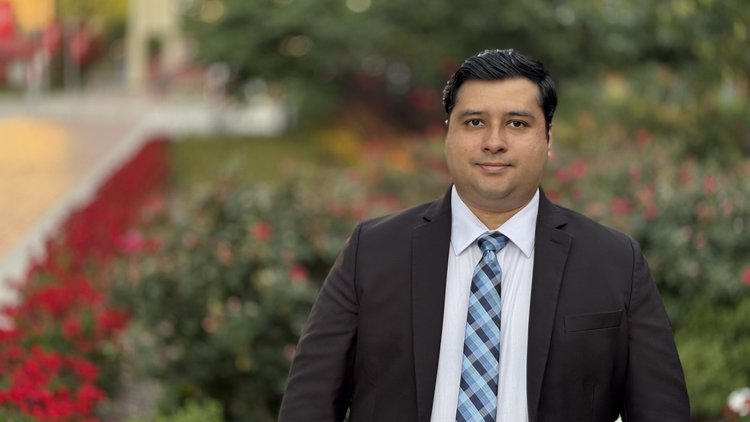
Who or what inspired you to pursue a career in music?
I was first inspired by my parents, both of whom play the piano. My dad would fill the house with the music of Beethoven, Bach, and Chopin, while my mom often played pieces by Richard Clayderman. Music was always around me growing up, but it wasn’t until later that I realized how deeply it resonated with me on a personal level.
I’ve always felt emotions very intensely. Communicating those feelings with words or relating to others wasn’t always easy for me. I often felt disconnected and closed off from the world. But when I discovered music, especially composing, it became the language I had been missing. It gave me a way to express myself in the most honest and real way I knew how.
When I was about 14, I came across a YouTube video of a pianist playing Mozart’s Turkish March, and something just clicked. I had barely touched a piano since I was 7 or 8, when my parents first tried teaching me, but that video ignited something in me. I taught myself the piece and played it at my audition for the National Conservatory of Music of Mexico, where I was accepted. That was when I realized I wanted to be a pianist, and shortly after, a composer.
From the moment I started learning Mozart, I began composing. I was fascinated by how different harmonies and textures could evoke such powerful emotions. Although I initially tried balancing music with studying Physics at a university in Mexico, I eventually followed my heart and chose music completely. That path led me to Rutgers University, where I studied composition and piano. Over time, I shifted my focus fully to composition, exploring different styles and techniques. While I experimented with more contemporary and twelve-tone approaches, I always came back to what moved me most emotionally.
In the end, music gave me a voice when I couldn’t find one anywhere else, and that’s why I chose this path.
Who or what have been the most significant influences on your musical life and career as a composer?
Some of the most significant influences on my musical life and career as a composer have been Beethoven, Tchaikovsky, Shostakovich, John Williams, John Barry, Einaudi, and Yiruma. During my academic years, my style leaned more toward Shostakovich, but nowadays I compose more in the spirit of Yiruma or Einaudi, music that is calm, emotional, and personal.
But beyond the composers, the biggest foundation for everything I do has been my parents. Their support has been the reason I’ve been able to pursue music in the first place. They’ve always been there for me, through the good times and especially the hard ones. When I’ve felt like giving up, they’ve been the ones to remind me why I started, to lift me up, and to give me the confidence I so often struggle to find in myself.
What have been the greatest challenges/frustrations of your career so far?
One of the greatest challenges in my career so far has been navigating my mental health. Living with depression, anxiety, and being on the spectrum has often made it difficult to stay consistent with my work, and at times it’s made me want to give up entirely. The pressure to always be producing or networking can feel overwhelming, especially when I’m already struggling internally. Networking has been really difficult for me, especially since I’m on the spectrum and often struggle to communicate effectively with my neurotypical peers.
There have been days where even getting to the piano felt impossible. But over time, I’ve learned to give myself grace and to keep going, even if that just means showing up in small ways. In a strange way, those struggles have also shaped my music. They’ve pushed me to write from a more vulnerable, honest place. And through it all, my family, especially my parents, have been there to remind me of my worth, even when I couldn’t see it myself.
How do you work? What methods do you use and how do ideas come to you?
When I write neoclassical music, I usually sit at the piano and start by thinking about a concept, a story, a feeling, or an emotion. Often, these ideas come from what’s been going on in my life or things I’ve seen. For my music, I try to sit with my emotions and feel them 100 percent. It’s almost like a meditation, where I let myself experience the emotions fully and bring them to the surface so I can express them through music. Then, I just begin improvising, trying to translate whatever’s in my head into sound. A lot of the time, I can actually hear what comes next in my mind. I’ll hear a melody or a certain accompaniment, and I just follow it. Once I’ve got something that feels close to the idea, I take a piece of what I’ve been improvising and play it over, maybe changing a few things to match more closely what I imagined. Sometimes I’ll use theory to tweak things, like thinking, “Maybe this chord would work better here,” and if it feels right, I go with it. For me, everything has to feel right emotionally.
When I was writing more academic music, it was a totally different process. I’d sit at the computer and work directly in the notation software. I’d still hear the music in my head and try to put that into the piece, but I leaned much more on theory, structure, and polish. That kind of music felt more planned out, more carefully constructed. My neoclassical work, on the other hand, is more about going with the flow and letting the emotion lead.
How would you characterise your compositional language/musical style?
I would characterize my compositional language as very melodic and accessible, with an emotional core that tends to stay with listeners, a lot of people have told me my music lingers in their minds like an earworm. Stylistically, I blend elements of neoclassical, new age, minimalism, cinematic music, and classical crossover.
I often build pieces around pop-like melodies and chord progressions, but I like to expand them by adding richer harmonies or introducing dissonances that, while they might seem unconventional by traditional theory standards, feel expressive and fitting within the world of my music.
A big part of my writing is also about trying to exude a sense of romance, not necessarily in the traditional “love story” sense, but more in the emotional warmth, tenderness, and beauty that I aim to weave into every piece. Overall, my music is very reflective and
introspective, offering a space for listeners to slow down, breathe, and connect with their inner emotions.
Of which works are you most proud?
I am most proud of Warmness of the Heart and Taking Flight Miniature.
I composed Warmness of the Heart in 2021 after a breakup. At the time, I was shattered. I felt this deep ache in my chest, and for a while, I honestly wondered if my heart was beyond repair. Months went by where I barely composed anything. Then one day, I sat down at the piano, almost without thinking, and decided to just play, to create something that reflected who I am deep down.
To my surprise, what came out was a warm, gentle melody. It felt like a message from within, telling me, “This is you. Your heart hasn’t changed. This is your warmness of the heart.” It was a reminder that even through pain, the core of who I am, the kindness and warmth, was still there.
Taking Flight Miniature traces its roots back to my orchestral and cinematic piece Taking Flight composed in 2022. The original theme actually began as a simple melody I wrote on the piano. From there, I expanded it into a full orchestral score. Later on in 2025, I wanted to bring that melody back to where it started, so I created a piano version. While adapting it, I came up with an additional theme that felt even more natural for the piano, and I decided to shorten the piece, since the full orchestral version runs about ten minutes long and I wanted something more compact.
The main melody from Taking Flight remains at the heart of Taking Flight Miniature. To me, the melody on the piano feels incredibly inspirational and romantic. Every time I play it or hear it, it gives me a sense that anything is possible, almost like the feeling of being in flight. It makes me happy, and maybe that’s why I’m so proud of this piece.
As a musician, what is your definition of success?
For me, success is simple: it’s about being your authentic self in everything you do. In music, and in life, authenticity is key. When you embrace who you truly are, you create something unique, something that can’t be replicated, because no one else brings exactly what you do. That authenticity not only sets you apart, but it also attracts the right people into your life and opens the door to the best opportunities.
In music, the best outcomes come when you’re creating work that feels true to you, that comes from a place of honesty and vulnerability. When you’re genuine in your artistic expression, it resonates with others in a way that simply can’t be forced. So, to me, success isn’t about fame, recognition, or perfection. It’s about aligning with who you are, staying true to that, and trusting that the right things, musically and personally, will follow.
What advice would you give to young or aspiring composers?
My advice to young composers or aspiring composers is simple: don’t give up on your dream. The road can be bumpy, and at times it might feel really tough, but stick with it because, in the end, you’ll have created something beautiful. You’ll have the power of music at your fingertips, and to me, that’s almost like a superpower. Trust the process and do what feels right for you. If you feel that going to music school is the right choice, then pursue it. But if it doesn’t feel right, don’t feel pressured to follow that path. Don’t give in to fear. It’s normal to feel afraid, but don’t let that fear dictate your life because living with regret is much harder than facing your fears.
If you’re thinking about auditioning for a music program and you’re scared, that’s okay, but push through it. If you don’t get accepted, you’ll know you tried and won’t be left wondering, “What if?” Remember, not giving in to fear is also about taking care of your mental health. It’s so important to nurture your well-being along the way. My advice is to prioritize your mental health, go to therapy even if you think you don’t need to. One can always improve their mental health. Learn about mindfulness and take time to understand yourself. The journey will be challenging, but it’s worth it when you stay true to yourself.
What’s the one thing we’re not talking about in the music industry which you really feel we should be?
I don’t think we talk enough about how underrepresented music by people of colour is —especially in classical and neoclassical genres. As a brown composer myself, I rarely see others who look like me in this space. We need to make a conscious effort to uplift and amplify the voices of composers of color.
What next? Where would you like to be in 10 years time?
In 10 years, I hope to be teaching music composition and theory at a university, while also composing for film and pursuing my own creative projects. I’d love to perform my music in concerts, sharing it from the piano.
Links: Spotify: https://open.spotify.com/artist/2J9AkGNRGUlAUFwLxRR4Vk?si=HCxN-W9IQUG_3qTgOWb7Gw
Instagram: https://www.instagram.com/hugo_antonio_miranda/?hl=en
Facebook: https://www.facebook.com/hugoantoniomirandamusic
Website: https://www.hugomirandamusic.com
Discover more from MEET THE ARTIST
Subscribe to get the latest posts sent to your email.
 MEET THE ARTIST