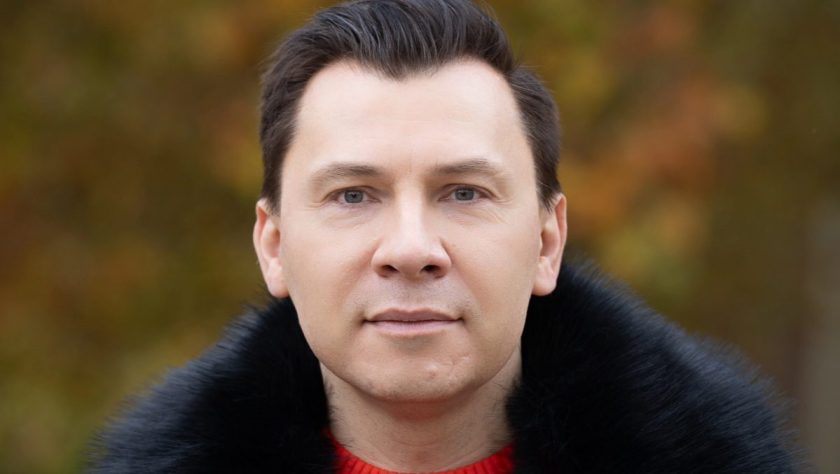
Who or what inspired you to pursue a career in music, and who or what have been the most important influences on your musical life and career?
One of my early childhood memories is an occasion when, while at kindergarten, I picked out a familiar tune on the piano with one finger, without having been taught music or knowing any notes at that stage – to the great excitement and interest of our nursery teacher. I must have been around six years old, and my parents were advised to enrol me in a music school. As time passed, music came to occupy a larger and larger part of my life, and eventually the choice became obvious.
The most important influences, of course, were my teachers (piano and all the other disciplines), every one of whom I remember with a great deal of gratitude and think about often. The further one advances in years, the more important and meaningful those childhood memories become. I also recall an episode at secondary school in a music class when the teacher played an LP with the orchestral accompaniment to the opening theme of Rachmaninov’s Third Piano Concerto—and sang the theme herself. Apart from conveying the idea of musical phrasing, which I think was the subject of that lesson, I remember to this day the crystal clarity and plasticity of her singing voice—something that captivated me completely back then and perhaps ignited an interest in the sound of the singing voice for the rest of my life.
What have been the greatest challenges of your career so far?
The work I usually do requires a very wide skill base. I suppose it could be viewed either as a challenge or as a perk. Working with classical singers in an operatic production or recital context requires the ability to play the piano to a very high standard, to read freely at sight, to conduct rehearsals or work off-stage, to coach a wide variety of repertoire, to play for long stretches of auditions—there is never a dull moment.
Apart from all the musical aspects and understanding how the voice works in technical detail, coaching and working with singers also requires the ability to find the right words to convey a suggestion, to strike the right tone in communication, and to connect with different facets of individual personalities, with all their foibles and daily emotional fluctuations. I find that such an extensive and complex range of tasks and situations in professional life positions one extremely well for continuous personal growth—a challenge and a benefit at the same time.
Does the approach to working on operatic repertoire and art song differ in some way?
I would say yes—and no. Of course, there are realities related to the different scale of the two forms: opera is obviously bigger and, to simplify to an extreme, louder. Art song invites and requires much finer resolution, a more nuanced palette of colours, and a more intricately crafted emotional narrative. Contrary to common opinion, a song recital often contains more singing, in terms of duration, than most operatic roles (with some exceptions, of course). This is coupled with the fact that often only one singer—rather than a cast of five or six—sings continuously for that length of time, which demands a particular stamina and concentration.
From the pianist’s perspective, operatic repertoire may require a more solid and rhythmically grounded approach, as well as a certain delegation of interpretative and architectural aspects to the conductor. That is not to say that playing an operatic score should be devoid of any expression—decidedly not. Listening to the great singers of the past, I often think that the amount of light and shade, detail, nuance of colour, and emotional articulation they bring to operatic roles is absolutely of the same intensity and magnitude one seeks in an art song recital.
Which recordings are you most proud of?
I am very fond of the first CD we recorded with a dear colleague, Katherine Broderick, featuring Songs and Romances by Modest Mussorgsky in 2015. It feels to me that it has stood the test of time very well. I am also particularly proud of a CD of Poulenc’s Fiançailles pour rire and La Voix humaine with another dear colleague, Paula Sides, released a year or so ago.
What was the idea behind the new CD released by SOMM Recordings?
This is our third CD with Anastasia. We have known each other for many years and have previously enjoyed collaborating on recordings of Melodies by Reynaldo Hahn and Romances by Alexander Dargomyzhsky. When thinking about our next project, we almost inevitably turned to Rachmaninov. His Romances are very well known and popular, and deservedly so. We also felt that remembering his composition teacher at the Conservatory, Anton Arensky, would be a good idea. Rachmaninov studied harmony, counterpoint, and free composition with Arensky at the Moscow Conservatory between 1885 and 1888, when he was still a teenager. He valued Arensky’s influence very highly, yet Arensky was also a prolific composer in his own right.
By juxtaposing their compositions on our new CD, we hoped to give Arensky his rightful platform while also highlighting the similarities and differences in their styles. Both composers are, of course, closely related stylistically—expansive, shapely melodies in the spirit of Russian bel canto in the vocal writing, and rich, complex piano parts with breathing figurations and counter-melodies, among other features. However, listening to their works back to back reveals their individual flavours, which I find intellectually very pleasing. For example, hearing Debussy and Ravel in quick succession offers a similar experience.
As a musician, what is your definition of success?
That is difficult to answer simply. I suspect that universal success is something of an illusion, and that it can be understood only in relation to different groups of people. For example, fellow musicians and professional colleagues may perceive success in very different terms than audiences and music lovers.
With the public—those who come to hear you perform—what matters most to me is the creation of emotional memories that endure over time. With colleagues, given the often complex dynamics among professionals, I would value respect more than popularity. With students, success may be measured by the long-term value and structural impact one can have on their development, ideally with minimal intrusion into their own artistic paths and ways of making music.
What advice would you give to young or aspiring musicians?
Persistence and tenacity are the first qualities that come to mind. In addition, I would stress the importance of being intellectually voracious: absorbing ideas widely and independently—beyond what is taught directly in their classes—and, of course, generating their own. Of course, acquiring technical skills and continually maintaining and refining them throughout a musician’s career is of paramount importance. Yet we must remember that skills are ultimately tools—means of expressing and projecting one’s inner life and personality.
Sergey Rybin and Anastasia Prokofieva’s new SOMM album of Arensky & Rachmaninoff Romances SOMMCD 0716 is out on 20 February: Find out more
Artist image: (C) Ed Choo
Discover more from MEET THE ARTIST
Subscribe to get the latest posts sent to your email.
 MEET THE ARTIST