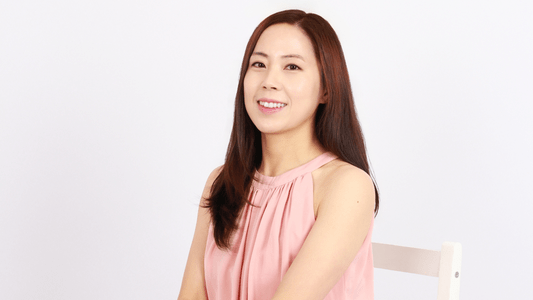
Who or what inspired you to pursue a career in music and who or what have been the most important influences on your musical life and career?
I was first inspired to pursue a career in music by my parents. I was born into a musical family: my late father was a composer and conductor, and my mother is an opera singer, so music was a constant presence in our home. From a young age, I was exposed not only to listening but also to compositional tasks such as writing out Bach inventions and improvising in a classical style, which felt very natural to me and helped shape my musicality. My parents also strongly supported my decision to study abroad and I moved to Paris and entered the Paris Conservatoire at the age of 16.
Artistically, I have been influenced by pianists such as Martha Argerich, Maurizio Pollini, and Murray Perahia, as well as by my teachers—Daejin Kim; the late Germaine Mounier who was a disciple of Alfred Cortot; Bruno Rigutto; Elisso Virsaladze; and Boris Slutsky, whose passion and artistry have had a lasting impact on my musical development.
What have been the greatest challenges of your career so far?
One of the greatest challenges of my career has been continuing to perform while becoming a mother to twins during my Doctor of Musical Arts studies at the Peabody Conservatory. I returned to full-time study shortly after their birth, performing solo recitals, working as an Accompanying Graduate Assistant alongside completing my qualifying exams during an intense and demanding period.
Moving to the UK during COVID was another challenge, as I initially had no professional network here. With the support of generous colleagues, I gradually established myself. Since 2024, alongside my full-time role at Elmhurst Ballet School, I continue to pursue my career as a recitalist with great commitment, finding real joy in practising whenever time allows.
Which performances/recordings are you most proud of?
I am proud of my performance of Pictures at an Exhibition by Mussorgsky, which I played shortly after giving birth.
At Peabody, I studied with Boris Slutsky, who helped me to relax more while playing and encouraged me to explore Russian repertoire such as Pictures, Prokofiev’s Seventh Sonata and Rachmaninoff’s First Piano Concerto.
I am also very happy about my upcoming album of Nicholas Scott-Burt’s 24 Preludes for Piano. I was lucky to record the pieces at the beautiful St George’s Bristol, whose fabulous acoustic suits Nick’s music perfectly. The sound engineer, Jonathan Scott, did a fantastic job as well. The album is released by Divine Art Recordings on 6 March.
Which particular works/composers do you think you perform best?
I feel a strong affinity with French music, especially early 20th-century composers such as Ravel, Debussy and Poulenc. I moved to France as a teenager and lived there for 16 years, which naturally shaped my musical sensibility. I also love performing nearly all the styles, but my former teachers appreciated a lot when I performed Mendelssohn, Schumann or Brahms (oh, they are all German ☺).
It is often said that the Korean temperament suits the character of Brahms’s music well. I feel directly connected to the music when I play Nick Scott-Burt’s music. In addition, I greatly enjoy playing Kapustin’s Études because of its persistent syncopation, jazzy style and the exciting character of his music.
How do you make your repertoire choices from season to season?
I try to include new repertoire in every recital programme. I keep a long list of pieces I would like to learn, and each season I choose works that feel timely and personally meaningful. I also take composers’ anniversary years into consideration when planning programmes. For example, I included Ravel’s La Valse and Pavane pour une infante défunte – that I had never played beforehand – in my previous recital at St George’s Bristol – to mark and celebrate the composer’s 150th anniversary of birth.
Do you have a favourite concert venue to perform in and why?
I absolutely loved playing at St George’s Bristol last October. The combination of its acoustic and the Steinway D’s sound quality was ideal. It was my first time performing in their lunchtime concert series, and the audience was extremely welcoming. One of the concertgoers left a memorable feedback to me saying that my recital was a calm oasis in a frenetic world.
What do you do off stage that provides inspiration on stage?
I usually arrive at least one and a half to two hours before a concert. I put on makeup, have a cup of coffee, and continue practising or doing run-throughs right up until the doors open. I try to go through all the pieces, if possible, paying attention to every detail – this helps to keep the music present in both my mind and body and gives me confidence on stage. Just before the concert, I review the structure of each piece, I pray and do some light stretching for my arms and back.
What is your most memorable concert experience?
One of my most memorable concert experiences was a duo recital with my brother, Da-Min Kim, concertmaster of the Marseille Philharmonic Orchestra, as Duo Ainos. In 2013, after two days of private recording sessions with Lyrinx label at Musée du Terroir Marseillais, we gave a live recording concert on the final day. We performed sonatas for violin and piano by C. Debussy and R. Strauss, as well as K. Szymanowski’s Nocturne and Tarantella, for our album. Whilst we were playing the Strauss Sonata, I felt much freer on stage, and together with Da-Min we felt more united in the music – especially in the delicate middle section of the second movement – sharing the same musical ideas or completed bonded in that moment.
Here is the link to the album on qobuz: Duo Ainos – Tradition Chez les Modernes (2014)
As a musician, what is your definition of success?
I think success is very subjective. It is, of course, related to outward recognition and fame, but for me it means thoroughly enjoying performing it on stage after mastering a piece (if one can say that) and being able to share its story with the audience. In that sense, a performance can be a success regardless of external measures.
What do you feel needs to be done to grow classical music’s audiences?
To grow classical music audiences, I believe professional musicians need to share the experience
more openly with listeners. Today, communication through social media plays an important role, as does engaging directly with audiences through outreach concerts. To attract wider and especially younger audiences, we need stronger strategies in promotion and programming – for example, making the programme more varied by pairing well-known repertoire with lesser-known works or add an arrangement of a popular song into a classical style.
What’s the one thing in the music industry we’re not talking about which you think we should be?
There is a strong focus on promoting young musicians, which is completely understandable. However, a musician’s artistry matures year by year, and I think it is a shame that we sometimes prioritise youth over depth. There are many middle-aged musicians with profound musical insight and experience who deserve greater attention.
What advice would you give to young or aspiring musicians?
Use your time effectively and explore every possibility. Take part in competitions and festivals, approach managements, and use your youth as a springboard. Listen widely, read, attend concerts and masterclasses as much as possible. Be confident on stage and take risks – don’t simply follow your teacher’s guidance, but try innovative ideas, new repertoire, collaborations and projects.
What is your most treasured possession?
My most treasured possession is my Yamaha C3 studio piano that I owned for 24 years. It’s my late father’s gift and purchased in Paris. It has such a lovely palette of the sounds and my best friend who helps me to focus with all its particular tone colour whenever I practise.
24 Preludes for Piano is released on 6 March on the Divine Art label. Album launch concert on Monday 16 March at the 1901 Arts Club, London
Discover more from MEET THE ARTIST
Subscribe to get the latest posts sent to your email.
 MEET THE ARTIST