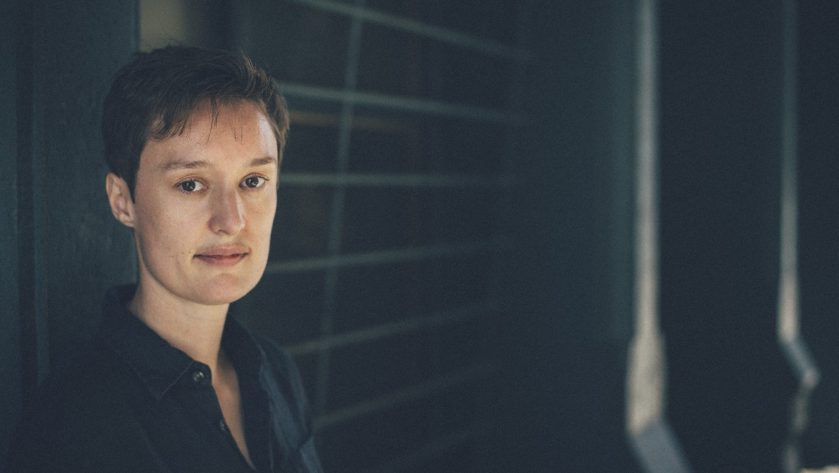
Who or what inspired you to pursue a career in music and who or what have been the most important influences on your musical life and career?
It was my first grade teacher Miss Green who first inspired my desire to learn piano. She would sing and play songs from the Sound of Music in class. I started taking lessons after that and by about the age of ten, I knew I wanted to be a pianist. I would say each of my music teachers has profoundly influenced my journey in one way or another.
What have been the greatest challenges of your career so far?
I think the shutdown during the Covid pandemic created one of the greatest challenges to date. Live concerts stopped and there was a point where I didn’t know if I’d have a career on the other end of it. But luckily the need for human connection and live music survived that difficult time. Hopefully people recognize that and appreciate it more as a result.
Which performances/recordings are you most proud of?
I feel particularly proud of my most recent solo album ‘Cocteau’ [released 6 March]. I worked on every stage of making this album, both as pianist and producer – from the research and programme planning phase, to grant writing, to recording with amazing engineer Ben Rawlins, to album design, liner notes… the list goes on. I am so happy with how it all turned out. Being hyper-critical I don’t always enjoy listening to myself, but on this occasion when I hear it, I feel very proud of the end result.
Which particular works/composers do you think you perform best?
I’ve always gravitated to music from the 20th and now 21st centuries. I think I am probably most in my element playing the music of living composers. There is something magical about bringing into existence a work that’s never been heard before. I also really enjoy the collaborative aspect of working with living composers and being able to have a dialogue directly with them about their musical intentions. Working with composer Rhona Clarke on her set of ‘Cocteau’ pieces is what inspired the rest of my album. As I was researching Cocteau I discovered all sorts of musical connections with Satie, Stravinsky and Le Groupe des Six. It brought me back full circle to my earlier classical training.
How do you make your repertoire choices from season to season?
Some things are planned far in advance, while other performances come up at short notice. This spring I’m performing five completely different programmes of music – some solo and some chamber music.
When I’m putting a concert programme together myself, I try to think of the arc of the experience from the listener’s point of view. I want to take them on a musical journey. I think about the pacing, the mood of each piece and how one will lead into the next. It’s the same thing when deciding the track order on an album.
Do you have a favourite concert venue to perform in and why?
I love performing in all sorts of venues, from traditional concert halls such as Carnegie Hall and Lincoln Center, to art galleries, museums, churches and club venues. Each type of space has a different energy, acoustic and instrument.
What do you do off stage that provides inspiration on stage?
I love to travel and to be in nature. I love experiencing different cultures and seeing the world from a new perspective. Hiking mountains or seeing the underwater world of fish and coral while snorkeling, are some of my favorite outdoor activities. I also spend a lot of time experiencing other art forms, whether that be dance, visual art, theatre or reading books. For this ‘Cocteau’ album I did a lot of research exploring Cocteau’s sketches, watching his films and interviews, and reading his plays and his early manifesto ‘Le coq et l’harlequin’. These inform the music that was written in his collaborations with Satie, Stravinsky and Les Six. It is also the core inspiration for the new work on the album by composer Rhona Clarke.
What is your most memorable concert experience?
Two recent experiences stand out. One was being part of Georg Friedrich Haas’ 11,000 Strings at the Park Armory in New York. I was one of 50 pianists playing in a giant drill hall space. The scale of the work both physically and sonically was extremely powerful. The other highly memorable concert was performing the New York premiere of Stargazer, a concerto by Vietnamese-American composer Viet Cuong. It is a stunningly beautiful work. The audience just went crazy for it!
As a musician, what is your definition of success?
I think being able to make a living as a musician in today’s challenging environment, playing the music of composers whom I respect and whose music I enjoy
What do you feel needs to be done to grow classical music’s audiences?
I think the media landscape has changed so much in the last few years. There are fewer reviewers and journalists in print media. Everything is online and people’s attention is being pulled in so many different directions. It’s increasingly important to have a social media presence and there is huge pressure to be constantly creating engaging video content to break through the noise.
What’s the one thing in the music industry we’re not talking about which you think we should be?
I think the development of AI is a huge concern and will impact the future for recording artists. While it can be a useful tool in some areas, more attention needs to be given to make sure that moving forward the intellectual property of artists is protected.
What advice would you give to young or aspiring musicians?
Listen to as much music as you can and be curious to discover new things. Get out of the practice room and go to concerts. Make friends, as it’s often connections and collaborations that build a career. You have to create your own opportunities and remain resilient in the face of rejection. Forge your own path!
What’s next? Where would you like to be in 10 years?
I’d like to tour more, create new musical collaborations and maybe become artistic director of a festival.
Isabelle O’Connell’s ‘Cocteau’ explores the musical connections and artistic spirit of the multi-talented and influential French artist, filmmaker, novelist, and poet Jean Cocteau. The album is anchored by Irish composer Rhona Clarke’s brand-new work ‘Cocteau’, written especially for O’Connell, and heard after the listener moves through Cocteau’s contemporaries and collaborators in Paris a century ago – Satie, Stravinsky and Les Six. Find out more
Discover more from MEET THE ARTIST
Subscribe to get the latest posts sent to your email.
 MEET THE ARTIST