Who or what are the most significant influences on your musical life and career as a composer?
Being a touring session musician for pop artists, my answers might not be quite what you’d expect within the classical world. I grew up training classically on piano, and playing in church, but I always listened to pop and rock music. There are two pianists that I truly feel imprinted on me, and shaped my sound from a young age: Elton John, and David Tyson (particularly through his work on Amanda Marshall’s 1995 self-titled release). I would constantly shy away from my training to learn pieces from both composers. In high school I met a life-long friend, Taylor Stevenson (linktr.ee/klikmusicandpoetry). Though we were just grade 9 kids messing around on an old piano, he really changed my whole understanding and approach on the instrument. I vividly remember walking into a practice module where he was sitting at a piano, playing a beautiful pop-inspired solo piece. I had never heard it before; secretly I was checking out his playing and seeing how my abilities matched up against his. When he finished the song, he mentioned that he made the entire thing up on the spot. I was at a loss for words. I had tried composing songs before, but had never seen anything like that – a completely improvised solo piece. I picked up chord progressions from him, and I started understanding how everything I learned in music theory could be used within improvisation. Up until that point, scales and triads were just exercises to build technique, but now I was starting to realize I could apply them in realtime to create something meaningful.
Throughout high school, I dove deeper into improvisation, composition, and recording. From there I went on to earn a BMus in Jazz Performance and an MA in Composition. All the while I networked and built up the music community around me. I’ve been fortunate to work under and alongside many incredibly talented bandleaders and musicians. Everyone I’ve worked with has imprinted on me somehow, and helped to mold my journey. For that I am truly grateful.
When I compose within the neoclassical genre, it’s an amalgamation of all the artists and musicians I’ve listened to or worked with, my classical training, and my jazz training. But the biggest influence of all was just jamming with a friend during lunch breaks.
What have been the greatest challenges of your career so far?
Navigating the highs and lows. You start off with inspiration and passion, but also a lot of self-doubt. You second-guess every interaction, every decision. You wonder if you’re chasing something completely unachievable. But then you somehow actually start making it. You pull off a big tour, a big release, being in a movie… You feel on top of the world. You feel accomplished. You feel that all those years of hard work have finally paid off, and you’re where you deserve to be. You’re getting the recognition you longed for, you’re loved and celebrated by everyone you know, and by many people you don’t know. But this doesn’t last. Everything in life is fleeting, and it seems even more so in this industry. Songs get old and forgotten about. People move on to new stages of their lives. Bands break up. Tours end. Money stops coming in.
This part hits the hardest. When you know how good it can be, and how good you can be, but nothing is aligning and you can’t get yourself back up. You keep trying, and you’re consistently working yourself to the point of exhaustion. You see the people around you, the most talented people who you look up to, and they’re breaking down. They’re mentally unstable, they’re drinking, they’re on drugs, they’re desperate for money. That really brings the self-doubt back. If they can’t do this, then what chance do you have?
I didn’t want this to get so dark, but it is an unfortunate reality that artists are faced with. There is nothing stable or certain about this career, you’re in a constant battle with yourself trying to regulate your mindset and emotions.
What are the special challenges/pleasures of working on a commissioned piece?
Unfortunately, I’ve never had the pleasure of being commissioned to compose a piece. I have, however, had the honour of songwriting with, and producing several artists. It’s really exciting – listening to references and learning their influences, creating sound palettes that match their energy, and getting to let loose in the studio. I love tracking and layering different instruments, programming a beat, and then jumping between guitar, bass, and synths.
I must admit, it isn’t great when you’ve put together something you’re incredibly proud of, and the artist dismissively states that it’s “not quite the right direction.” But at the end of the day, it’s their project, so they have the final say. It can be tedious reworking everything, but I’ve always been happy with the end result.
Another frustration is completing a project, just for it never to be released. This could be for a number of reasons, from the track not making the cut on an album, to the artist taking a different direction in their life, to a project ending completely. Some of the works I’m most proud of have never seen the light of day, and maybe never will.
Even with these setbacks, the creative process is so exciting and alluring, it keeps me coming back for more regardless.
What are the special challenges/pleasures of working with particular musicians, singers, ensembles or orchestras?
As a session player, I’ve been extremely fortunate to get to meet and perform alongside many different great musicians. I gain something from everyone I work with. Everyone has a unique and admirable approach, and a different idea of what music means to them.
I always aim to come into new scenarios with my ears and mind open, trying to take in as much as I can. I want to learn an artist’s sound; I want to understand the atmosphere they are creating and drawing their audience into. From there, I’m going to make stylistic choices about how I’m playing, and the sounds I’m designing.
One of the most inspiring things is the diversity within music. So many different influences – after a whole lifetime of playing, you’re still a student. There’s always something exciting and new to pick up; you continually gain a new view, a new understanding, and a new appreciation of the world.
Of which works are you most proud?
I’d like to answer this in a few parts, if that’s alright? Firstly, live performances: I’d love to share this arrangement of Shawn Mendes’ “Bad Reputation” from MTV Unplugged back in 2017. This was one of the most fun and epic songs to play live with Shawn, and they even let me write a little piano intro:
Next up, again with Shawn, this is “Perfectly Wrong” from The Late Late Show With James Corden in 2018. I’m pretty sure it’s the only time we played this song live, and it’s definitely one of my favourite performances with him:
Now, on to solo compositions: “Shatter” was one of the most exciting and challenging songs to write. I really enjoyed getting to play around with its dark energy, intricate lines, and syncopation during the composition process. I would typically expect to add full instrumentation around a piece with this much drive; the challenge lay in portraying the size and emotion of the song using nothing more than a piano.
https://lnk.dmsmusic.co/eddyruyter_shatter
Finally, neither the composition nor the release of “Glaciers” were planned to happen how they did. The song came from a quick voice note recorded in the middle of winter while waiting for
a dryer technician to come to the house. That voice note sat untouched for over a year. While preparing for the deluxe release of my album Waves, many of the collaborations I was hoping for to remix original tracks fell through, and I found myself looking for ideas to create a new song, as I was worried the track listing might be too short. I brought up the voice note and ran with it; this is what came out:
https://lnk.dmsmusic.co/eddyruyter_glaciers
How would you characterise your compositional language?
My compositional language has a heavy influence from my pop background. I aim to make use of repetition and current ABABCB forms (or at least variations stemming from them). I love exploring compound time signatures and syncopation. I have also recently been diving into playing with variations of minor scales/modes. For example, having melodies that switch between Dorian and Aeolian modes, or natural, harmonic, and melodic minor scales. One piece that I find best showcases these ideas is “Theory of Circular Dynamics (Piano Version)” with the incredible Ross Christopher (https://www.rosschristopher.com/):
How do you work?
Deadlines. Deadlines really help me. Having a set date to work towards, and having other people holding me accountable.
I also love using voice notes. If inspiration hits at the most inopportune time (as it usually does), I’ll quickly record or film myself playing the idea. Sometimes it’s even played on a piano app on my phone. Anything just to have it there. I can then come back and expand upon it when I have more time (or have a priorly set deadline quickly approaching).
As a musician, what is your definition of success?
Being able to connect with people. Being able to create something that resonates with them, or helps them through whatever they may be dealing with. Listening to and playing music have always been forms of escape and support for me. I just hope what I create can give someone else solace too.
What advice would you give to young/aspiring composers?
Dive right in, meet people, and collaborate. The more musicians you work with, the more you learn. But be aware – there’s a lot of heavy lifting behind the scenes. Don’t expect the world overnight; it’s a long way to the top. A professional’s job is to make it look easy – it isn’t.
Set small goals at first, and go step by step. It’s not about success; it’s about what you create and how that makes you feel. If you’re happy writing songs to play in your bedroom, perfect. If you’re happy jamming with friends, perfect. If you’re happy programming beats and putting them up online, perfect. The end goal is different for everyone.
At the end of the day, if you’re enjoying yourself playing music, you’ve already won.
What do you feel needs to be done to grow classical music’s audiences?
In an ideal world, there would be more funding in music education. In the current world, more online presence. Now, I’m a musician – not a promoter or an influencer – so I don’t feel I’m the best suited to answer this question, but I’m happy to toss out a couple ideas.
In my mind the most accessible form of “classical” music for the general public is through picture. It may be beneficial to highlight behind the scenes of popular film/video game composition and recording sessions on social media in short video format.
I love how orchestras are playing scores along with movies and games. I think that’s a huge step in the right direction. Maybe the next step could include establishments hosting themed nights including chamber musicians?
What’s the one thing in the music industry we’re not talking about but you think we should be?
Burnout. Mental health. Physical health. Privacy. Wages. Job security. AI charting. Streaming royalties (we are talking about this one, but nothing’s happening). The age of social media requiring quantity over quality to be able to trigger an algorithm in order to be noticed. Lack of benefits. Perceived work vs. actual work (3-hour performance vs. 40+ hours of preparation). Lack of support from unions. I know that’s a lot more than one, but we’re not in a good place.
What next – where would you like to be in 10 years?
Hopefully still touring, hopefully still writing and releasing music, and hopefully people are still listening! I’m very grateful for everything I’ve been able to experience, and if this is it, I really can’t complain. It’s more than I ever could have imagined.
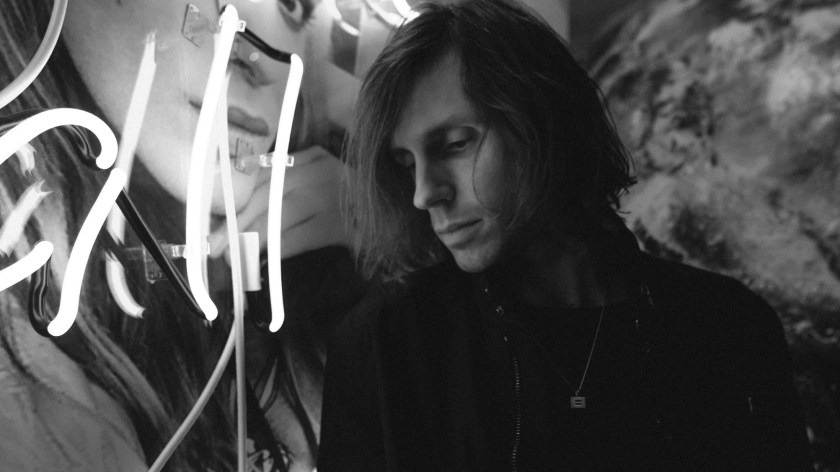
Photo credit: Phil Shaw
Discover more from MEET THE ARTIST
Subscribe to get the latest posts sent to your email.

