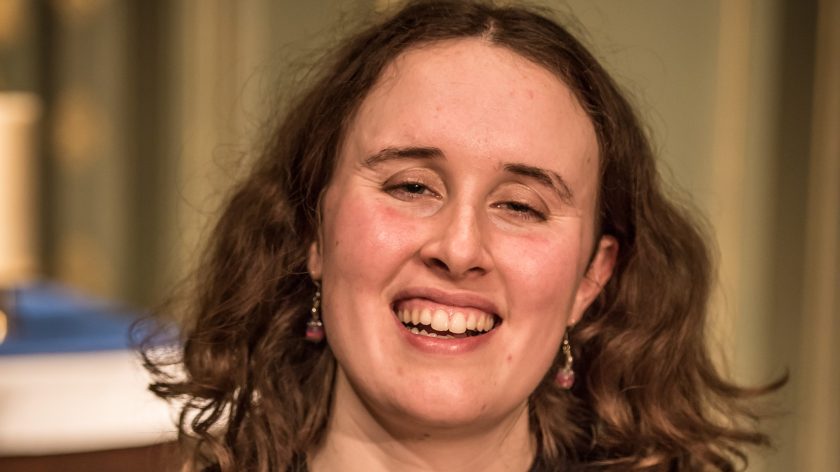
Who or what are the most significant influences on your musical life and career as a composer?
For me, it is the moments of experiencing my work brought to life that have had the greatest
impact on my compositional journey to date. I was fortunate to hear my own music performed at a very young age; these formative experiences meant I have always composed with performers, and later other collaborators such as a writers and directors, right at the heart of my process.
My very first compositions were for choirs: voice and text have since been an important part of who I am as a composer (whether in vocal or instrumental worlds), and have nurtured a enduring love of world building and telling stories through music. When composing, I often imagine some sort of ‘place’ in the broadest possible sense – I grew up in a family that loved exploring the outdoors and natural landscapes, which has undeniably shaped my own creative affinities and outlook.
Finally, there is no way I would be working as a composer today without the many teachers,
mentors, collaborators and colleagues who have guided, supported and inspired me along the
way, as well as my partner, family and closest friends. To those reading, you know who you are!
What have been the greatest challenges of your career so far?
Getting the balance right is definitely an ongoing challenge for me as a composer. I’m lucky to be
writing to commission alongside teaching composition (primarily through my role as Composition
Coordinator at Centre for Young Musicians), but that privilege comes with great responsibility; it’s
really important that I honour both to the best of my ability, without losing myself in the process.
And this is without even considering the array of work a composer is expected to juggle beyond the act of writing music!
What are the special challenges/pleasures of working on a commissioned piece?
I’m a creative that works particularly well when given a set of parameters – themes, concepts, texts and programmes often help me bring even more of myself to a project, by providing a context in which I can situate myself. I also love writing with specific performers and spaces in mind, and will often find ways to let their qualities permeate my creative process.
What are the special challenges/pleasures of working with particular musicians, singers,
ensembles or orchestras?
As mentioned above, I always strive to collaborate closely with the artists I am working with. This
inevitably becomes more difficult when working with larger ensembles, and is a challenge I am
curious to explore further as my practice develops.
Of which works are you most proud?
Most recently, my long-term collaborator Nazli Tabatabai-Khatambakhsh’s and my song cycle Book of Queens inspired by the Shahnameh (‘Book of Kings’), the 10th-century epic poem by the
Persian poet Ferdowsi:
Nazli’s and my chamber opera TIDE (Aldeburgh Festival 2022) is another project that sits
particularly close to my heart:
And through my year with National Youth Choir, I was given space to truly experiment with my
creative process and vocal writing – in particular, my work khāné (meditations on home) comes to
mind:
How would you characterise your compositional language?
Deeply concerned with narrative and world building, as well as being strongly led by a sense of line and vocality.
How do you work?
I normally start with a collection of intertwining extra-musical concepts and ideas that gradually
merge into an broader picture of what I’m going to write, which I often visualise before realising any musical material. Sometimes I sketch out a graphic representation of a piece from start to finish, whilst at other times a specific idea, sound or texture emerges vividly enough for me to sketch onto manuscript paper and/or find at the piano. I will almost always sing out vocal lines as I’m writing, even where there are no voices or texts involved.
As a musician, what is your definition of success?
Making the work I want to make with collaborators I admire and cherish.
What advice would you give to young/aspiring composers?
First and foremost, be your most authentic self. Find what gets you going as a creative and pursue it, whilst always staying curious. Listen to a wide variety of music, go to live performances to meet people and discover what resonates with you, seizing opportunities to hear other musicians perform your music whenever you can. And don’t forget that music and sound can (and do) exist in dialogue with other disciplines such as dance, theatre, film and visual art – these art forms offer invaluable perspectives on what we do as composers, so it’s worth keeping an open mind to them.
What do you feel needs to be done to grow classical music’s audiences?
Whilst I don’t have a complete answer to this right now, I believe there is a great deal to be said for building relationships and understanding with individuals/communities who may or may not think classical music is ‘for’ them. Our shared humanity lies at the heart of what we do as creatives, and that extends to those experiencing the work as much as it does to those making it.
What’s the one thing in the music industry we’re not talking about but you think we should be?
This is just one of many thoughts I have here, but the conversation around socio-economic barriers is one that too often gets overlooked in our line of work. It has become increasingly difficult to exist as an artist in the UK without some level of financial privilege, and as an industry we must ensure that future generations have a fighting chance of pursuing a creative career.
What is your idea of perfect happiness?
Music, food (especially chocolate), sunny walks, and being with the people I love the most
Emily Hazrati’s Words, tracing receives it world premiere on Sunday 23 May at this year’s Song Easel series, which runs from 21 to 24 May. Find out more
Discover more from MEET THE ARTIST
Subscribe to get the latest posts sent to your email.

