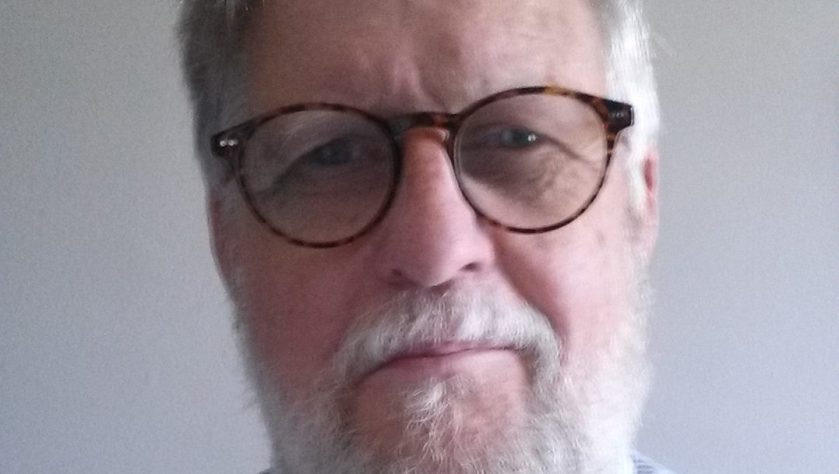
Who or what are the most significant influences on your musical life and career as a
composer?
I regret I didn’t start studying piano til my late teens, though I did take flute lessons before that. But my biggest musical influence has been choral music, specifically coming up through the Anglican church choir tradition (in Ottawa, Canada, where I grew up). It was the traditional men-and-boys choir in those days, so I sang as a treble from age 7 and as an alto (countertenor) after my voice changed (late, about age 15). I still sing in choirs, mostly now as a tenor, including a fine (mixedvoice) evensong choir. As a result, many of my works as a composer are choral or vocal.
I took a music degree (B.Mus) at Queen’s University (Kingston, Canada), where my studies included composition. Also music history, which has found its way into several books I’ve written of humorous music history (Bach, Beethoven and the Boys; When the Fat Lady Sings; Getting a
Handel on Messiah; Bach, Beethoven for Kids and others.). I also have to give a shoutout to earlier musical humourists – Victor Borge, Peter Schickele, Tom Lehrer, Anna Russell (who graciously wrote the foreword to my opera history book, When the Fat Lady Sings). Both as a writer and composer, musical humour has been a strong influence on me.
What have been the greatest challenges of your career so far?
As a composer (also as an author), my biggest challenge has been in getting enough exposure for
my work. Getting choirs or other performers interested enough to perform my works. Now that
many of them are published (SheetMusicDirect.com and SheetMusicPlus.com), also getting
enough interest in sales. I continue composing anyway, because I enjoy it and find it satisfying
(also sometimes a welcome change from writing books). But I’ll be frank in saying I’d welcome
greater recognition – and commissions/sales that might come from that.
What are the special challenges/pleasures of working on a commissioned piece?
For choral music, I generally prefer setting only texts that speak to me, that I can endorse
emotionally or philosophically. So it can be a challenge to set a text that someone else has chosen (either by commission or, say, for a competition). But I welcome that challenge too. And of course you hope that – if you’re writing for someone else – they are going to like what you’ve written for them. The special pleasure comes from when they do.
What are the special challenges/pleasures of working with particular musicians, singers,
ensembles or orchestras?
In my brash youth I composed two symphonies (shortish Haydn-length ones, not Mahler). The first, Symphony #1 in C major (Narnia) I wrote for a friend’s ensemble. It started as a suite for concert band, with which as a former flute/sax player I felt more familiar. I later rescored it for orchestra (strings etc.) Which was much more of a challenge (and I had some help), since I’m not a string player and much less familiar overall with how orchestras and voicing work (as opposed to choirs).
The second one (in G minor) was just an academic challenge I set myself. I’d say artistically semisuccessful, though it’s never been performed. Wanting a Holstian or John Williams sound, I made the rookie mistake of scoring one of the movements for four horns (!) Silly. No one has four horns. You could get the sound with two horns and two trombones. Live and learn. Anyway, I know enough now to stay away from writing large instrumental works. I’m much more comfortable with smaller ensembles, or especially choral music, and shorter works overall. I will say the symphonies did generate some nice tunes that I’ve happily stolen from myself and reworked for other pieces. So not a complete waste.
Similarly, I’ve just composed a prelude & postlude for organ. I relied on some organist friends to explain the best way to use the instrument and make my music playable. The challenge with choral/vocal music is in writing melodies and harmonies that not only sound good but are also easy enough or at least manageable to sing. In a comfortable tessitura, with rhythms and harmonies that make sense. Being mindful of tuning. (Why is F major such a difficult key for choirs to keep in tune? Such a mystery.) But also trying to say something new and fresh.
Of which works are you most proud?
Definitely my Requiem for SATB, oboe/cello/organ. It’s about 20 minutes long and combines some of the traditional Latin texts with poetry by Milton, Donne and others. I honestly think it’s quite beautiful musically and spiritually. But also, despite my church music background, I’m an agnostic humanist, so I took care to choose texts – at least most of them – that express my particular spiritual sensibilities. One text is by St. Anselm (ca. 1100) that I found tucked away in a corner of Canterbury Cathedral. It’s a lovely prayer that celebrates “thinkers, writers, artists and crafters” and encourages us “to seek for truth and to rejoice in beauty.”
Also proud of my Missa Brubeckia, based on the music of Dave Brubeck, for SATB and jazz
quartet. I got Brubeck’s permission to write it, but alas his publisher stepped in to prevent
publication or any future performances. So it’s had only its debut, none after that. I’ve decided now that 30 years have passed, I should see whether the publisher might allow it – and if I can afford the licensing fee.
Other than that, I’ve written a whole bunch of short, lighter parody pieces for solo piano for friends, based on Happy Birthday – in the style of a Bach two-part invention, Beethoven’s Moonlight Sonata, Chopin’s Prelude in E Minor, Elgar’s Enigma Variations, Haydn’s Nelson Mass, the Star Wars Imperial March, the Get Smart theme, the Great Escape March, etc. They’re good fun and I enjoy writing them. Also little piano fughettas on Taylor Swift’s Shake It Off and Drake’s Hotline Bling. Britney Spear’s Oops I Did It Again arranged for SATB in the style of a 16th-century madrigal. (Also in a version for solo piano.)
How would you characterise your compositional language?
Being a fan of some jazz (certainly Brubeck) as well as choral (Byrd, Purcell), I do sometimes like
writing in compound rhythms (my Requiem plays with 7/8 and 5/8 in some movements). And I
often use jazzy chords – added 6ths, 7ths, 9ths and other crunches. I even like (sometimes)
finishing a cadence on an unresolved major/major seventh or ninth chord. A kind of wistful lack of finality. With my strong choral influence, I often describe my style as Byrd meets Brubeck.
How do you work?
I don’t get many commissions or requests (call me!). So most often I’m just writing for myself –
maybe I find a poem or text I like – or in hopes that after I’ve written it, someone will like the piece enough to perform it. Writing my music books – and now writing murder mysteries – takes a long time. So sometimes I just like the distraction and more immediate satisfaction of composing a parody for someone’s birthday, or a little fugue or fughetta on a popular song. Anthony Burgess, who wrote the preface to my book Bach, Beethoven and the Boys, once said he wrote fugues the way “old women knit” – as a kind of distraction and to keep his hands busy. I’m the same. I used to write by sitting at the piano and scribbling onto staff paper with a pencil. I now use Finale software (for as much longer as that will survive), so I’m getting better at writing right “on the page,” as it were. I still have to go back to the piano to check things often (my brain isn’t as smart as my ear). But being at best a mediocre pianist, I also appreciate that the software can play my music back to me at whatever tempo – from absurdly slow so I can check harmonies, to an a tempo much faster than I could ever hope to play it. Also, no one else can read my handwriting, so I appreciate have a beautifully legible final score. And the ability to transpose and change things easily is wonderful.
As a musician, what is your definition of success?
Won’t lie, commercial success is welcome. But I also take great satisfaction in learning that
musicians enjoy performing my work and listeners enjoy hearing it. Depending on the mood/intent of the piece, whether I can move them or bring them a little bit of joy.
What advice would you give to young/aspiring composers?
Learn piano early! Also some other instrument(s). Sing as much as you can. Regular choir or band
helps hone your sightreading skills. And you get to be with other people who like music too. Learn harmony/theory. Best to know the “rules” before you can break them properly. Listen to anything and everything. And enjoy yourself.
What do you feel needs to be done to grow classical music’s audiences?
This is something I’ve tried to address in my music books: We’ve made some progress, but
classical music still suffers the reputation of being stuffy and unapproachable for many listeners.
Sometimes it’s a language barrier (surtitles have helped this), other times a sense of over-formality that some can find offputting. Having said that, there’s a delicate balance. Too casual and you may get people yakking on their phones during the performance, or chatting as if they’re at home on their couch. So I think a little education in concert etiquette is welcome. Both as performer and listener, I take it seriously enough to want no clapping between movements and, in a solemn piece, a decent interval of silence before applause at the end. One way to accomplish this is to have the conductor (or someone) speak to the audience before the show starts to explain some of these things (phones off!). One choir I sing with often has what we call a “Kaffeemusik” concert, where the artistic director gives informal (though always carefully researched) program notes and explanations about the music as we go along. I find useful and interesting information always enhances the audience’s appreciation of the music.
What’s the one thing in the music industry we’re not talking about but you think we should
be?
There are several – fair treatment of musician as regards pay and also decency and equity. But the biggest threat we now face is from so-called “generative AI.” The outright theft of our labour, effort, creativity and intellectual property without any of “the three C’s” – consent, credit and
compensation. So now we have AI “composing” music that’s “performed” by AI “musicians.” All of it built on theft and a complete lack respect for real artists. We as a society, and as governments in particular, need to stop this unethical behaviour, crack down on theft and ensure that artists are treated fairly and properly compensated. Anything less is a failure of the social contract.
What next – where would you like to be in 10 years?
I hope still composing, still writing, still singing. I might be done with the music books, but I am
working a fourth Dugan Heywood mystery, and he’s a working musician, so I can keep my hand in that way. Most immediately, I’m looking forward to singing a performance of the Tallis 40-voice
motet Spem in Alium. A rare opportunity. This will be the third time for me.
What do you enjoy doing most?
Singing beautiful choral music well (maybe the Byrd 4-part) and walking my dog. And nothing
beats a nice cup of tea.
What is your present state of mind?
Despite the awful political climate of Trumpism (which affects us here in Canada as in the whole
world) and despite my anger at and legitimate fear of generative AI (“Other than that, Mrs. Lincoln, how was the play?”), I still find joy and hope, even in small quantities, in music – in creating it, performing it and in the fellowship and togetherness it brings us.
Discover more from MEET THE ARTIST
Subscribe to get the latest posts sent to your email.

