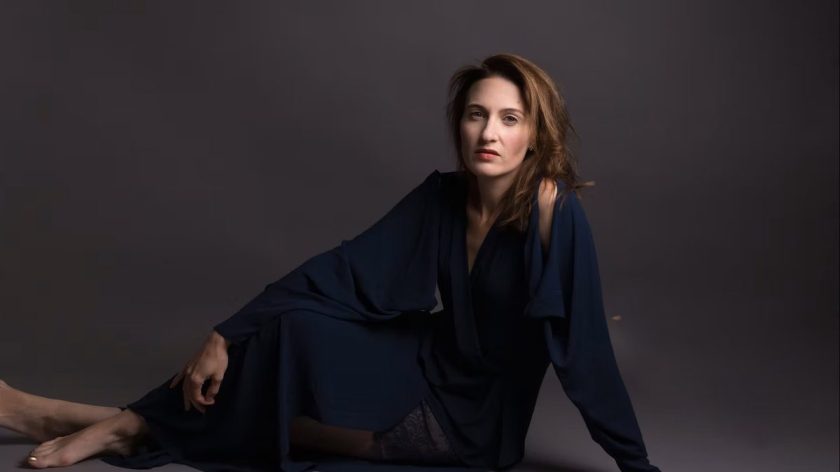
Who or what inspired you to pursue a career in music and who or what have been the most important influences on your musical life and career?
I was raised in a very small town called Columbus, Georgia in the USA and I didn’t have any exposure to classical music apart from old movies and an old tape that had the Hallelujah chorus that my mom liked. The way that I came to classical music was a high school teacher who told me “you have classical chords!” I had no idea really what that meant! I was brought up singing gospel music and trying to sound like the incredible soloists in front of the church I grew up in!
My teacher gave me a book of arie antiche and suggested I learn a few. Within the week I had learned two of the songs myself by playing the tunes on the piano. I had piano lessons from the age of five, and figured out the tune. I found a recording and copied the Italian. She then said to me, “I have a friend who can coach you.” I went and had my first coaching at the age of 15. I was hooked. I loved it! I felt like this was a whole world that I could lose myself in. I always was drawn to poetry and the poems set in song, especially German were incredibly honest and profound. Reading was always my escape and this felt like a natural progression into a new way to express poetry and art for me.
Making a career in music was a very tough decision. I was going toward law as a career as a wise choice…. I had obtained a music scholarship but also a much larger academic scholarship to pursue maths and law. It was such a tough call to follow my passion. I did a few years of law and I don’t regret it. I loved studying anthropology, history, and calculus and in many ways I think it has made me a better artist to know more about the world around me, but I couldn’t let go of the fact that every free moment was filled with me singing and learning/performing music. I changed path to music and never looked back.
The early stages of my career were not typical. I worked incredibly hard at the Schwob School of Music in Georgia. Wow! It was tough, but built such an amazing foundation for my knowledge of all I needed to really feel confident and progress. I moved to the UK and even before I went to the Royal College of Music I got the role of Mimì in La bohème and sang over 45 performances over 2 years of a tour all over the UK and Ireland. That role meant so much to me. I had been on stage acting since I was 5, but opera was just incredible. It really gave me so much joy bringing Mimì to life.
After that I went to the RCM hungry to learn more stagecraft and get more experience and contacts for the road ahead. I did an audition and became the voice for Peroni in cinemas all over the UK and Europe, which paid for my education!! I went on to receive the gold medal from King Charles for my year. I used to say that they gave me the medal because I never left the building! I miss the library so much. The students don’t know how incredibly lucky they are to have those resources until you can’t get to them any more!
After that I have sung nearly 50 roles so far. Every one has been rewarding and a discovery. I have worked a lot and felt incredibly lucky to have those opportunities. I have sung a lot with English Touring Opera over the years. I felt as though I was on festival contract with a UK house because I learned so much working with the company and sang so many roles. It built a way for me to have a UK based career and have a life and three children in the mix. I never wanted to sacrifice my life for this career but to have it be a part of the whole picture of who I was as a person. Woman, artist, wife, mother, friend. I didn’t want to sacrifice those things for the voice.
What have been the greatest challenges of your career so far?
Balance. I always seek it. I would work more abroad but say no if I am away from my family more than I want. I know I can do the job well but want to encourage companies to have better boundaries in contracts. People should be able to go home at weekends. Directors can plan better to get things done in the week so we can have other parts to our lives. This is a tough subject as many don’t want to really say it as they feel they won’t get work. I don’t mind saying it as I won’t do that sort of work out of choice. This does come with a regret that the business is not designed for artists to have a life but to sacrifice it all for the art. This needs to change.
Which performances/recordings are you most proud of?
I am proud of both of the recordings I have done with Sergey Rybin. The La Voix was truly a joy as I had performed it several times by then with him and wanted to really capture it. Same with the songs in our new album, Of Love and Transience, which is 15 years in the making with songs I have loved to sing for many years and wanting to share them in a different medium for others to enjoy, especially the songs by Viktor Ullmann and Korngold. They hit a special note for me because of their story and the historical context of their compositions.
Which particular works/composers do you think you perform best?
I think one thing casting people have told me time and time again is that I fall in the trap of being able to do too much and confusing people. I pride myself on having a very good technique in singing, with that comes the ability to be very versatile. I think the roles I have enjoyed the most changes, but I do enjoy working with amazing directors from outside opera that bring that side of character to Opera, rather than just the logistics of stand and sings. I enjoy finding the fire in characters, whatever that may be.
How do you make your repertoire choices from season to season?
I am always talking about rep with dear Sergey…. he is just fabulous and I always feel like we are partners in our choices. We play things and it always just works so beautifully.
Opera is a different world because you are chosen. The psychology of living in a perpetual waiting room for people to choose you next is a part of being a singer. You have to be comfortable with change and how people see you. I have worked over the years to always feel I still have choice and can say no when it isn’t
right for me. I can sing almost anything so that his my challenge. I can say no.
Do you have a favourite concert venue to perform in and why?
I recently sang at the Holywell Music Room for the Oxford International Song festival and what an incredible space. It is so intimate and historically incredible. I would love to sing here time and time again. You feel much more connected to the audience to really tell stories through the music and be more vocally nuanced.
What do you do off stage that provides inspiration on stage?
I read a lot. I play a lot with my children. I teach. I invest in therapy. I many ways a combination of all these things makes me a better performer. I think we need to be playful in order to take risks on stage. We need to be self-aware enough to be able to let go and trust we are safe when finding a character or singing a new role. We need to be curious by reading and continue to find out more about the world and how we think by reading. Therapy is a huge support to make sure you are held and supported through the challenges of working with characters who suffer, which may connect to your own pain without bringing that pain to our real lives. That is something that needs to be acknowledged more.
What is your most memorable concert experience?
One of the concert experiences that still feels very powerful to me was performing La Voix during Covid at Snape Maltings in Aldeburgh. There was a massive space, socially distanced, masks and face shields shining in the lights reflecting light back at me on the stage. Everyone wanted to be there no matter what. They wanted and needed music. We all did. I felt it more then than ever. Being in a room sharing music and art is a privilege we all need.
As a musician, what is your definition of success?
Success is working on my craft and growing as a musician every day, through every concert and every performance and at home at my piano. We can’t control everything but we can grow. If we grow we succeed at being better artists.
What do you feel needs to be done to grow classical music’s audience?
I’m reading a book at the moment “The World of Yesterday” by Stefan Zweig. In this book he describes being obsessed with opera and art and literature at the age of 12 with his friends. Seeing the stage as a reflection and challenge to society. I believe that opera shouldn’t be a museum or a reflection of the past but the present. It should challenge us and make fun of us…. help us see ourselves. If it does this it will be more appealing to a younger audience. They want to challenge authority and be seen. If art doesn’t do this it is not alive and present. It is dead and something of the past. Opera falls into this trap as it doesn’t want to challenge the audience too much and become uncomfortable.
What’s the one thing in the music industry we’re not talking about which you think we should be?
Balance and boundaries in the industry. Planning is crucial to provide better respect for artists.
What advice would you give to young or aspiring musicians?
Grow as a person every day. Remain curious. We are human beings who need to grow in order to perform.
‘Of Love and Transience’ is released on 30 October – a collection of hauntingly beautiful early 20th century songs, by Alban Berg, Viktor Ullmann, Erich Korngold and Richard Strauss (Four Last Songs), all written at a time of huge transition, both in music and in history. Digital only release.
Discover more from MEET THE ARTIST
Subscribe to get the latest posts sent to your email.

