Who or what inspired you to pursue a career in music and who or what have been the most important influences on your musical life and career?
Without Canon Neil Heavysides at Gloucester Cathedral I’m not sure I would have pursued music at all. On a school trip with the school chamber choir we sung a couple of Evensongs at Gloucester Cathedral whilst the Cathedral choir was on a break. I sang a little solo and Neil came to me afterwards and arranged for me to sing for the Head of Music, Adrian Partington. I auditioned for a choral scholarship and was given a place for my gap year and moved to Gloucester after my A Levels. Without that I don’t think I would have gone into music at all!
What have been the greatest challenges of your career so far?
I think the thing that bothers me the most is how irregular the schedule is and how it prevents anything that requires regular commitment. I would absolutely love to still be playing rugby or cricket or have a season ticket at Leicester Tigers, but it’s just impossible. I tried to play cricket when I was at Glyndebourne for a few summers and joined a rugby team here in Hannover which was great, but eventually the work just gets in the way and a combination of it not being fair on teammates and being stressful to organise, means it usually runs its course fairly quickly.
Which performances/recordings are you most proud of?
A tough question! I think if I’ve given myself the best chance to perform well and have given everything in each moment in terms of communication, honesty, vulnerability and vocal performance, then I’m proud of myself. I can only demand from myself my best in each given moment and I always feel proud that no matter how big or small a concert might seem I give all of myself to it. My two CDs, for example, I’m very proud of what I gave to them and I’m proud of the snapshot of me on those few days recording, but there’s heaps of things I’d love to change about them and I know they are not perfect.
Which particular works/composers do you think you perform best?
Another tough question! I think my voice is well suited to song singing because of the colours I demand from it and I love how direct the communication is. I don’t think there is a specific composer I’m better with, but I’d say German and English are the languages I sing most fluently and idiomatically. At the moment I’m working hard on Russian and French and hopefully one day I’ll feel confident enough to perform that repertoire in native speaking countries. In terms of composers, I try not to change my approach with different composers, but I’m sure other people have opinions on what my voice suits better. I think whatever I perform I just want it to be honest to myself in terms of my direct reaction to the music and the words and my ideas of how I can best communicate that to an audience. I reckon that’s a more achievable goal than wanting your Russian repertoire to sound like Hvorostovsky or your lieder to sound like Fischer-Dieskau or, perhaps worse, pigeon-holing yourself into one particular genre or style.
What do you do off stage that provides inspiration on stage?
I just try to consume as much art as possible I suppose; TV, film, art galleries, live theatre, books, poetry, all types of music – I especially find reading books and poetry helpful as it’s important in our job to find and expose our emotions through someone else’s words. I reckon as well that just being open with ourselves and our emotions is really important so we can recognise when what we have been through and what we have felt is relevant to our characters on stage. I suppose in the end, everything we go through as humans is important to our characters and roles on stage if we want it to be relatable. I find watching Shakespeare fascinating as there are a lot of parallels to draw with opera and it’s cool to see how, despite the slightly complex language, it can be just as communicative and moving as anything on Netflix.
How do you make your repertoire choices from season to season?
There are lots of factors that come in to it but, as I rule, I try to avoid doing whole recitals of brand new repertoire and I pace the learning of things around different recitals so that it’s not too overwhelming. Other than that, I just try to build programmes I think my Mum would enjoy. She loves coming to hear me sing, but didn’t train as a musician so it seems a nice target audience to programme for. I mostly like using themes so that musically there can be a big variety, but still with a thread that we can follow through, and then a nice balance between well-known and lesser- known works, different languages, moods, styles, composers etc.
Do you have a favourite concert venue to perform in and why?
I don’t know if I have a favourite, but I’ll always be so grateful to the Wigmore Hall for all their support. It really feels like a ‘home game’ when performing there, which is such a lovely thing to feel about such a famous and prestigious venue.
What is your most memorable concert experience?
When I was about 9, I was singing the Hallelujah chorus at De Montfort Hall in Leicester and I sung one too many hallelujahs in what should have been the dramatic silence before the final cadence.
As a musician, what is your definition of success?
I’d love to just fulfil my potential, be as good as I could possibly be, that would be an amazing achievement.
What advice would you give to young/aspiring musicians?
I think for me music has always been about telling stories and communicating with people and making people feel things. I think if you move someone or make them feel something they’ll never forget… that’s a beautiful thing.
What do you feel needs to be done to grow classical music’s audiences?
I’m not sure I have an overall answer to that, I’m sure advertising and social media and all those things can play a part if we were to harness them better as an industry. I think it would make a massive difference if it was prioritised more in schools, especially state schools like the one I went to. I think we shouldn’t be afraid to celebrate the audience that classical music already has though – if we focus on the content being truly remarkable then there’s an audience there. I wonder if something we must guard against is lots of concerts but with limited rehearsal time and assuming that playing all the right notes at the right time is good enough. I’m not sure a pop singer would get away with that or a West-end show, but I’m not really an audience member so these are just thoughts.
What’s the one thing in the music industry we’re not talking about which you think we should be?
This is quite specific and is something that is much better in the UK than elsewhere, but the norm in opera for schedules to be released daily and sometimes with barely 12 hours before the next rehearsal seems a fairly brutal to way to live life. I’m not sure there are many other jobs that demand that of their employees and it doesn’t help with mental health etc, especially when you’re expected to be away from home for such a huge proportion of your working life.
What is your idea of perfect happiness?
I‘m not sure this exists – ha ha – but a pretty great day is being home with my girlfriend, cooking all day, sport on the TV to watch, cold beers, time to play a bit of PlayStation and no concert for at least a week!
James Newby, one of BBT’s most recent award-winners fron 2022, is appearing in London at Wigmore Hall on Saturday 10 June 7.30 pm as part of the Borletti-Buitoni Trust’s (BBT) 20th anniversary celebrations. He sings Mahler’s Rückert Lieder with Mitsuko Uchida. https://www.bbtrust.com/events/bbt-celebrated/bbt20/
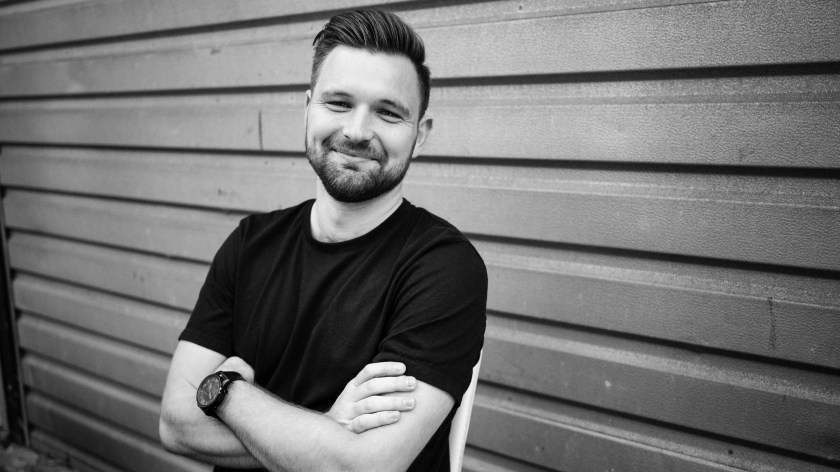
Photo Credit Gerard Collet
Discover more from MEET THE ARTIST
Subscribe to get the latest posts sent to your email.
 MEET THE ARTIST