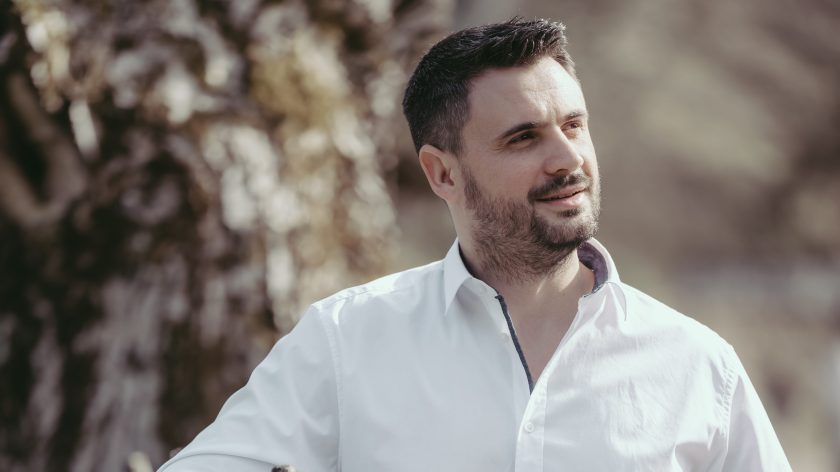
Who or what inspired you to pursue a career in music, and what have been the most important influences?
I didn’t really “decide” on music at any one point, it was always there. I grew up in a family where music, especially traditional folk music, was part of everyday life.
Even though I later moved toward classical music, that early influence never left me. That direct, almost raw way of expressing something through sound still shapes how I think about music today.
What have been the greatest challenges of your career so far?
Honestly, the biggest challenges are internal – learning to trust yourself, staying focused, and not losing your direction in moments of doubt.
There’s a lot of uncertainty in this path of being a musician, and you have to build a certain kind of mental strength. In the end, that inner work becomes just as important as everything you do at the piano.
Of which performances are you most proud?
A special Wigmore Hall recital stays very present in my memory (April 2019 – The Royal College of Music Benjamin Britten Piano Fellowship Recital). It was one of those rare moments where everything aligns – the sound, the space, the concentration. I felt completely inside the music and at the same time deeply connected to the audience.
Which particular works/composers do you think you perform best?
I naturally gravitate towards Schumann and Brahms. There’s something very human in their music, something that allows you to go very deep, but without forcing anything. It feels close to how I hear and experience music myself. I also love the music of my country, which I explore in depth in my new recording ‘Origins’.
How do you make your repertoire choices from season to season?
It’s quite instinctive. I follow what draws me at that moment. Sometimes a piece stays in my mind for a long time before I actually play it, and sometimes it appears very suddenly. I try not to overthink it too much.
Do you have a favourite concert venue to perform in and why?
Wigmore Hall is definitely special to me. The acoustics are so clear that there’s nowhere to hide, but at the same time it allows for a very intimate connection with the audience. However, I would say that in general, it’s not really about the hall, it’s about whether the moment feels real.
What do you do off stage that provides inspiration on stage?
Having quiet time: walking, being alone with my thoughts, listening to the world around me. Such moments somehow settle in you, and later they come out naturally when you’re on stage.
What is your most memorable concert experience?
My first performance of Brahms’s First Piano Concerto with an orchestra – the Young Musicians’ Symphony Orchestra with conductor James Blair in 2017 at St John’s Smith Square, as it was then known. I remember that feeling of being inside this huge sound. It was powerful, almost overwhelming, but at the same time there was a very strong sense of connection, everything felt alive in that moment.
As a musician, what is your definition of success?
For me, success is very simple. It’s those rare moments when you forget everything else and are completely inside the music. If that reaches the audience in an honest way, that’s enough.
What do you feel needs to be done to grow classical music’s audiences?
I think we need to stop presenting classical music as something distant or untouchable. The music itself is incredibly direct, but often the way it’s presented creates distance. If you bring it closer, make it more human, more open, people respond to it very naturally.
What’s the one thing in the music industry we’re not talking about which you think we should be?
We don’t talk enough about how vulnerable the creative process actually is. There’s so much focus on results, careers and visibility, but very little on protecting the space where things are still uncertain, where you’re searching, failing, trying again. That’s where real growth happens.
What advice would you give to young or aspiring musicians?
Don’t try to fit into an idea of what a musician should be. Stay curious, take risks, make mistakes, and trust your own path. Everything else comes with time, but that part has to be yours.
What is your present state of mind?
I feel a sense of balance now, more peace and control in life, and that, in a way, allows for a deeper freedom in music overall, a freedom to explore, to experiment, and to follow my own instincts without being limited by fear or doubt.
Serbian pianist Nikola Avramović explores Central/Eastern European folk traditions in his new album ‘Origins’
Discover more from MEET THE ARTIST
Subscribe to get the latest posts sent to your email.

