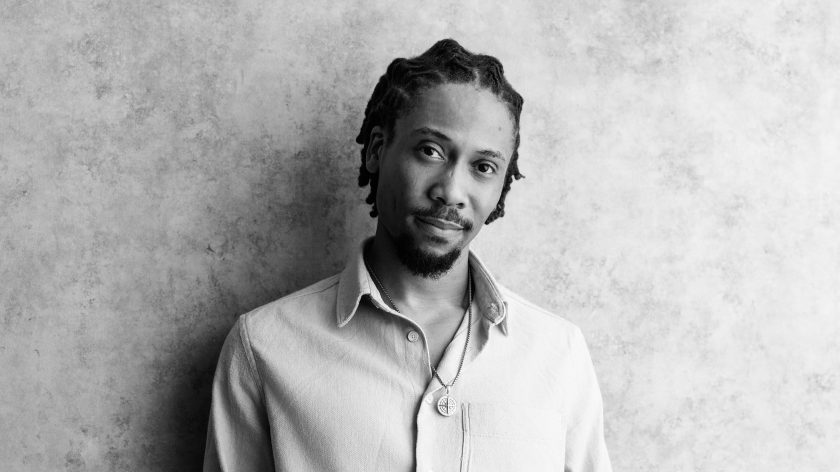
Who or what are the most significant influences on your musical life and career as a
composer?
My influences come from many places, but they are all connected by sound, story, harmony, rhythm and craft.
I remember hearing Stevie Wonder’s Songs in the Key of Life for the first time as a child. Even then, without knowing what it took to make a great body of work, I knew I was listening to a masterpiece. It reached me before I had the language to explain why. Stevie’s songwriting, harmony and emotional directness have stayed with me.
Miles Davis has shaped the way I listen. My real introduction to Miles was not through the album people might expect, like Kind of Blue, but through Sketches of Spain. That album made me hear him differently. The space, restraint and atmosphere had a real impact on me.
Danny Elfman was another major influence, especially through The Nightmare Before Christmas. I remember devouring that score. It was strange, gothic, theatrical and full of imagination. It connected with the kind of worlds I wanted to build as a composer for theatre, film and media.
John Williams has influenced me through the scale and clarity of his writing. Hedwig’s Theme has such movement and beauty in it. The Imperial March is terrifying, grounded and almost royal. I remember hearing the brass in that piece and feeling its authority. Then there is the adventure and heroism of the horns in Indiana Jones. His music understands wonder.
Quincy Jones is probably the clearest blueprint for excellence. His range is extraordinary. Thriller, Off the Wall, The Italian Job, Frank Sinatra, Count Basie. He moved across worlds with deep musicianship and complete command. Quincy is the stencil for me. If I could achieve even a percentage of what he did in his lifetime, I would be very happy.
I am also influenced by Pharrell Williams, especially his ability to find the right sounds and simplify with excellence. He understands how little you sometimes need when the idea is strong.
Jack Bruce has influenced my sense of energy, bass, harmony and song. Orphy Robinson has also been an important influence and presence, especially as someone who moves with depth across Black music, improvisation, composition and performance. I think I am drawn to artists who were never just doing one thing. They were building languages.
What have been the greatest challenges of your career so far?
One of the greatest challenges has been learning how to move through high end art spaces while holding the full scale of my work. There is sometimes an unspoken racial undercurrent in those spaces. I have experienced situations where people assume that my work will be easier to play, easier to understand or less technically demanding because I am a Black composer. It is not always said directly, but it can be felt in the preparation, the rehearsal time and the way the work is approached.
Then, when people realise the music requires real commitment, there can be a difficulty that has nothing to do with the clarity of the score. It has to do with the amount of time and respect the work should have been given from the beginning.
Another challenge is the wider financial instability that many artists face. I do not think this is only a personal issue. It is structural. Artists are often expected to make work of emotional, cultural and intellectual value while dealing with uncertainty around fees, payment schedules, rights, royalties and long term sustainability. That affects the art. Stability does not make art less brave. In many cases, it allows artists to make stronger work.
I have also had to learn how to exist across different musical worlds without being reduced by any of them. I work across theatre, contemporary composition, songwriting, electronic music, performance and collaboration. That range is central to who I am, but the industry often wants to categorise people quickly.
The challenge has been to stay clear about the work, even when the structures around it are still catching up.
What are the special challenges and pleasures of working on a commissioned piece?
The pleasure of a commission is that someone is asking you to bring something into existence. There is trust in that. A commission gives the imagination a frame, and a frame can be useful.
The challenge is that commissioned work sits between your inner world and an external structure. There may be a venue, an organisation, a brief, a deadline, a budget, performers and an audience expectation. The task is to honour all of that without losing the reason the piece needs to exist.
For me, the best commissions are conversations. They allow me to ask: Why this piece? Why now? Who is it for? What should the audience feel or understand differently afterwards? There is also a useful discipline in writing for a specific moment. You cannot wait forever for the perfect
version of yourself to arrive. You have to make decisions. You have to finish.
A commission reminds you that music is not only an internal act. It has to meet the world.
What are the special challenges and pleasures of working with particular musicians,
singers, ensembles or orchestras?
One of the great pleasures of being a composer is hearing a piece become more human through the people playing it.
I love writing for particular musicians because they bring tone, instinct and personality to the work. When you know who you are writing for, the music becomes more specific. You are not only writing for an instrument. You are writing for a person.
I am drawn to musicians who have depth beyond technique. Craft matters deeply, but I am also interested in players and singers who understand atmosphere, restraint, groove, silence and emotional truth. Some music needs precision. Some needs fire. Some needs the performer to understand where the music has come from.
The challenge is communication. As a composer, you cannot hide behind feeling. You have to give musicians enough structure to do their best work while leaving space for their humanity.
Collaboration opens up new sides of me as a composer. I think it can do the same for the collaborator, as long as there is mutual respect for each other’s art and craft.
When that respect is present, the piece stops belonging only to you. It becomes a shared act.
Of which works are you most proud?
I am very proud of The Windrush Suite which has its live premiere later this month on the 25 June at music venue Kings Place in London. It won an Ivor Novello Award but has never been performed in front of an audience until now. I’ve amassed a distinguished rollcall of musicians including Orphy Robinson MBE, Romarna Campbell, Ayanna Witter-Johnson and Jean Toussaint who will all be performing on stage with me.
This is more than a concert, it will be an evening of connection, reflection, and celebration.
I am proud of the vision behind it. It took personal and collective memory seriously. It allowed me to bring together orchestration, jazz, spoken word, Caribbean influence and Black British history in a way that felt honest and necessary.
I am also proud of Yasuke, the opera I am currently writing. I am both composing the music and writing the libretto, which is pushing me into a deeper relationship with structure, drama, character and scale. Opera is demanding because everything has to carry weight: music, language, silence, tension and emotion. It is forcing me to grow.
Another work I am proud of is The Last Summer, my contribution to Four Seasons of the Caribbean. That project was a 21st century response to Vivaldi’s Four Seasons. I loved the idea of responding to a classical work through the sounds, feelings and stories of Britain’s Caribbean community.
I am also proud of the music I wrote for Othello at Shakespeare’s Globe, particularly in the Sam Wanamaker Playhouse. It is such an intimate space. Writing for that room is a pleasure because every sound feels close and alive. I enjoyed how audiences responded to the way the music helped amplify the story.
I am proud of 2fox as well, because it represents a different but equally important part of my musical world. It sits in the electronic music space rather than the classical or theatre world, but it is still connected to how I think about sound, collaboration, movement and audience connection. The project has achieved over 30 million streams and counting, and the response from audiences has been incredibly affirming. We are developing an album for release this year and touring festivals, so it feels like a clear example of how my work can move across different spaces and still carry a strong artistic identity.
I think the works I am proudest of are the ones where the music does more than decorate. It reveals something. It changes the temperature of the room.
How would you characterise your compositional language?
I would describe my compositional language as rooted in African diasporic memory, shaped through Afrodiasporic sound, and reaching toward universal scale. That means I am interested in music that carries history, but does not feel trapped in the past. I use harmony, rhythm, texture, voice, repetition, groove, orchestration and atmosphere to build musical worlds. My music often moves between the intimate and the cinematic. It can be reflective, physical, direct or
spacious, depending on what the work needs.
I am drawn to the meeting point between classical form, theatre, jazz harmony, Black British music, Caribbean rhythm, electronic music and song. I do not see those things as separate territories. They are all part of the same language.
I think a lot about memory. I think a lot about the body. I think a lot about what sound can do before words arrive.
I want the music to feel specific in its roots, but wide in its reach.
How do you work?
There is a lot of thinking before anything is written down.
I often begin by humming, singing, walking around with an idea or sitting with the feeling of the piece. I need to understand what the work is asking for before I start shaping it properly.
Sometimes I improvise around the piano. Sometimes I sing fragments into my phone. Sometimes I work directly in a DAW. Sometimes I need to map the structure before I touch the harmony. The process changes depending on the piece, but the first stage is usually about listening inwardly.
I love collaboration when there is mutual respect. A good collaborator can open up a new side of me as a composer. They can reveal something I would not have found on my own. But collaboration only works when both people respect each other’s craft. It should sharpen the work, not blur it.
I also believe there is no inspiration greater than a good deadline. Deadlines create decisions. They stop you from floating in possibility.
My mornings tend to be quiet. They often involve walking, silence and time to process the day that has gone and the day ahead. I need that space. It helps me hear what is actually important.
As a musician, what is your definition of success?
Success is freedom with artistic integrity.
It is the ability to make work that feels honest, ambitious and necessary. It is being able to move across different musical spaces without losing the centre of who I am. It is having the clarity, support and structure to build work at the level I imagine it.
Success is not only recognition, although recognition matters. It is not only money, although financial sustainability matters because it allows artists to create with more freedom and less fear. Success is also impact. Does the work move people? Does it open something up? Does it contribute to culture? Does it last beyond the moment?
I am interested in building a body of work, not just collecting opportunities. I want the music to have weight, beauty, memory and reach.
So success, for me, is impact, ownership, dignity, artistic truth and the ability to keep expanding.
What advice would you give to young or aspiring composers?
Take your musical voice seriously, but do not romanticise confusion.
You need imagination, but you also need craft. You need instinct, but you also need discipline.
You need to understand the business, not because business is more important than music, but because poor structures can damage good art.
Learn how to communicate. Learn how to collaborate. Learn how to finish. Learn how to invoice properly.
Learn what rights you are giving away. Learn what your music is worth. Learn how to listen to musicians.
Learn how to protect your energy.
Do not spend too much time trying to sound impressive. Try to sound honest. The world does not need more music pretending to be important. It needs music that has found a reason to exist.
Also, understand that your career may not look like anyone else’s. That can be frightening, but it can also be the source of your power. Build a life around the kind of artist you actually are, not the one the industry finds easiest to understand.
What do you feel needs to be done to grow classical music’s audiences?
Classical music needs to stop treating audience development as only a marketing problem. It is also an artistic, cultural, educational and structural question.
People come toward music when they feel invited into meaning. That does not mean everything has to be simplified. Audiences are intelligent. But they need to feel that the music is connected to life, story, identity, emotion and the world around them.
We also need to look honestly at who is being programmed, who is being trusted, who is being given proper rehearsal time, and what kinds of stories are treated as central rather than additional.
Growing audiences does not mean chasing trends. It means expanding the frame. It means allowing classical music to be in conversation with the world people actually live in. It means taking young people, Black audiences, working class audiences and culturally diverse audiences seriously, not as outreach categories, but as people with taste and intelligence.
We need to make the concert hall feel less like a place of permission and more like a place where human experience can happen.
What’s the one thing in the music industry we’re not talking about but you think we should be?
We are not talking enough about the hidden assumptions that shape how artists are treated.
Those assumptions can be financial, racial, cultural or artistic. They show up in who is trusted with complexity, who is given time, who is expected to be grateful, who is allowed to be ambitious, who is assumed to be difficult and who is assumed to be easy.
We also do not talk enough about the connection between financial stability and artistic freedom.
Many artists are expected to make work of great value while dealing with unstable income, unclear contracts, late payments, inconsistent rights information and limited long term support.
That affects the art. It affects confidence. It affects who can stay in the industry long enough to develop properly.
There is no industry without writers, composers and creators. If we believe that, then the systems around them need to reflect it.
What next: where would you like to be in 10 years?
In 10 years, I would like to have built a body of work that feels undeniable.
I would like to have major stage works, recordings, live projects and artistic formats that are not only successful in the moment, but form part of a larger cultural legacy. I want to continue writing operas, theatre works, concert works, songs and electronic music, but I also want to build structures around the work: publishing, recordings, live formats, education, direct audience relationships and spaces for other artists to grow.
I want to be working internationally with the right collaborators, institutions, venues and audiences. Not simply for scale, but because I believe the work can travel. The roots are specific, but the questions are universal.
I would also like to be performing more, not only as a composer behind the work, but as an artist with a live presence of my own.
Ultimately, I would like to be known as an artist who helped expand the idea of what Black British
composition could be: rooted, ambitious, emotionally honest and built on a universal scale.
What is your idea of perfect happiness?
Perfect happiness is peace without smallness.
It is the feeling of being aligned with the work I am here to make. It is having space to think, compose, perform, collaborate and build without constantly having to shrink the vision.
It is not about comfort alone. I do not think happiness is the absence of challenge. I think it is the ability to meet challenge without losing your centre.
Perfect happiness would be a life where the work has depth, the days have clarity and the music continues to grow.
What is your most treasured possession?
My most treasured possession is not really a possession. It is my sense of purpose.
I am not particularly attached to physical things. Practices such as Buddhism and minimalism have shaped the way I think about the physical world, and I do believe that attachment can lead to suffering. That does not mean I am disconnected from memory or the things that carry meaning. It means I try not to place my deepest sense of value in objects.
What I treasure most is the question of purpose. What am I doing here? How am I contributing? What impact is the work having? What am I helping people feel, remember or understand? That sense of purpose is what I hold closest.
What do you enjoy doing most?
I enjoy making connections between things that other people might not immediately see.
That can happen through composing, performing, producing, talking, teaching, building a show or shaping an idea. I enjoy the moment when separate elements begin to reveal a larger architecture.
I also love the physical feeling of music. Groove, harmony, atmosphere, people moving together, a room changing because of sound. There is something direct about that. I enjoy the point where craft, instinct and meaning meet.
What is your present state of mind?
My present state of mind is focused, clear and in motion.
I feel like I am in a period where the magnitude on which I am able to work is becoming clearer. I can see myself taking real steps toward an international landscape, which is both slightly frightening and very exciting.
That is why structure, discipline and containment feel so important to me now. The vision is there. The work is there. The next stage requires the right systems around it. I am also building a team around me in a way I have not had before. That is exciting because it means I am no
longer carrying every part of the journey alone. There are now people to speak with, plan with and think strategically with.
There is still pressure, of course, but I feel more aware than ever that I cannot abandon myself in the process. The support being built around me reinforces that. The work now is to keep moving forward with clarity.
The Windrush Suite: Join Artist in Residence Renell Shaw for an evening that celebrates history, identity, and the power of music at Kings Place on the 25 June.
https://www.kingsplace.co.uk/whats-on/jazz/renell-shaw-the-windrush-suite-echo-in-the-bones
Discover more from MEET THE ARTIST
Subscribe to get the latest posts sent to your email.

