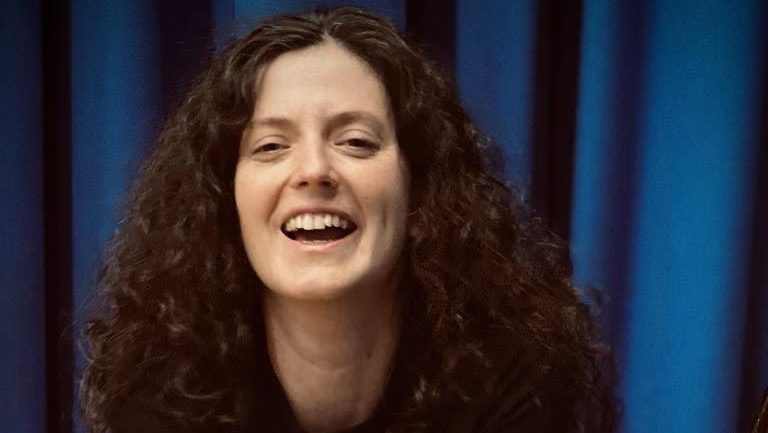
Who or what inspired you to pursue a career in music and who or what have been the most important influences on your musical life and career?
I started learning the piano with my mum when I was quite small but at the age of 6 started lessons with Enloc Wu, who taught me all the way through to when I was 18. Enloc was a fantastic teacher – she had learned in a very rigorous Chinese school of teaching but knew how to give me a lot of freedom in the music I was drawn to and to develop my own tastes. I think I spent a whole year aged 11 only playing Debussy! She is a major influence behind my tendency to pick short, colourful, often quite whimsical, pieces.
It didn’t feel inevitable to me that I was going to pursue a career in music, but I’ve always felt very ‘myself’ performing, very deeply at ease, and it was this sense that encouraged me to keep going and see where it led. I’ve often made decisions seemingly away from performing – like studying Modern Languages at university – but it’s always somehow come back to me.
What have been the greatest challenges of your career so far?
Quite soon after leaving music college, I ended up working in Nairobi for 3 years as music director at the Anglican Cathedral, as well as teaching and performing. It was an amazing time and I still keep a link with the very buzzy emerging classical music scene in Kenya. That said, I came back during the pandemic (and added a baby into the mix), so rebuilding performing in the UK has been pretty challenging! I’ve had to have a lot more confidence doing my own projects and learning how to make things happen – I realised how relatively passive I’d been in the early stages of my career in letting opportunities happen rather than going out and advertising myself. I’ve learned a lot, and interestingly it’s meant I’ve probably ended up doing more solo performing than I would have imagined, at least for the moment.
Which performances/recordings are you most proud of?
Notes from the Undergrowth is my solo debut and feels in many ways like the logical conclusion of the kind of programming I’ve been working on for a long time – I’m very pleased with the mix of music and the flow of the programme. I’ve been really proud of the project, both in performance and recording.
Which particular works/composers do you think you perform best?
I’ve always loved playing Bach, especially the Partitas – there’s something about the dance, the sense of flow and the lightness of the articulation that really fits. Other than that, most of my favourite repertoire to play is from the first half of the twentieth century, especially French composers. There’s such a richness and variety of sound in that repertoire that I hugely enjoy exploring. I loved coming back to ‘Le baiser de l’enfant-Jésus’ from the Messiaen Vingt Regards last year – one of these days I’ll get round to playing the whole series!
How do you make your repertoire choices from season to season?
I often go down rabbitholes of repertoire online: I find something beautiful recorded by a pianist I don’t know and then see what else they’ve recorded. While so much of the growth of streaming services has been detrimental to artists, it has made it much easier to explore less well-known music, for instance by women composers. Growing up, my dad had a big classical CD collection, which was a real privilege, but this kind of music collecting did really favour box sets of big-name composers rather than interestingly curated programmes!
Do you have a favourite concert venue to perform in and why?
I love playing anywhere small enough to talk to the audience without a microphone – it makes such a difference to get people on side from the start and communicate something of why you love the repertoire you’ve picked.
What do you do off stage that provides inspiration on stage?
Having two small children reminds me to stay playful! The really golden moments of parenting are all about improvisation rather than about end products. It’s made me realise how many things we decide in teenage years that we’re not good at (like drawing, in my case) and then never do again – whereas with children the question of whether you’re good at a particular activity becomes irrelevant. It’s freed me up in many ways to be riskier about performance choices and keep a sense of fun.
What is your most memorable concert experience?
I went back to Nairobi for a few weeks last year and played Beethoven’s 4th piano concerto with the Nairobi Orchestra in a swelteringly hot and packed auditorium – I found it pretty stressful to be honest (Beethoven is maybe not the composer I play best at the best of times) but certainly memorable! It’s a wonderful group of people to play with.
As a musician, what is your definition of success?
I’ve always found this a tricky one as I knew very early that I wouldn’t want to do performing full-time, but I think there can be an assumption that for classical musicians this is really the goal and any other work you’re doing is just to make ends meet. It tends to get left off the standard artist biography, for instance! I’ve always worked alongside my performing, particularly in church and community music and leading amateur choirs, and being involved in more participatory music has been an important part of my sense of purpose as a musician. It has meant having to quite actively resist the idea that more performing is always the goal.
I think for me success is having creative projects on the go that I’m excited to share, and having a sense of choice and agency in the music I play. I love it when I’ve brought a piece of music into a concert that no-one’s heard before and people really ‘get’ it.
What do you feel needs to be done to grow classical music’s audiences?
It’s an unusual thing to do, to go and sit down with no other distraction and listen to a piece of music, especially music that feels quite abstract because it doesn’t have words or context. If you’re not already familiar with the piece or the style, a hook or way in can be helpful. It doesn’t have to be high-tech: a story, even just the performer introducing the piece with something imaginative rather than dry biographical detail. The way we talk to an audience makes such a difference to whether they feel out of their depth or really welcome in the space. Collaboration with more visual art forms or introducing narrative can help – and clearly early music education and the chance to participate in music at all stages of life is key in making new music intelligible to people.
What’s the one thing in the music industry we’re not talking about which you think we should be?
I wonder whether as well as accessibility we need to be talking more about the practice of cultivating attention, in a culture where so much disrupts it. Maybe as classical musicians our offer and challenge to new audiences can also be: don’t just relax and tune out, learn how to really listen with curiosity and attention. Then our role becomes also to teach and guide this kind of listening, not just assume it.
What advice would you give to young or aspiring musicians?
I did some auditioning for Help Musicians earlier this year, so I’d say: I love Rachmaninov, but seriously, stop playing the Etudes-Tableaux.
What is your most treasured possession?
It’s not really a possession, but I’ve got big into gardening in the last few years and now have a successfully fruiting apricot tree. I think this may mean I can never move house.
Notes from the Underground is out now on CD and streaming on the Deux-Elles label.
Discover more from MEET THE ARTIST
Subscribe to get the latest posts sent to your email.

