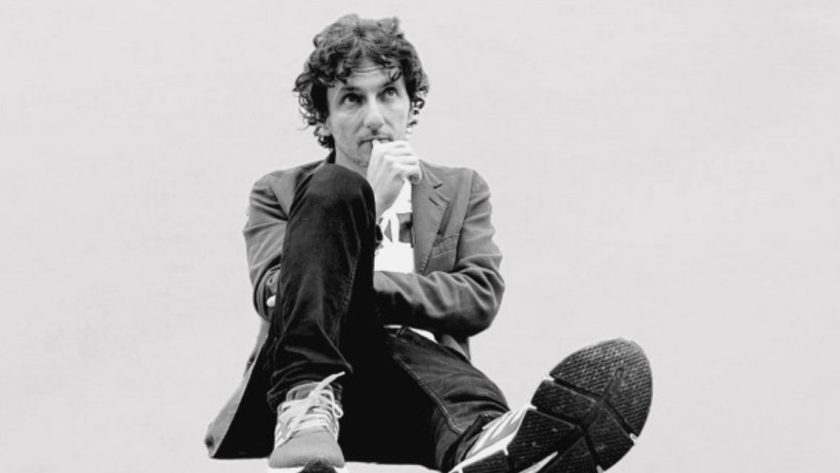
Who or what are the most significant influences on your musical life and career as a composer?
My passion for music and my aptitude for the piano emerged spontaneously when I was just seven years old, without any external influence.
During my youth, when you start to make plans about your future, I was very fortunate in meeting the renowned maestro Luis Bacalov. We developed a wonderful teacher–student relationship as well as a good friendship; this encounter proved decisive, as it finally gave me a clear understanding of the professional path I was meant to follow.
At first, I listened to, appreciated, and performed various musical genres, ranging from rock to classical, jazz, and electronic music. Over time, however, I focused primarily on classical and electronic music, pursuing my work by nurturing both of these artistic sides, which are undoubtedly united by the nostalgic and melancholic tone that defines me.
Inevitably, the emotional influences and musical techniques I absorbed through this wide range of musical experiences have shaped my artistic personality and influenced my compositional creativity. I refer to great classical composers such as W. A. Mozart, and L. van Beethoven, F. Chopin, Erik Satie as well as more contemporary masters like Henry Mancini, Ennio Morricone, Nino Rota.
In addition to classical models, I owe much to rock artists such as Radiohead, Coldplay and, in my earlier years, Jimi Hendrix, The Doors, and especially Deep Purple, whom I greatly admired for their ability to blend elements of classical music with rock.
Furthermore, the many collaborative experiences I have had with internationally renowned artists have broadened my perspective and enriched my technical skills.
What have been the greatest challenges of your career so far?
Throughout my career, I have consistently encountered two challenges, both rooted in my personality and way of being, and therefore not easy to overcome definitively.
The first is the ability to give to my compositions, both in the creative process and in the performance, the intense expressive and emotional charge that matches my own expectations of a sensory and emotional experience. For me, striving toward this goal requires sincerity, passion, and precision: the three essential elements for discovering that kind of magic which transforms musical components into genuine emotion. I would therefore say that one of my greatest challenges is the pursuit of that “magical musical spark,” and this search guides both my piano compositions and my electronic music production.
The second challenge is performing in public, a moment in which I must confront both my emotional nature and my technical execution. This is due to the fact that I am naturally very sensitive, and performing my pieces in front of an audience intensifies this emotional impact. Furthermore, since my artistic focus has so far been cantered more on composition and production rather than on strict technical rigor, I tend to be highly self-critical and demanding when it comes to my technical and stylistic abilities.
What are the special challenges/pleasures of working on a commissioned piece?
Commissioned work is certainly stimulating, enriching, and rewarding, but it always presents some challenges, as it limits one’s creative freedom and personal working methods, which must adapt to the client’s request. However, it is important to distinguish between two situations. When you share perspectives and interests that are positioned on the same wavelength, the work becomes enjoyable, productive, and an opportunity for valuable feedback that helps you grow. On the other hand, when working with someone whose outlook on life and profession is very different from your own, or who expects you to embrace ideas you don’t align with, the interaction can become difficult and demanding.
What are the special challenges/pleasures of working with particular musicians, singers, ensembles or orchestras?
Working together with other musicians, singers, or groups of artists can present challenges, both from a thematic and a formal point of view, when it comes to finding perfect harmony. Once this challenge is overcome, however, it opens up a wide range of satisfaction and rewards: professional, personal, moral, social, and, why not, even financial. In particular, on a professional level, it leads to the enrichment and refinement of one’s knowledge and artistic skills; on a human level, it allows for the sharing of goals, life experiences, and emotions; and on a moral level, it strengthens shared human, social, and artistic values.
Of which works are you most proud?
Being very self-critical and demanding of myself, I constantly strive to improve and refine my musical work. I also believe that in life, in general, we should never stop learning and acquiring new knowledge. For this reason, I rarely feel fully satisfied with or proud of my work; however, there are certain pieces in which I recognize myself more than in others, in the sense that they express my inner and musical identity with precision. I am referring to pieces such as “Silent Mountains”, “Caresse,” “Metafora,” which were in fact born as improvisations during particularly evocative moments in my life.
How would you characterise your compositional language?
I would describe it as nostalgic, romantic, and contemplative.
Many of the pieces I compose are inspired by memories of the past, both joyful and painful, and reflect a sense of longing for what has been and can no longer be, expressed through a romantically nostalgic language. Other pieces arise from reflections on existence and the present moment, naturally taking on a calm and meditative expressive form; or they depict places and abstract atmospheres through evocative and ethereal musical elements.
How do you work?
Although I do not usually follow a strict or clearly defined work schedule, I would say my process is divided into three phases: the creation and composition of the piece; the revision and refinement of the melodic draft; and finally, the perfection of the interpretative performance.
In the first phase, I capture the moment of inspiration, a particular sensation that is not sought after, but arises spontaneously and asks to be expressed, and I create the melody directly on the piano. In the second phase, I listen several times to the recording of the initial draft and transcribe it into sheet music even if this is not always the rule. Finally, I search for the interpretation that feels most expressive and emotionally resonant. I would also add that a fundamental part of my work is the daily study of classical composers, which remarkably improves the fluidity of my hands, enriches my thematic ideas, and above all provides new technical strategies for both composition and performance.
As a musician, what is your definition of success?
In my opinion, individual success is generally the achievement of at least some of the goals we set for ourselves, and we often identify those goals already during adolescence. The goal does not have to be ambitious or grand; what matters is that achieving it brings us satisfaction.
I would say my greatest success is my family, of whom I am deeply proud and for whom I feel truly blessed. As an artist, my greatest achievement has been continuing to pursue and stand by my music with dedication and perseverance, understanding that nothing comes without effort. Music is a fundamental part of who I am; it is part of my essence.
What advice would you give to young/aspiring composers?
It is a complex issue because, since the music market is so vast and accessible to anyone at any time, on the one hand this benefits the evolution of the musical process and aspiring composers, while on the other hand it can cause artistic disorientation.
Digital platforms such as Spotify and Apple Music offer the opportunity to discover musical styles of every kind and find artists, even unknown ones, on a global level; however, exposure to continuous flows of sounds and noise risks clouding the individual tastes and artistic identities of young people.
The advice I would give to young people is to use technology with wise honesty and not let it make decisions for them. Everyone has the responsibility to identify their own “voice” while remaining true to themselves and affirming their originality.
What do you feel needs to be done to grow classical music’s audiences?
As far as the promotion of and awareness about classical music and every other form of artistic expression are concerned, I believe that social and cultural institutions and structures are sufficiently committed. Artistic outreach such as live or broadcast performances, festivals and awards, and the presence of art in schools, all of these educational and promotional strategies already exist.
Perhaps what should be strengthened is the belief that classical music, and art in general, are not merely decorative additions, but an essential component of human society.
What’s the one thing in the music industry we’re not talking about, but you think we should be?
I believe that the music industry broadcasts extensive, thorough, and wide-ranging information, even though art in general continues to be, metaphorically speaking, the child of a lesser god. Perhaps it should expand communication regarding the meanings and artistic content of works, alongside the formal and technical analysis of the artistic product.
Meanings and content, when honest and sincere, even though they may be influenced by external factors, still remain a product of human thought, consciousness, and intuition. Therefore, giving them weight and importance means giving value to human nature itself and protecting it from technological and digital arrogance.
What is your idea of perfect happiness?
I believe that perfect happiness is not a constant presence in life; rather, it comes and goes, often appearing only rarely. Each of us, at different points along our journey, may experience moments of hardship and suffering, just as we may also encounter moments of happiness. So for me what can exist instead is a psychophysical state of ‘serenity’ in which we feel free from worries and problems to solve; fulfilled in our emotional and professional lives; satisfied with who we are and with what we have built over the course of our lives. I believe that this condition is predominantly a subjective state of mind.
Raffaele Scoccia – “Silent Mountains” (Official Video)
Soundcloud https://soundcloud.com/raffaele_scoccia
Website www.raffaelescoccia.com
Discover more from MEET THE ARTIST
Subscribe to get the latest posts sent to your email.

