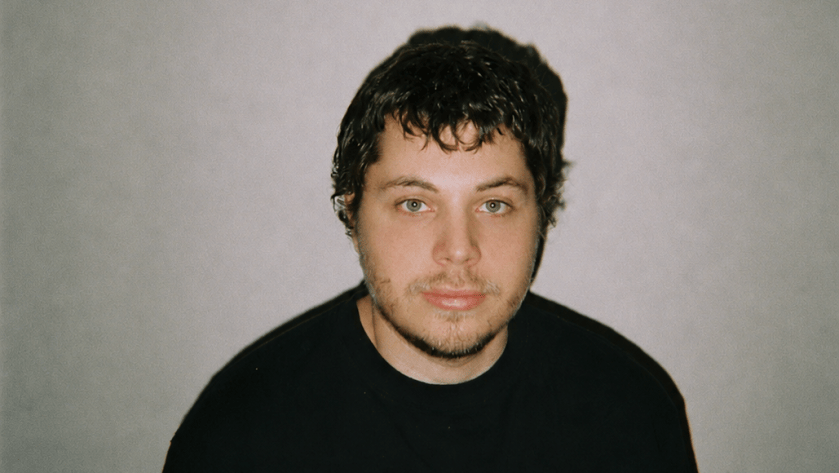
Who or what inspired you to pursue a career in music, and who or what have been the most important influences throughout your musical life and career?
I come from a musical family, so music has always been a part of my life, although not in the classical tradition. When I was twelve, I taught myself to play the piano, and the first piece I learned was Beethoven’s Moonlight Sonata. I became completely fascinated by Beethoven, then by the lives and music of composers like Mozart, Chopin, and many others. It did not take long before I realised that composing was what I wanted to do.
Not long afterwards, I discovered Steve Reich and Philip Glass, and they have probably been the biggest influences on my musical life and career. I would also include Arvo Pärt and John Tavener, whose music I admire enormously. Although they each have their own distinctive voice, they all share a connection to minimalism, and I have always been especially drawn to the stillness, clarity, and spirituality of that music.
At the same time, I have always been interested in experimentation. Composers like John Cage opened up completely different ways of thinking about sound and music, and that curiosity has stayed with me. It also extends beyond the classical world to artists like Aphex Twin, whose work I find just as inspiring in its own way. Those influences, from minimalism to experimental electronic music, continue to shape the way I compose today.
What have been the greatest challenges you have faced in your career so far, and how have they shaped you as a musician?
One of the biggest challenges has been taking a very unconventional path into composition. I never studied at a conservatoire. Instead, I pursued subjects such as politics, design, and computer science, while teaching myself composition independently. That has sometimes left me feeling slightly outside the traditional classical music community and, on occasion, I think some people have been quick to judge that background.
At the same time, I would not change it. Being self-taught has fundamentally shaped me as a musician because I was never taught that there was a “correct” way to compose. Instead, I developed my own approach through constant experimentation, trial and error, and a lot of curiosity. I think that has helped me develop an original voice, while also reminding me that music should communicate something emotionally, rather than becoming so intellectual that it loses its humanity.
Working independently has also made me self-reliant. I have had to learn how different instruments work, how to produce convincing recordings of my music, and how to solve creative and technical problems on my own. Although it has been a more difficult route at times, it has ultimately given me a much broader skill set and a stronger sense of who I am as a composer.
Which performances or recordings are you most proud of, and why?
Without question, Three Commutes is the recording I am most proud of. It represents the beginning of an entirely new chapter in my compositional journey, coming after a five-year period in which I did not compose at all. In many ways, it feels like a rediscovery of my voice, but with a greater sense of maturity, confidence, and clarity than before.
The work also marks the start of a new sonic direction for me. It is deeply rooted in my experience of London, not as a documentary portrait, but as a romantic and deeply personal one. Each movement reflects a different way of moving through the city, capturing both its energy and its quieter moments.
I am especially proud of the final movement, III. Bike, which I think captures that balance particularly well. More than anything, Three Commutes gave me the confidence that I had found my way back to composing, and that I had returned with a much stronger sense of who I am as an artist.
Which particular works, composers, or musical styles do you feel you connect with and perform best?
I feel the strongest connection to minimalist music, particularly the works of Steve Reich, Philip Glass, Arvo Pärt, and John Tavener. Steve Reich’s Different Trains is a particular favourite, especially in the way it combines live instruments with fixed media to create something that is both deeply personal and structurally compelling. I also return regularly to the early Philip Glass Ensemble works, his string quartets, and his piano etudes. John Tavener’s Eternity’s Sunrise is another work that has had a lasting impact on me.
What draws me to minimalism is its ability to say so much with so little. I find repetition almost meditative, and I love the way subtle shifts in harmony, texture, and rhythm can completely transform a piece over time. Techniques such as additive and subtractive processes create music that feels alive, despite often being built from the simplest materials.
I also think my background in design has shaped the way I approach composition. Good design is often about stripping away anything unnecessary until only the essential remains, and I try to bring the same philosophy to my music. Every note should have a purpose. For me, the challenge is not to write more, but to achieve more with less.
As a musician, how do you define success?
Having spent several years in the world of startups, where success is often measured by numbers, growth, users, and financial outcomes, I have come to think about success in music very differently. Those metrics have their place, but they are not what motivates me as a composer.
For me, success is entirely about the work itself. It is about creating music that feels honest, that has something meaningful to say, and that has the potential to outlive me. If a piece can genuinely move someone, or offer them a moment of reflection or beauty, then I feel it has achieved something far more valuable than any number ever could.
Perhaps the simplest way I think about it is to imagine looking back on my life from the very end. I hope I would see a body of work that feels coherent, sincere, and unmistakably my own. I want each piece to have been written from a place of curiosity and conviction, rather than a desire for attention, recognition, or commercial success. If I can build a discography that is sonically refined, emotionally truthful, and faithful to the artistic ideals I believe in, then I would consider that a successful life in music.
What do you think needs to be done to expand and diversify classical music’s audiences?
I think the most important thing composers and performers can do is focus on making the best work they possibly can, and then share it with the world. Classical music has endured for centuries because great music has a remarkable ability to find the people who need it, even if that doesn’t happen immediately. In a culture that increasingly values speed and instant gratification, classical music offers something slower, more reflective, and more lasting. I do not think there is anything wrong with that.
My own experience has reinforced this belief. I grew up on a council estate with a single mum and no classical music in the home. Yet I discovered Beethoven as a teenager and fell in love with the music completely. Nobody introduced me to it. I found it naturally, and I believe many others can too.
That said, I do think the institutions surrounding classical music still have work to do. The traditional classical world can sometimes feel exclusive and shaped by assumptions about class, education, and background. Those barriers need to come down so that people from every walk of life feel they belong. I hope that, in some small way, my own path into composition shows that there is no single route into this profession.
As for contemporary classical music, it will probably always remain a relatively niche art form, and I do not think that is something to be afraid of. I am also not convinced that audiences grow by trying to engineer a particular sound or by chasing trends. The best way to expand and diversify the audience is simply to create music of genuine quality, communicate it honestly, and trust that it will find the people it is meant to reach.
What advice would you give to young or aspiring musicians?
My advice would be not to feel pressured into following a conventional path. There is no single route to becoming a musician or composer, and trying to imitate someone else’s journey can often make it harder to discover your own voice.
Be curious, listen widely, and allow yourself to experiment. Some of the most important lessons come through trial and error, rather than formal instruction. Whether you study at a conservatoire or teach yourself, what matters most is developing a musical language that feels honest and authentic to you.
Most importantly, be patient. Finding your own voice takes time, and it cannot be rushed. Trust your instincts, keep making work, and resist the temptation to chase trends or write the music you think other people want to hear. The most enduring music comes from people who are unapologetically themselves.
Brandon Hopkins’ Piano Etudes, Book I is released on 25 September. Following a five-year absence from the piano, the album grew out of relearning lost techniques and finding new ones. It brings together an etude written in September 2018 with five new works completed in July 2026, and was recorded at Sutton House, London.
https://hopkinsbrandon.bandcamp.com/album/piano-etudes-book-i
Discover more from MEET THE ARTIST
Subscribe to get the latest posts sent to your email.

