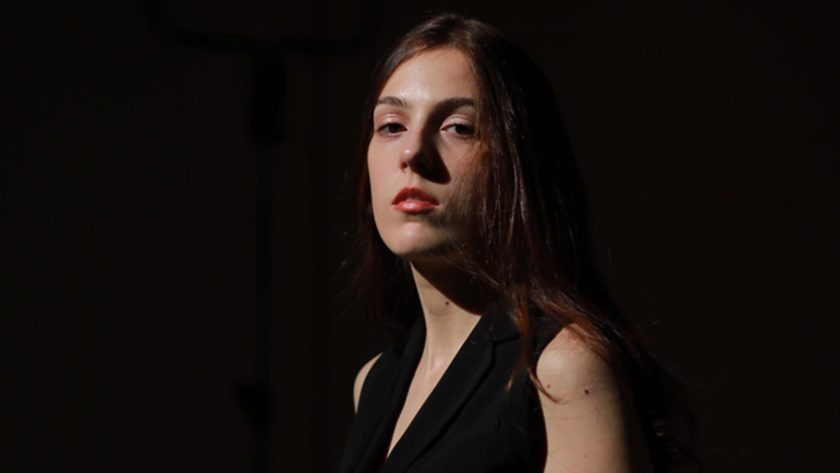
Who or what inspired you to pursue a career in music and who or what have been the most important influences on your musical life and career?
I grew up in a musical family. My father and grandfather were both excellent conductors, and the rest of my family consists of musicians as well, so I was surrounded by music from the very beginning. Interestingly, though, I was never pushed to pursue music myself. If anything, my family was very aware of how difficult and demanding a career in music can be, and they allowed me to find my own way towards it. As a child, I was actually much more fascinated by opera, ballet and symphonic music than by the piano. There was a piano at home, of course, and I always felt drawn to it. So I suppose my family gave me the environment and the musical language, but the decision to become a musician ultimately had to come from me.
What have been the greatest challenges of your career so far?
One of the first major challenges I remember vividly was performing Tchaikovsky’s First Piano Concerto and Ravel’s Piano Concerto in G major with Georgian Philarmonic and my father conducting in the same evening. I was 18 years old and felt completely hyped about it, perhaps without fully realizing what I had taken on! Since then, every time I doubted myself I looked back on that night.
Which performances/recordings are you most proud of?
I would have to choose my debut album, which comes out on 18 September.
Everything surrounding this recording has been delightfully challenging. The three days in the studio really forced me to listen with an even more careful ear and learn how to organize my energy in a productive way and tackle very demanding works by Liszt Scriabin and Saariaho.
But the recording itself was only one part of the process. For the first time, I was stretching my creative muscle and also thinking about the visuals, the music video, PR, marketing and all the details that we don’t normally have to think about on a daily basis as performers. It made me realize how many different creative decisions go into presenting music to an audience today.
I had a very strong vision for the project, and I am proud that I managed to bring that vision to life.
Which particular works/composers do you think you perform best?
I wouldn’t say that I have a specific niche, and I think it also varies from time to time.
As a child, I was obsessed with Robert Schumann and played most of his solo repertoire. I have always had a particular love for Liszt, Scriabin and the Romantic composers, but I am equally delighted to perform earlier works as well as modern and contemporary works.
I actually enjoy not being confined to one particular musical world. I like the feeling of moving between different styles and discovering what each one demands from me.
How do you make your repertoire choices from season to season?
I love coming up with creative programmes and finding connections between different pieces and eras. Sometimes the connection is obvious, and sometimes it feels like a narrative or juxtaposition which makes it unexpected as well.
Growing up, my teacher and I always wanted the repertoire to challenge me and help me grow, both technically and musically. I am older now, but that instinct hasn’t really changed. I still like to get out of my comfort zone and mix things up. I don’t particularly enjoy playing pieces simply because they are comfortable. I need to feel that there is something to discover or something that will push me somewhere new.
Do you have a favourite concert venue to perform in and why?
The Berlin Philharmonie Chamber Hall was an absolute dream come true for me. I also love the intimacy and magic that Wigmore Hall has to offer.
But it is difficult to choose just one or two venues because every concert space has its own energy, acoustics and most of the experience depends on the connection you build with the audience that day.
What do you do off stage that provides inspiration on stage?
I look to other forms of art for inspiration. If I feel stuck within the world of classical music, my usual method is to turn to poetry, literature, film or visual art. It helps me become curious again and see things from a different perspective.
I also think it is incredibly important to get out of our practice rooms and interact with other people. I find some of the greatest beauty in community and in the relationships between people. I learn so much by observing and communicating about art and life, and by simply zooming out.
We spend so much time zoomed in when we are practising. Sometimes you need to step away from the instrument, experience other things and allow yourself to breathe and disconnect.
What is your most memorable concert experience?
My favourite thing to do in life is to be on stage. It never feels repetitive because every performance is a unique opportunity to learn more about the piece, about yourself, and to connect with people on a level that is almost mystical and difficult to explain.
I think I felt that kind of magic most recently at the Ravel Festival in Saint-Jean-de-Luz, France. I was performing Ravel’s Piano Trio in a city where Ravel himself grew up and where he later wrote the piece. There was something incredibly special about performing his music in a place so connected to his life.
I remember feeling a very strong sense of calm and joy in that moment. Everything seemed to make sense – the place, the music and the people. I will never forget it.
As a musician, what is your definition of success?
I wish to have a full life.
I want to feel challenged by music, to keep finding ways to combine different art forms and to reach new audiences. I want to stay curious and open to new possibilities, while also finding ways to make classical music more attainable for people.
I also don’t believe in the idea of the tortured artist. I think we can have it all – a happy social life, meaningful relationships and a life outside the practice room, while being deeply invested in our craft.
For me, success isn’t about sacrificing everything else for music. It is about creating a balanced life.
What do you feel needs to be done to grow classical music’s audiences?
As a young person, I feel a certain responsibility to share classical music with my peers and invite them into this world. I have many friends who are not musicians, and I have seen first-hand how simply giving someone a little context before a concert can completely change their experience.
I also think we need to remove some of the judgement and unwritten rules around classical concerts. Even something as simple as whether or not you are “supposed” to clap between movements can make people feel that they aren’t qualified to be in the audience.
People don’t usually feel this way when they walk into an art exhibition, a theatre or a cinema.
What’s the one thing in the music industry we’re not talking about which you think we should be?
Unpaid gigs. I think there’s still a tendency to overlook how much time, money and work musicians put into performing. Playing live is such an important part of building a career, but musicians shouldn’t feel like they have to constantly work for free just to prove themselves or gain exposure. I think we need to have more honest conversations about valuing musicians’ time and work.
What advice would you give to young or aspiring musicians?
Stay true to yourself. Don’t make decisions based on what you think other people want to hear or what you think will make you more successful. Don’t be afraid to stand out, and don’t be afraid to make mistakes – we are all going to make a lot of them. Take more chances. Every mistake is just new information that you can take forward and use to create something better in the future
What’s next? Where would you like to be in 10 years?
I have the album coming out, and I’m really excited for people to experience it and go on this spiritual journey with me. After that, I hope to perform more, continue growing as an artist, and explore new projects that reach new people and allow me to connect with them in different ways. In 10 years, I’d love to look back and feel like I’ve stayed true to myself while continuing to evolve and take new risks.
What is your most treasured possession?
My grandfather’s piano. I value it so much because it’s more than just an instrument. He passed away when I was 9 so I never got to share music with him in a proper way. Playing on this instrument feels like we still share a bond.
Salome Jordania’s debut solo album “PASSAGE: A Spirit Odyssey” is out on Friday 18 September
Discover more from MEET THE ARTIST
Subscribe to get the latest posts sent to your email.

