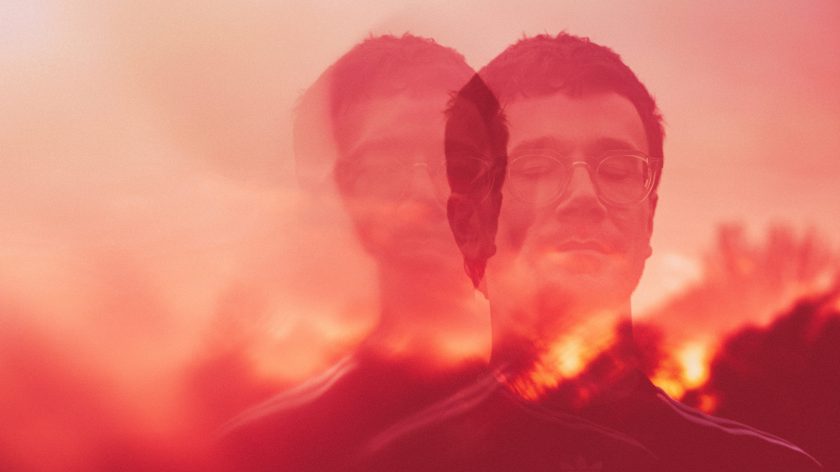
Who or what are the most significant influences on your musical life and career as a composer?
Visual art has always been a rich source of inspiration for my work as a composer. The work of Barbara Hepworth, Bridget Riley and Richard Long, who each have such unique and clearly-defined voices, stands out as constant touch points in my creative life. When I was first trying to understand who I was as a composer, it was turning away from musical influences and towards visual ones that gave me the space to explore and discover ideas that I wanted to interpret sonically. I’m drawn to abstraction, but abstraction that feels rich and emotive through a laser-focussed sense of form and rhythm and texture.
I also feel very lucky to be surrounded by so many creatives who are each searching and pushing and building in their own ways – artists, performers, composers, writers, dancers, photographers. It’s the conversations I have with them that spark moments of creativity for me time and again, whether that be delving into our processes and creative ambitions, or helping each other through a break up, or just chatting about what art we’re crushing on and why.
What have been the greatest challenges of your career so far?
Sticking it out! It’s really tough to make a living as artist – we all know that – but it’s not been getting any easier over the past decade or so of austerity and economic setbacks. There have been times where I’ve felt like I’m clinging on by my fingernails, working too many hours on too many different things and not feeling like I’m moving anywhere. I think we’ve all had times like that, but we persevere and push on because when you come out the other side and the thing is made, there’s nothing better than sharing that with others. For a long time, I thought ‘one day this will all be easy and I’ll have everything I need to make everything I want to make’, but I realise now that part of it is having the will and determination to say ‘What is it that I want to create? What exactly am I going to spend my precious time and energy on?’ and then throwing myself into that with everything I’ve got.
What are the special challenges/pleasures of working on a commissioned piece?
Commissions are great because they give you a bunch of starting points – performers, a theme maybe, a context for the performance. Your boundaries are already sketched out and you can start to play around within them and push at them and test them. However, it’s also important to remember that the piece is coming from you and you need to speak through it too. It can’t just be a way of fulfilling a contractual obligation.
For An Inner Life (my new piece for The Carice Singers), conductor George Parris wanted to collaborate with me on a new work inspired by sculptor Barbara Hepworth and composers Michael Tippett and Priaulx Rainier after hearing my Hepworth-inspired Single Form (Dawn). He was planning a big retrospective of Tippett’s choral music and wanted a new piece that was born out of the tight-knit relationships that the three artists shared.
We did a bunch of research including looking at their letters to one another and, for a long time, I struggled to know what I wanted to say with this piece. I didn’t want to make a biographical piece or a homage or a pastiche. I wanted it to be relevant to an audience today but inspired by their lives and works. Half way through writing it, my partner of eight years left me and an already tricky creative process became almost unbearable. I turned to the letters that Hepworth and Rainier exchanged and found within them an unshakeable bond of mutual support; shared creative frustrations, anger at societal expectations, and deep wisdom and truisms about life.
The piece became a choral meditation on relationships, on how we connect and collide with others over the course of our lives. It’s told through their letters to each other but, really, it’s a universal journey that each of us is going on and it helped me forge my own path as I got back to myself.
What are the special challenges/pleasures of working with particular musicians, singers, ensembles or orchestras?
I’ve been incredibly lucky to work with some exceptional performers and ensembles over the years, often working together on a number of pieces and projects and being able to really understand what makes each other tick. When composing, I’m always conscious that I’m composing for actual people, not just an instrument or a voice. I’m composing for their preferences and interests and hobbies, I’m composing for their performance and presentation style, and I’m composing for how they want to reflect themselves in their art. The best music I’ve written has been when those things have aligned super closely with my aims for the piece, and everything gels in a way that allows both composer and performer to communicate as themselves whilst creating something out of our shared experience.
Of which works are you most proud?
Two pieces immediately come to mind – one quite old and one quite new. I consider Curved Form (No. 4) to be my “Opus 1” in many ways. It was the first time I’d finished a piece and I knew that it was exactly what I wanted it to be – I hadn’t been swayed by what I felt others would like and instead listened to my intuition and held my nerve against the inner critic. It’s a drone piece made with hammers – a solo piano work written for Eliza McCarthy as part of my SOLO series – and I knew when I first heard her play it that it was going to be special. Eliza performs in such an attentive and embodied way and she totally understood the piece and really made it her own. The piano plays a steady pulsing chord with different notes fading in and out, pretty quickly the pulsing itself seems to recede and Eliza ends up playing the resonance of the piano and the room, shaping this intangible cloud of sound that hovers just above our heads.
More recently, I wrote hottt for the Bang on a Can Summer Festival – a near utopia of contemporary music making that takes place over three weeks in a huge art gallery complex in rural Massachusetts. I’ve adored the work of Bang on a Can’s founders Julia Wolfe, David Lang and Michael Gordon since I was first starting out and had kind of made it a life ambition to go and work with them. Thankfully, on this occasion, you definitely should meet your heroes because not only were they the most warm and supportive and creative mentors but the team they assembled for the festival and the other composers and performers they brought together created a truly life-changing experience and I met so many people who are now dear friends for life. The piece itself is radically different to the one above – it’s a techno-driven ride through the joy of experiencing things for the sheer thrill of it, throwing yourself into life, into music, into dancing, into connection, into late nights and early mornings, and into a community of like-minded people who are just as mad as you are.
How would you characterise your compositional language?
I think my compositional language is quite changeable. I’ve realised I’m very attuned to the context in which a work is going to be heard. I recently wrote PARTITA for pianist Zubin Kanga which is 30 minutes of beat driven electronica and a world away from the choral sensibilities of An Inner Life. They’re both born out of my experience though and both channel that experience through me into two very different performances. I’m taking some time at the moment to think about what music I want to make in the future, how I want it to be received and how I want to connect with audiences. So much has changed since I started this journey back in 2012, that I want to be very intentional about how I present my work and what music I make for different spaces. I’m planning to launch a new moniker in 2027 for my more electronic music because I want a space for that work that sits alongside my practice as a classical composer. The two streams of my practice will no doubt influence each other and blend and change over time, but I’m interested in working in slightly different ways for different contexts.
How do you work?
I’m almost always driven by audience experience. What do I want the piece to feel like? How do I want an audience to react? Where will the piece be played and how will it be received? What do I want audiences to take away from it? I think contemporary classical music has a tendency to think about music first and experience second. A lot of time and energy is put in to honing a particular language without really thinking about how that will be understood by someone with no prior knowledge or experience of the work. I find myself having to act as both composer and editor to make sure I’m staying on track when composing. I’ll put my head down and get lost in the music as a composer, but then I’ll take a step back and ask myself if it’s really doing what I want it to do as an editor. In the literary world, editors are a huge part of the process and you wouldn’t dream of publishing a book without an external pair of eyes on it to ensure that the work is speaking to the ideas that you want it to. I think our process as composers could benefit a lot from that kind of interrogation and so I think that it’s important for us to act in that role too when creating a new piece.
As a musician, what is your definition of success?
This is something I struggle with A LOT. At a time when it’s only getting harder to sustain a career in music, success can feel like it’s always just out of reach. We’re kind of taught by society that if you’re not making money from your work, then you’re not a success and that’s something that I’m constantly trying to dismantle. I don’t think it’s ever really been true because artists have always had side hustles and second jobs, it’s just that we often only see an artist on an international platform after years and years of working a bunch of different jobs in order to make their art. For me, I have to remind myself that I make music to connect with other people, so I’m always trying to focus on how I can get my music in front of the people I think will like it and then connect with the ones that do. In this digital age, it’s easy to focus on quantity of connections rather than quality and I think it’s important to nurture the quality of your relationships with other artists and with audiences because that’s where you find the most inspiration and fulfilment.
What advice would you give to young/aspiring composers?
I’ve run quite a few workshops with younger composers about self-producing and getting your work out there and one of my biggest pieces of advice is ‘look around you’. What are your mates up to? What resources do you have access to? Where is the audience for your music? I think a lot of classical music education focuses on the upper echelons of the industry – star soloists, famous orchestras, big venues – but no one gets their overnight and it really takes a village to build a career in this industry. By focusing on what you have available to you right now, you can get on with the messy process of making things, messing up, finding what makes you tick and building a community. Those are the things that will help you build a career and make a name for yourself. If you’re only ever dreaming of overnight, international success without getting stuck in and building it from the bottom up, then it’s likely to remain just a dream.
What do you feel needs to be done to grow classical music’s audiences?
I think we need to broaden the definition of what is considered classical music. For me, some of the most exciting classical music being made at the moment sits in this kind of hinterland between instrumental music and electronic music – artists like saxophonist Bendik Giske and organist Kali Malone who are making these gorgeous instrumental works with an experimental mindset that’s more akin to electronic artists than classical composers. They’re artists who really know how to connect with audiences in today’s day and age and I think it speaks volumes that they choose to work in classical adjacent ways but without being caught up in all the language and posturing that comes with the classical concert experience.
What’s the one thing in the music industry we’re not talking about but you think we should be?
I don’t think we talk enough about the way that streaming has removed a huge source of passive income for ensembles, performers and composers. The classical sector (for as long as I’ve been working in it) has never been exactly flush with cash, but the fact that income from recordings has plummeted over the past 10-20 years means that there’s a lot less financial slack in the system as a whole and I think it’s making the sector more risk averse and conservative. These days, recordings are a financial burden which will never recoup their costs and yet we still expect artists and composers to be releasing albums if we’re to consider them successful. It’s become just another way to lock people out of the industry if they don’t have the means to take a hit on putting their music out there, and not enough is being done to hold streaming platforms accountable for that.
What is your idea of perfect happiness?
I didn’t realise it until I read a beautiful description of it in Oisín McKenna’s book Evenings and Weekends, but my idea of perfect happiness are those one or two days each year which feel like they go on forever. You get up early, maybe head out for a stroll, see a friend for coffee, read a book on a park bench, catch up with mates for lunch, go sit in the sun all afternoon, bump into some more mates for a drink, grab a quick dinner on the way to a party, head out dancing all night long, make out with your crush on the dancefloor, watch the sun rise from the smoking area, fall into a taxi with your mates, and roll into bed completed exhausted.
An Inner Life by Alex Groves receives its world premiere at Kings Place, London, on Friday 20 November. Find out more
(Artist image: Kit McCarthy)

