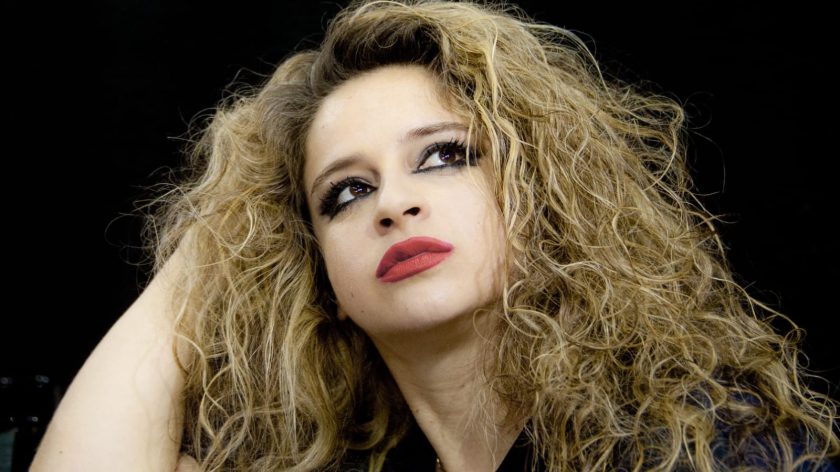
Who or what inspired you to pursue a career in music, and who or what have been the most important influences throughout your musical life and career?
I never questioned my decision to pursue music, because, in truth, I never felt there was any other path for me. Music has always been my way of expressing emotions and connecting with others. I come from a small Greek island and not from a musical family. I began studying the piano at the age of twelve, and moved to Athens in order to finish the Athens Conservatory. The circumstances were challenging, but they never discouraged me. I have been inspired by great composers, musicians, and teachers who have shown me the importance of dedication, imagination, and honesty in music. Martha Argerich has undoubtedly influenced my artistic development, particularly through the remarkable independence she embodies as a pianist. Her unique musical personality and distinctive artistic voice have inspired me to cultivate my own individuality and artistic identity, allowing me to develop my own independent approach to piano performance. There are personalities who enter our lives and leave behind an imprint that never fades; they become part of our inner path and our artistic identity.
What have been the greatest challenges you have faced in your career so far, and how have they shaped you as a musician?
Life does not ask to be explained. It asks to be endured with tenderness. And if there is one thing I have learned from the piano and from the very act of performance, it is that a pianist does not exist simply because they are watched and heard. A pianist exists because, even for a brief moment, they manage to surrender completely. It is always a great challenge to balance artistic ambition with the demands of a professional career. It has taught me resilience, discipline, and the importance of always continuing to grow.
Which performances or recordings are you most proud of, and why?
I am most proud of the performances where I feel a true connection with the music and the audience. Those moments where the music communicates with the public are meaningful and are the most rewarding. I cherish the recording we have done together with Martha Argerich under the Label of Warner Music, where we performed Beethoven’s 6th Symphony “Pastorale” for two pianos, as well as Beethoven’s “Storm” Sonata. The recording received high praise and was nominated for best chamber music album.
Which particular works, composers, or musical styles do you feel you connect with and perform best?
I feel especially connected to composers with a strong storytelling, such as Rachmaninoff, Liszt, Brahms, Chopin, and Beethoven. Their music allows me to explore both passion and human expression. I have a soft spot for Shostakovich, Mozart and Prokofiev.
How do you approach choosing your repertoire from season to season?
I choose according to my desire to share meaningful musical journeys with audiences. Each programme should have its own story and emotional direction. Many times the orchestra or festival have their own inquiries, which I find wonderful as if it is a work that I’m not acquainted with, usually I’m excited to take that journey through the new scores.
Do you have a favourite concert venue in which to perform? What makes it special for you?
I appreciate venues where the atmosphere allows a deep connection between performer and audience. The most special halls are those where the music feels truly alive. Couple of my favorites have been the Golden Hall of Musikverein, the Tchaikovsky Hall of Moscow, the Berliner Philharmonie, the Guangzhou Opera House, Shanghai Oriental Art Center, and Carnegie Hall.
What do you do away from the stage that inspires or informs your performances on stage?
Life experiences, traveling, watching a lot of films, and observing the world around me all influence my interpretation. Inspiration comes from everything that helps me understand people and emotions more deeply.
What has been your most memorable concert experience?
The most memorable concerts are those where there is a strong emotional connection to the audience. Those moments remind me of the unique power of live music. When this happens, they are all memorable.
As a musician, how do you define success?
To stand at the center of a stage, to play, and to suddenly realize that this is your life. Not an image, not a search for validation, but a moment of absolute presence.
Success means staying true to yourself, continuing to grow, and creating moments where music can genuinely touch people’s hearts. If I would like something to be recognized later in my life, it is not success, nor triumph. It is endurance. The exhausting, almost irrational endurance required to continue playing, to continue loving the audience, people, and life itself.
What do you think needs to be done to expand and diversify classical music’s audiences?
Classical music can reach more diverse audiences by becoming more accessible, inclusive, and connected to people’s everyday experiences. By welcoming new voices, using modern platforms, and creating less intimidating concert experiences, more people can discover its emotional power.
What is one issue in the music industry that is not being discussed enough?
I think we should talk more about the human side of being a musician—the dedication, challenges, and emotional journey behind every performance. To truly connect with music, one must dissolve the boundaries of the ego. One must enter a space where the final destination is unknown, yet the journey continues with dedication and faith. Music, for me, is a constant presence throughout my life — a force that takes different forms but remains unwavering. It is memory, necessity, communication, and a way of existing in the world.
What advice would you give to young or aspiring musicians?
Be modest, patient, work consistently, and develop your own artistic voice. Stay curious and remember that authenticity is one of the greatest qualities an artist can have. I will feel sorry for those who are not yet ready to be conquered fully to the power and love of music. Continue moving forward with dedication and courage. The world is waiting to hear your story.
Theodosia Ntokou appears tonight at this year’s Oxford Piano Festival performing Shostakovich’s Piano Concerto No. 2. Find out more
Discover more from MEET THE ARTIST
Subscribe to get the latest posts sent to your email.

